Pakistan launches high-res imaging satellite
Updated 50 minutes ago

With no separate detention centres for underage offenders, children under trial are exposed to criminal influence
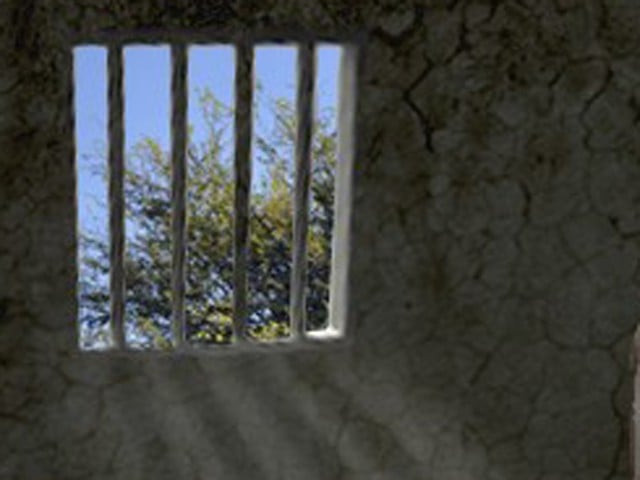
Sixteen-year-old Musa, a resident of the Shabqadar tehsil in Charsadda district, was arrested by Peshawar Police in a mobile snatching case and sent to Central Jail Peshawar along with two of his accomplices. At an age meant for education and personal development, this was Musa's first encounter with prison life.
"I was not part of any professional criminal gang but was influenced by TikTok videos that fueled my desire for expensive mobile phones. This led me to commit theft," confessed Musa, whose arrest marked the beginning of a harsh and unfamiliar reality. Musa described jail as an entirely different world, where drugs and mobile phones were surprisingly accessible inside barracks.
Due to his age, he was placed in a separate barrack, but it remained within the same jail premises as adult prisoners. Each morning, he observed the activities of convicted criminals and members of dangerous gangs as the prison routine began. Central Jail Peshawar, considered one of the province's largest and model jails, houses many juveniles like Musa who, by law, should be placed in juvenile centers rather than adult prisons. According to sources, there is not a single functional juvenile center for prisoners under eighteen in any district of K-P.
Children accused of minor and serious crimes alike are treated as adult inmates and are kept only in separate barracks within regular jails. Major prisons such as Peshawar, Haripur, Mardan, and Bannu also hold prisoners convicted of terrorism, murder, and death penalty cases, often in close proximity to underage detainees. This practice directly violates the principles of the Juvenile Justice System and exposes children to criminal influences and psychological harm.
Senior Peshawar High Court Advocate Ali Azim stated that the Juvenile Justice System Ordinance 2000 and its 2002 rules mandated the establishment of borstal institutes for prisoners under eighteen. "Separate centers must provide education, vocational training, recreational activities, and psychological support to protect the futures of juveniles. Despite clear legal obligations, the provincial government has failed to implement these provisions. As a result, the futures of hundreds of underage prisoners remain uncertain, raising serious legal and human rights concerns," noted Azim.
According to the Khyber-Pakhtunkhwa Prison Department, more than 10,000 prisoners across 35 jails are currently under trial, including women and juveniles. Of the 10,216 under-trial prisoners, 353 are under eighteen years of age, including 2 girls and 351 boys. Categorically, Central Jail Peshawar holds the highest number of under-trial prisoners at 2,226, followed by Mardan with 1,658. Significant numbers are also reported in Bannu, Swat, Abbottabad, Nowshera, Charsadda, and other districts, highlighting the scale of the issue.
Social activist Imran Takkar explained that under the Juvenile Justice System Act 2018, children under eighteen cannot be kept in jail, while those under ten carried no criminal liability. "The law also requires juvenile justice committees at the district level, yet none are operational in Khyber-Pakhtunkhwa," noted Takkar, while commenting on the state of the juvenile jail system, where law, humanity, and childhood are all on trial.
According to official and non-official reports, more than 1,475 juvenile prisoners are currently held in Pakistan's jails, about 86 per cent of whom are under trial, meaning they are behind bars even before they are proven guilty. UNICEF's 2024 report showed that Punjab had the highest number of juvenile offenders (851 children), followed by K-P (304), Sindh (297), and Balochistan (23).
Meanwhile, the overall prison system is operating at 152 per cent overcapacity, with 73 per cent of prisoners under trial. Although the Juvenile Justice System Act 2018 mandates separating children from adult criminals, using arrest as a last resort, and focusing on rehabilitation through reformative centers, reports by NCHR and Justice Project Pakistan make it clear that most juvenile prisoners are still kept in regular jails with adult offenders.











This material may not be published, broadcast, rewritten, redistributed or derived from. Unless otherwise stated, all content is copyrighted © 2026 The Express Tribune.






COMMENTS
Comments are moderated and generally will be posted if they are on-topic and not abusive.
For more information, please see our Comments FAQ