Massive outages as deficit hits 6,500MW
Updated 4 hours ago

The Hour of the Wolf details decade-long abusive relationship
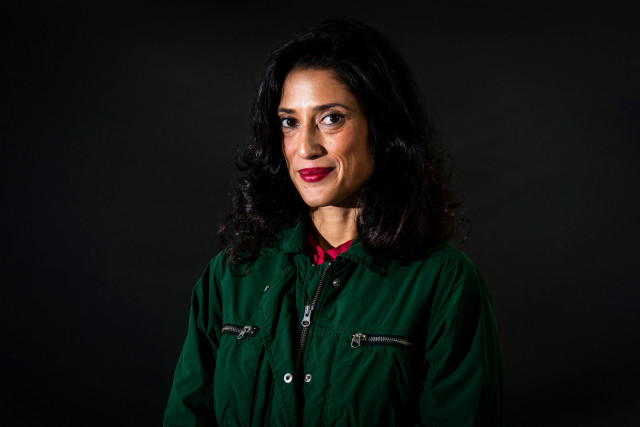
Fifteen years after publishing a memoir that shook Pakistan’s most powerful political dynasty, writer and activist Fatima Bhutto is returning with a deeply personal account of abuse, survival and renewal.
Bhutto’s forthcoming memoir, The Hour of the Wolf, details a decade-long coercive and abusive relationship that she says she endured in silence, believing it to be love. The book marks the first time she has spoken publicly about the relationship.
“I didn’t really want to do it,” Bhutto said of writing the memoir in an interview with British newspaper The Guardian. “Because I felt ashamed, I felt embarrassed, I did feel all those kinds of things. But I also know that if I’d read something like this, it would have helped me.”
Bhutto, a member of Pakistan’s most famous political family and the niece of former prime minister Benazir Bhutto, rose to international prominence with her 2010 memoir Songs of Blood and Sword. The book re-examined the Bhutto dynasty and held Benazir partly responsible for the murder of her father, Murtaza Bhutto.
The new memoir recounts how Bhutto met her partner, referred to only as “The Man”, in New York in 2011 while she was touring for her first book. She describes him as “uninhibited, blazingly sure of himself … beautiful, rugged, old-school masculine … a free spirit”.
Their relationship, largely long-distance, lasted 11 years. Bhutto writes that it suited her frequent travel for journalism, novels and literary festivals, but says her partner became increasingly controlling, alternating between charm and cruelty.
Read More: Fatima Bhutto welcomes second son, Caspian Mustafa
His behaviour, she writes, included verbal abuse, humiliation in public places and prolonged periods of silence and contempt. “He would switch from dazzling to demonic without warning,” Bhutto said, adding that he gradually isolated her from friends and normal social life.
Bhutto said she did not recognise the relationship as abusive for years because it was not overtly physical. “I had read stories and seen things throughout my life about women who’d been put in dangerous situations by men. I just never thought I was one of them because it hadn’t been physical, you know?”
In the book, however, she recounts one incident in which he bit her finger so hard it caused nerve damage. “The only way to survive 11 years of that is to think of it as a love story,” Bhutto said. “And you think it’s toughening you up for, you know, the great success that awaits you.”
Bhutto said secrecy was central to the relationship. Her partner insisted they remain hidden, discouraging her from introducing him to friends or family or sharing a life in the same city.
The relationship ended in 2021 after Bhutto, then 39, realised he would never commit to the family life she wanted, despite her undergoing fertility preservation. She later met her husband, Graham, in 2022 and had two children within three years.
Now settled with her family, Bhutto says she wrote the memoir after deciding to “just tell the truth”. “And then it fell out of me – it didn’t even pour, it fell,” she said.
Bhutto added that while she felt damaged by the experience, she believes she ultimately survived what was intended to break her. “I felt damaged by him, but I know that the damage he wanted to do was total.”
Also Read: Fatima Bhutto flays Imran Khan’s ‘opportunistic’ politics
Bhutto is the daughter of Murtaza Bhutto, the eldest son of Zulfikar Ali Bhutto, the founder of the Pakistan People’s Party (PPP) and prime minister in the 1970s. In 1985, her uncle Shahnawaz Bhutto, then 26, was found dead in Nice. The family has long believed he was poisoned.
Born in 1982, Bhutto spent her early childhood in Karachi before living in exile with her father in Syria following Shahnawaz’s death. She has written that Songs of Blood and Sword, her 2010 memoir, was in many ways a tribute to her father, whom she adored.
“I adored my father because he adored me,” Bhutto said. “He would make it fun, so it wasn’t like you were holed up in some scary place. But you still understand, something’s not right.”
Bhutto described a childhood shaped by secrecy and sudden movement, recalling being told to pack a bag at a moment’s notice and being cautioned against sharing details of her whereabouts. “The need for secrets? I understood that because I have had to live like that, even until now,” she said.
Political danger, she said, was openly discussed within the family. “The adults in my family never really hid anything from us,” Bhutto recalled. “They didn’t ever say, ‘leave the room, children, because we have to talk about something’.”
The family returned to Karachi in 1993, when her aunt Benazir Bhutto was beginning her second term as prime minister. A bitter feud soon erupted between Benazir and her brother Murtaza over party leadership and allegations of corruption. In 1996, Murtaza Bhutto was killed in a police shoot-out outside the family home. Fatima Bhutto was 14.
Also Read: Fatima Bhutto thinks no one is 'working hard' in Pakistan to make laws to protect women
After her father’s death, Bhutto lived with her stepmother and younger brother, at times in hiding in Syria for security reasons. “They definitely traumatised us in this way,” she said, recounting how she was told she might be targeted next.
She said her upbringing left her wary of political power rather than drawn to it. “It’s made me uncomfortable around power though, rather than craving it,” she said. “I’m very well aware of the dangers of power. I know no one is different.”
While she has long ruled out a political career, Bhutto remains deeply engaged as a writer and activist. In recent years she has focused extensively on Gaza, amplifying Palestinian voices and editing the essay collection Gaza: The Story of a Genocide, published last October.
Reflecting on documenting war while becoming a mother, Bhutto said the contrast was impossible to ignore. “When I was in labour, I was in a hospital… I wasn’t being bombed,” she said.
Asked how she has managed to process personal trauma alongside global crises, Bhutto said the experience has reshaped her. “I thought I was a fairly compassionate, sensitive person beforehand,” she said. “But it just kind of rips you open in a new way.”





This material may not be published, broadcast, rewritten, redistributed or derived from. Unless otherwise stated, all content is copyrighted © 2026 The Express Tribune.






COMMENTS (1)
Comments are moderated and generally will be posted if they are on-topic and not abusive.
For more information, please see our Comments FAQ