Trump warns Iran: Make deal or face 'obliteration'
Updated 4 hours ago

NIH confirms that Pakistan has adequate laboratory capacity, diagnostic kits to test suspected cases
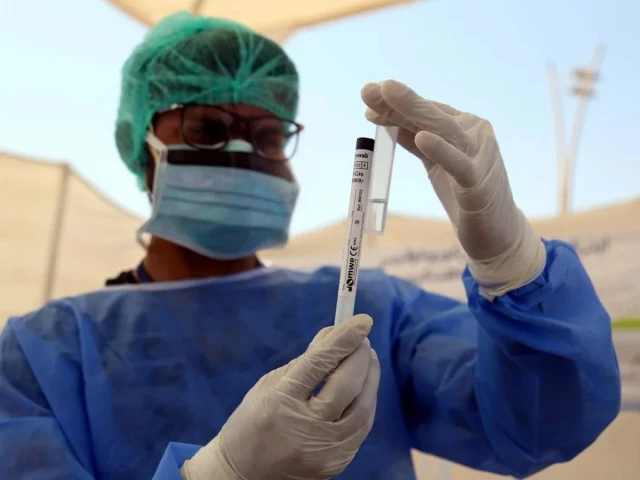
Pakistan has stepped up preparedness measures against the Nipah virus with officials from the National Institutes of Health (NIH) informing a high-level meeting on Thursday that the risk of an outbreak remained low, though the presence of animal reservoirs means it could not be entirely ruled out.
A day earlier, the federal government ordered strict and enhanced health surveillance at all entry points of the country following regional alerts over the Nipah virus, a highly fatal zoonotic disease. In an advisory issued by the heath ministry's Border Health Services, authorities cited reports of suspected Nipah virus cases in India’s West Bengal state and warned of the virus’s potential for cross-border transmission.
Director General (DG) Health Dr Abdul Wali Khan confirmed to The Express Tribune that a high-level meeting on preventive and preparedness measures was held today at the Ministry of National Health Services.
Read More: Pakistan tightens border surveillance over Nipah virus
He said the meeting was convened on the directions of Health Minister Mustafa Kama to review national readiness and ensure that response mechanisms are in place. DG Khan added that NIH officials said the risk of an outbreak remained low, but could not be fully ruled out due to the presence of animal populations.
He further said that they also confirmed that Pakistan had adequate laboratory capacity and diagnostic kits to test suspected cases, but noted that no approved vaccine or specific antiviral treatment existed.
Khan said Health Secretary Mr. Hamed Yaqoob Shaikh apprised the forum that although no Nipah virus cases had been detected in Pakistan in humans or animals to date, the ecological conditions observed in neighbouring countries necessitated continued vigilance and preparedness.
He added that officials reviewed preparedness across federal health institutions, surveillance systems, Border Health Services and major hospitals in the federal capital.
DG Khan said he himself told the meeting's participants that the Nipah virus was a zoonotic pathogen, with fruit bats and pigs as natural reservoirs, and that reported human outbreaks had so far been limited to parts of Asia, beginning in Malaysia in 1999.
He said fruit bats were present in Pakistan, particularly in northern and forested regions, but added that no scientific evidence existed of active Nipah virus circulation or spillover into humans within the country.
Khan said that according to Border Health Services officials at the meeting, enhanced screening of inbound travellers was underway at airports and land crossings, including thermal screening and travel history assessments, particularly for passengers arriving from high-risk regions, although there were no direct flights from countries that had recently reported cases.
Also Read: What to know about the Nipah virus?
He said that executive directors of the Pakistan Institute of Medical Sciences and the Federal Government Polyclinic told the meeting's members that designated isolation facilities were available and trained staff were ready to manage suspected cases under national guidelines.
The DG added that health experts at the meeting reiterated that Nipah was a highly fatal disease, with past outbreaks showing a case fatality rate of 40-75%, often causing severe respiratory illness and brain inflammation.
He further said that according to the federal health secretary, there was no cause for public panic but he urged authorities to remain alert and proactive; directed stronger public awareness campaigns ahead of Ramazan; advised people to wash fruits thoroughly, avoid fallen or partially eaten fruit and refrain from unsafe food-handling practices that may increase exposure to animal secretions, and stressed the need for close coordination between federal and provincial health departments to ensure rapid detection and response.
DG Khan said that the meeting's participants concluded that continued surveillance, border screening, hospital preparedness and public awareness were critical to preventing the introduction and spread of Nipah virus in Pakistan, while reaffirming that the current threat level remained minimal.
Nipah is classified as a priority pathogen by the World Health Organisation because of its ability to spark fast‑moving outbreaks, its fatality rate of 40-75%, and the fact that there is no approved vaccine or cure.
The virus, carried by fruit bats and animals such as pigs, can trigger a deadly brain-swelling fever in humans and can also spread directly from person to person through close contact. Several vaccines are in development but remain in testing.
Nipah was first identified in 1998 during an outbreak among pig farmers in Malaysia and Singapore, although scientists believe it has circulated in flying foxes for millennia and warn that a mutated, highly transmissible strain could emerge from bats.
India regularly reports sporadic infections, particularly in the southern state of Kerala, considered among the world's most at-risk regions for Nipah outbreaks. The virus has been linked to the deaths of dozens of people in Kerala since it first appeared there in 2018.
The West Bengal cases are the state's first in nearly two decades, following five fatal infections in 2007, local media reported.















This material may not be published, broadcast, rewritten, redistributed or derived from. Unless otherwise stated, all content is copyrighted © 2026 The Express Tribune.






COMMENTS
Comments are moderated and generally will be posted if they are on-topic and not abusive.
For more information, please see our Comments FAQ