Twin cities tighten security, suspend transport ahead of US-Iran talks
Updated 1 hour ago

Zardari also signs six other parliamentary laws
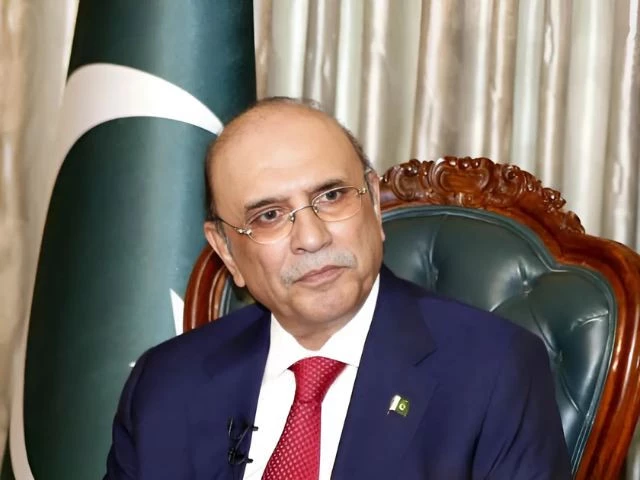
President Asif Zardari on Monday approved seven bills passed by parliament, completing the legislative process for a wide-ranging set of laws, covering taxation, trade, railways, education, social protection and human rights.
The bills are enacted despite earlier objections raised by the Presidency and protests from opposition benches. According to a press release issued by the President's Secretariat, Zardari has now assented the legislation.
The laws include amendments to the National Tariff Commission, Export Development Fund, Transfer of Railways, Income Tax and National Commission for Human Rights laws, alongside the Domestic Violence (Prevention and Protection) Bill and the Daanish Schools Authority Bill.
The assent followed a joint sitting of Parliament last week, chaired by National Assembly Speaker Ayaz Sadiq, during which the bills were passed amid sloganeering, opposition protests and formal presentation of presidential reservations on two key pieces of legislation.
President Zardari had objected to the Daanish Schools Authority Bill, advising that provinces should be consulted before establishing a federal authority, while raising concerns over the Domestic Violence Bill, terming parts of the draft vague and questioning proposed punishments.
Despite those reservations, parliament proceeded with the legislation, paving the way for formal approval, including the long-debated Domestic Violence (Prevention and Protection)
Bill, which introduces a comprehensive legal framework to address abuse within domestic relationships.
The law defines domestic violence broadly, covering physical, emotional, psychological, sexual and economic abuse against women, men, transgender persons, children and other vulnerable individuals, whether in current or former domestic relationships within households.
It clarifies that offences already covered under the Pakistan Penal Code (PPC) will continue to be prosecuted under existing criminal law, while acts not defined there will fall under the new statute, with courts required to assess overall circumstances in each case.
Under the law, offences not covered by the PPC may attract prison terms ranging from six months to three years, fines of up to Rs100,000, and mandatory compensation of at least Rs20,000 for victims, with abettors facing identical penalties.
The statement of objects accompanying the bill cites Pakistan Bureau of Statistics data showing one in three women experiences domestic abuse.
It notes rising cases in the Islamabad Capital Territory, and links the legislation to Pakistan's obligations under the Convention on the Elimination of All Forms of Discrimination Against Women.












This material may not be published, broadcast, rewritten, redistributed or derived from. Unless otherwise stated, all content is copyrighted © 2026 The Express Tribune.







COMMENTS
Comments are moderated and generally will be posted if they are on-topic and not abusive.
For more information, please see our Comments FAQ