'Iqbal's vision still resonates'
Updated 9 hours ago

Govt-trained staff head overseas as hospitals face shortages, citing lack of opportunities
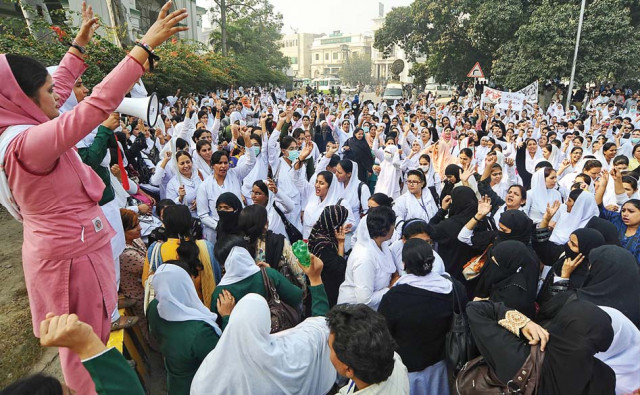
Despite heavy public spending on nursing education and training, a majority of nurses trained at government expense in Sindh are migrating abroad due to a lack of employment opportunities in public hospitals, exacerbating an already severe shortage in the province's healthcare system.
According to an investigation, the Sindh government spends approximately Rs1.6 billion annually on monthly stipends for nursing students enrolled in public and private nursing colleges and schools operating within government hospitals.
Over the five-year duration of nursing education and mandatory house job, this expenditure rises to around Rs8.2 billion. However, due to poor workforce planning and limited sanctioned posts, most trained nurses fail to secure government jobs and are compelled to seek employment overseas.
Each year, around 1,500 nurses graduate from public nursing institutions in Sindh after completing four years of education and a one-year house job. Of these, only 400 to 500 nurses are absorbed into government hospitals, while the remaining majority remain unemployed or leave the country for better-paying jobs and incentives in Gulf and European nations. Currently, the Health Department has only 5,000 sanctioned nursing posts across Sindh, despite a growing patient load in public hospitals.
Research shows that government hospitals in the province face a shortage of nearly 15,000 nurses. In general wards, a single nurse is often responsible for 12 to 15 patients, while ICU nurses are required to attend to more than six patients at a time-well above recommended standards-raising serious concerns about patient care and safety.
At present, Sindh has 21 government nursing schools and over 80 private institutions. Government nursing schools admit 70 to 80 students annually, while private schools enroll about 50 students each. Nursing students in both sectors receive a monthly stipend of Rs 30,000 from the Sindh Health Department. As a result, more than 5,500 nurses graduate annually across the province, costing the government around Rs 1.6 billion per year in stipends alone. Over the full training cycle, this figure reaches Rs 8.2 billion, yet the province continues to lose trained nurses due to the absence of adequate public-sector employment opportunities.
Young Nurses Association Chairman Ijaz Kalhori said that Sindh's public hospitals urgently require at least 15,000 additional nurses due to constant patient pressure. He criticised the unequal doctor-to-nurse ratio in government hospitals and said that the failure to provide jobs to trained nurses is forcing them to leave Pakistan. He urged the government to ensure employment for nurses trained at public expense.
Meanwhile, Sindh Government Liaquatabad Nursing College Principal Irshad Abbasi said that on the directives of Health Minister Dr Azra Pechuho, evening nursing classes have been introduced for the first time in government nursing schools to address the shortage of trained nurses in the province.















This material may not be published, broadcast, rewritten, redistributed or derived from. Unless otherwise stated, all content is copyrighted © 2026 The Express Tribune.







COMMENTS
Comments are moderated and generally will be posted if they are on-topic and not abusive.
For more information, please see our Comments FAQ