Pakistan Navy conducts successful live firing of indigenous anti-ship missile
Updated 1 hour ago

Conservation and restoration of the Sikh-era hammam and adjacent Athdara in Shahi Qila were also completed
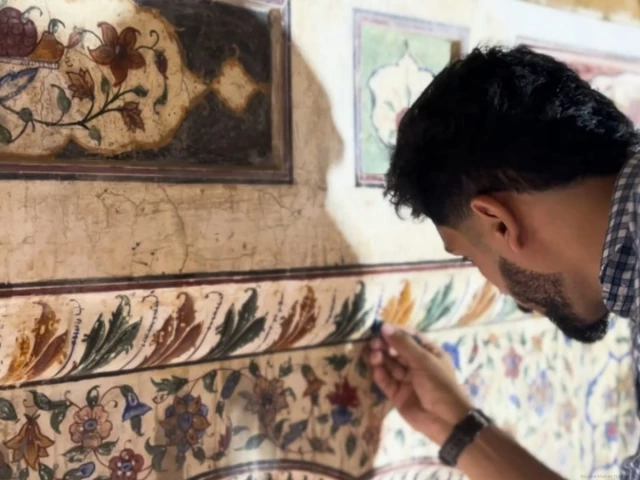
After extensive conservation and restoration work, the centuries-old Loh Temple, the Sikh-era hammam and the Athdara at Lahore’s historic Shahi Qila were formally inaugurated on Sunday.
Located at the foothills of the Shahi Qila, the Loh Temple was discovered in recent years and subsequently underwent detailed excavation, research and conservation. Experts link the site in local tradition to Loh, the son of Shri Ram, after whom Lahore is believed to be named, though they stress there is no authenticated written historical evidence to substantiate the claim.
Researcher Muntaha Ehsan, associated with the Loh Temple conservation project, said stories linking Loh and his twin brother Kaso to the founding of Lahore and Kasur have been passed down for generations. “These narratives should be understood as historical traditions rather than established historical facts,” she said.
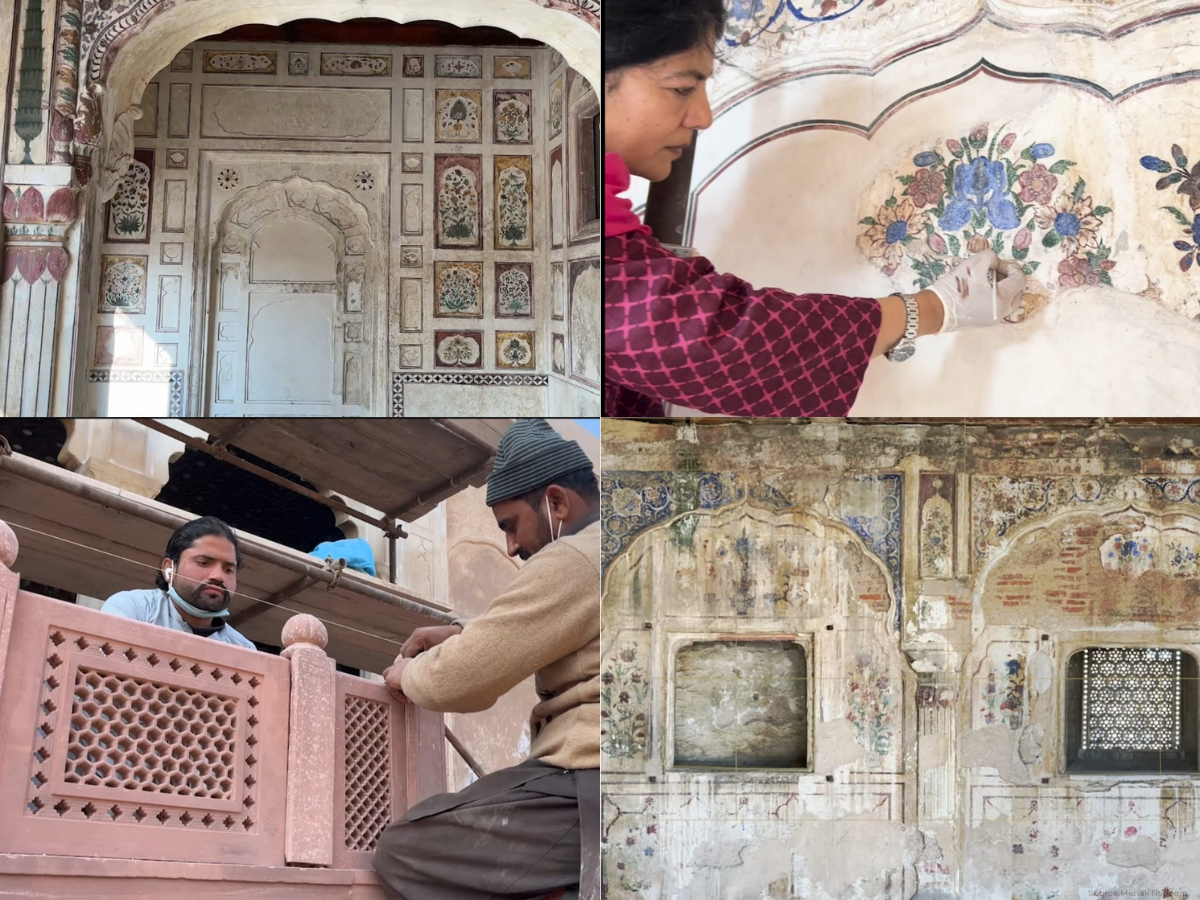
She added that fresco remains were identified during zoning at the beginning of the project, which led to an expansion of the scope and further excavation.
Project engineer Pyar Ali said that when restoration work began, “only the remains of a single room were visible.” Gradual excavation later revealed additional rooms, corridors and courtyards. He said the structure had suffered extensive damage due to water seepage and dampness, making drainage improvement the first priority. “After keeping the building dry for nearly a year, work on the internal structure, plaster and frescoes was initiated,” he added.
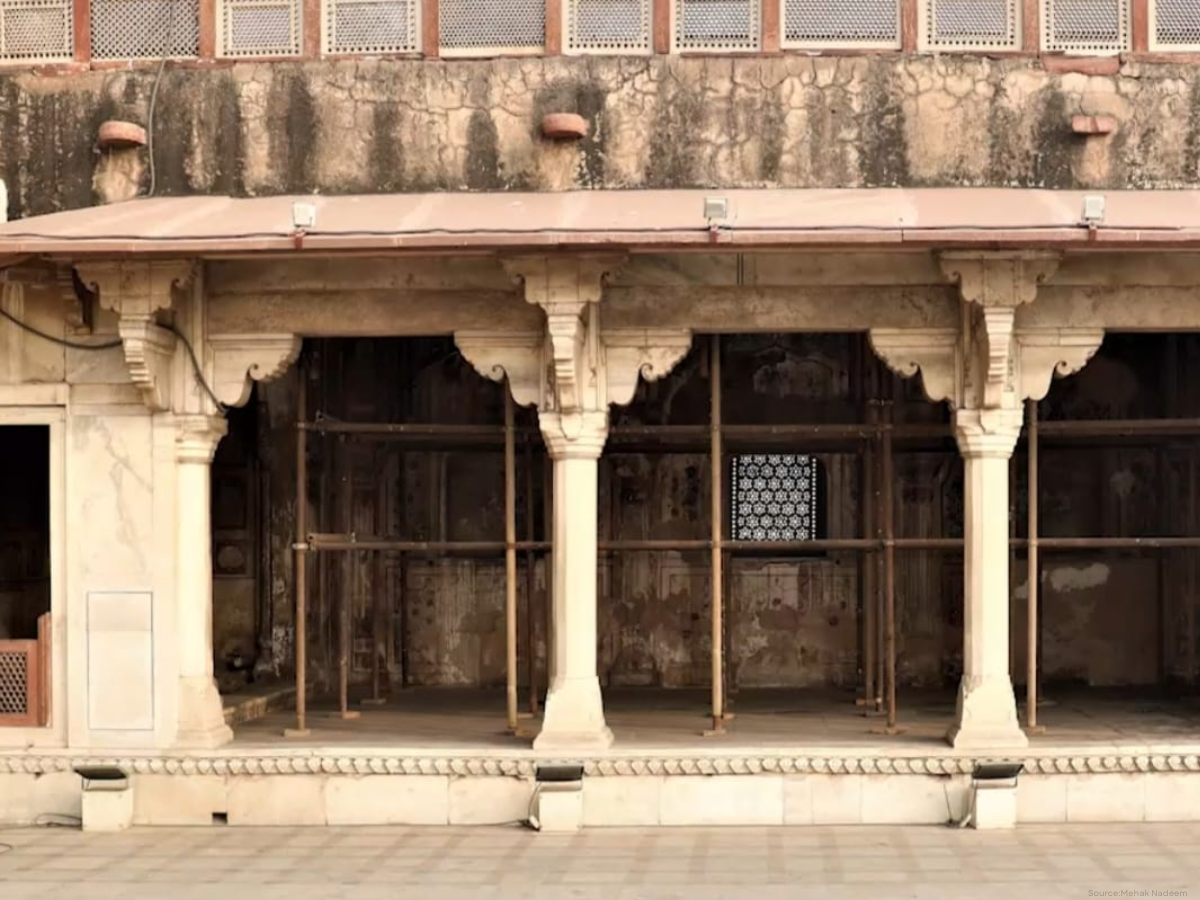
Under the same project, conservation and restoration of the Sikh-era hammam and the adjacent Athdara within the Shahi Qila were also completed. The Athdara served as the pavilion where Sikh ruler Maharaja Ranjit Singh held court, while the hammam is located within the Sheesh Mahal complex.
Director General of the Walled City of Lahore Authority Najm-us-Saqib said the Shahi Qila reflects multiple layers of civilisation. “Remnants from the Hindu period, Mughal era, Sikh rule and the British period coexist here, and we aim to preserve all these layers with equal respect,” he said, adding that new discoveries continue to emerge at every stage of excavation.
Project architect Salma Noorul Amin said the pavilion was originally constructed during the reign of Mughal emperor Shah Jahan and later converted into a hammam during the Sikh period. She said the conservation process involved removing later interventions, stabilising the structure and protecting surfaces. “Floral patterns on the ceiling were highlighted, while completely decayed wooden elements were reinstalled in line with historical standards,” she said.
Director of Conservation Wajahat Ali said Sikh-era paintings were preserved, with colours restored in some areas based on archival evidence. He added that the Athdara features white marble, red stone and wood, along with a distinctive truss-style decorative ceiling.
The project was jointly implemented by the Walled City of Lahore Authority and the Aga Khan Cultural Service Pakistan, with financial support from the United States government. Aga Khan Cultural Service Pakistan Chief Executive Officer Tauseef Khawaja said US assistance played a key role in completing the project. “The funding enabled the preparation and use of rare materials such as glass, stone and marble, which would otherwise not have been possible,” he said, adding that reviving traditional crafts was a key component of the initiative.
Authorities termed the project a major effort to uncover Lahore’s layered past and preserve the region’s shared religious and cultural heritage.
 Addressing the inauguration ceremony, US Consulate General Lahore representative Sandeep Paul congratulated authorities on the restoration of historic structures at the Shahi Qila. He said such initiatives “not only preserve history but also promote harmony and mutual respect among cultures,” adding that the project demonstrated the value of international cooperation.
Provincial Minister for Minority Affairs Sardar Ramesh Singh Arora said Pakistan is home to multiple religions and cultures. “Our ancient civilisations are part of our national identity,” he said, adding that heritage conservation boosts tourism and projects a positive image of the country internationally.
Following the completion of conservation work, the Loh Temple, the Sikh-era hammam and the Athdara have now been opened to the public.










This material may not be published, broadcast, rewritten, redistributed or derived from. Unless otherwise stated, all content is copyrighted © 2026 The Express Tribune.












COMMENTS
Comments are moderated and generally will be posted if they are on-topic and not abusive.
For more information, please see our Comments FAQ