Pakistan played ‘very sincere role’ in US-Iran mediation efforts: PM Shehbaz in Beijing
Updated 1 hour ago

Considers shifting oil price review to a weekly basis

Amid tensions in the Gulf region, the government has planned to import oil through the Red Sea from Saudi Arabia and the United Arab Emirates (UAE) due to the closure of the Strait of Hormuz, while also shifting to a weekly oil price review mechanism.
Sources told The Express Tribune that the government is currently working on various measures to ensure uninterrupted oil supply amid the IranUSIsrael war.
Pakistan imports around one million barrels of oil on a monthly basis, with Saudi Arabia being a key oil exporter to the country. The UAE also exports oil to Pakistan.
Sources said that UAE-based firm ADNOC and Saudi Aramco will supply oil to Pakistan by bypassing the Strait of Hormuz. One refinery has already imported a few shipments through the Red Sea. A couple of oil vessels have reached Pakistan, while others are en route.
As another measure, the government plans to shift the oil price review from the existing fortnightly system to a weekly basis. The objective is to discourage hoarding of petroleum products by dealers.
Sources said the government had projected a possible increase of Rs50 per litre in oil prices following the recent war in the Gulf region.
The United States has been pressuring India to halt oil imports from Russia. Following the war, India reportedly took oil cargoes from Russia in bulk to secure fuel supplies through the Red Sea. Pakistan now also plans to receive supplies from Saudi Arabia and the UAE through the same route.
They added that oil cargo vessels of the Pakistan National Shipping Corporation were placed on standby to lift supplies from Saudi Arabia and the UAE.
The Oil and Gas Regulatory Authority (OGRA) has already ensured high oil stocks to meet the country's 28-day requirement following pre-emptive imports of surplus fuel.
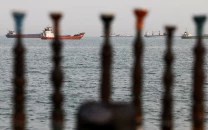
Due to the IranUSIsrael war, two crude oil cargoes were stranded following the closure of the Strait of Hormuz. The strait is 21 miles (33 kilometres) wide and serves as a vital shipping lane through which nearly one-fifth of the world's total oil consumption passes.
On average last year, over 20 million barrels of crude oil, condensate and fuel were transported daily through the strait. OPEC members such as Saudi Arabia, Iran, the UAE, Kuwait and Iraq use this route to export most of their crude, mainly to Asia.
"However, we have managed stocks of petrol and diesel sufficient to meet the country's requirements," sources told The Express Tribune, adding that Pakistan currently holds 28 days' stock of both products.
Officials said the regulator had already forecast in January that tensions in the Middle East could escalate into war between Iran, the US and Israel. "Therefore, we ensured oil stocks for over 25 days in January and 28 days in February through surplus fuel imports."
Experts, however, warned that the entire world could face an oil crisis if the war continues for a week. "Our two crude oil cargoes have been stuck due to the closure of the Strait of Hormuz," a source said, adding that remaining imports were scheduled for later.
The Petroleum Division had earlier directed OGRA to ensure adequate stocks of crude and petroleum products (MS, HSD and LPG) to avoid supply disruption. Imports were also ordered to be closely monitored for timely delivery due to the emerging security situation in the Gulf.














This material may not be published, broadcast, rewritten, redistributed or derived from. Unless otherwise stated, all content is copyrighted © 2026 The Express Tribune.










COMMENTS
Comments are moderated and generally will be posted if they are on-topic and not abusive.
For more information, please see our Comments FAQ