Water pollution monitoring lacks public transparency
Updated 1 hour ago

MNAs from across party lines call for urgent policy formulation to curb such crimes as scams take new forms
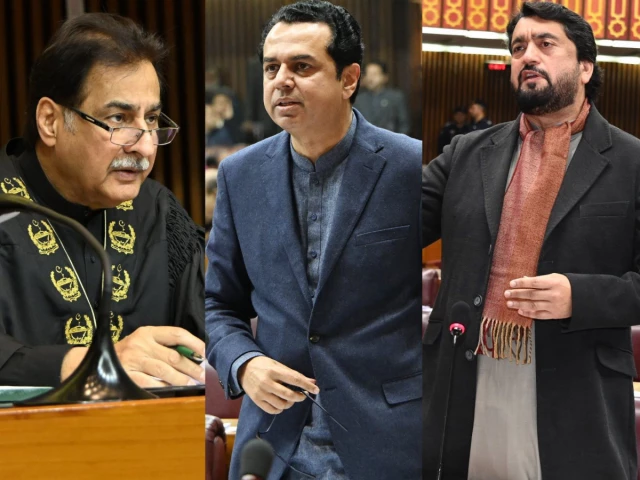
Members of the National Assembly on Friday expressed serious concern over rising incidents of digital and cyber scams across the country with lawmakers from across party lines calling for urgent policy formulation to curb such crimes.
During the session, chaired by NA Speaker Sardar Ayaz Sadiq, several members highlighted incidents affecting ordinary citizens, underlining the growing severity of cyber fraud.
Jamiat Ulema-e-Islam Fazl MNA Naeema Kishwar highlighted increasing cases of WhatsApp accounts being hacked. “We receive messages that a member’s phone has been hacked and demands for money are being made. This has become routine. What steps can be taken to control it?” she asked.
Drawing attention to another form of fraud, she said criminals were now tricking people under the pretext of parcel deliveries. “A new scam has started: they ask you to resend your number, claiming a parcel will be delivered. This has happened to me three or four times,” she added.
قومی اسمبلی اجلاس کے وقفہ سوالات کے دوران رکن قومی اسمبلی محترمہ نعیمہ کشور خان کا سوشل میڈیا ایپلیکیشن واٹس ایپ کے ذریعے فراڈ اور دیگر آن لائن سکیمز/فراڈ کی روک تھام کے لئے حکومت کی جانب سے اٹھائے گئے اقدامات کے حوالے سے سوال
— National Assembly 🇵🇰 (@NAofPakistan) January 16, 2026
وزیر مملکت برائے داخلہ و انسداد منشیات، طلال چوہدری… pic.twitter.com/MNPZe8hUFZ
She warned that such activities were creating serious problems, particularly in the education sector and other key government departments.
Endorsing her concerns, Speaker Sadiq, while referring to Minister of State Talal Chaudhry, noted that similar scams involved funds for the Benazir Income Support Programme and fake parcel deliveries. He cited an incident in which Kishwar was falsely targeted for money demands despite never seeking any funds.
Minister of State for Interior Talal Chaudhry said that changes in WhatsApp's features had contributed to a surge in hacking complaints, adding that the restoration of a security feature had since led to a decline in such cases.
PTI MNA Sheharyar Afridi also expressed worry, particularly over the risks faced by children. He said links sent via WhatsApp, Instagram and Snapchat often contained blasphemous or anti-state content.
“Senders use names of universities, colleges, madressas or organisations. When children reply, they are asked to send links in exchange for detailed information,” he explained.
Afridi warned that most children, especially in rural areas, were unaware of the dangers, with some even facing jail terms, causing distress to their families. “It’s not just boys, but also girls who become victims of this,” he added.
قومی اسمبلی کے اجلاس کے وقفۂ سوالات کے دوران رکن قومی اسمبلی شہریار خان آفریدی نے عوام بالخصوص نوجوانوں کو سوشل میڈیا ایپلیکیشنز پر موصول ہونے والے خطرناک، توہین آمیز، جعلی اور دھوکہ دہی پر مبنی لنکس کے حوالے سے سوال اٹھایا، جن کے جواب دینے کے نتیجے میں معصوم نوجوانوں اور شہریوں… pic.twitter.com/S9bKZyzgrc
— National Assembly 🇵🇰 (@NAofPakistan) January 16, 2026
Chaudhry described such networks as a "mafia" using blackmail tactics and said many suspects had been released following investigations. “Many have been freed from jail, and numerous cases have been closed,” he said, adding that cases involving religious matters remained particularly sensitive and put pressure on judges and officials.
The NA speaker asked the minister to provide a detailed briefing, referring to an incident involving MNA Nikhat Shakeel. “A message was sent in her name asking for money while claiming she was outside a PC (Pearl Continental). She had no knowledge, yet people sent her millions of rupees,” he said.
Speaker Sadiq said the scams were highly organised, with criminals using computers instead of mobile phones and discarding chips after use. He also revealed that his voice had been cloned and used to demand money. “The person called me and I confirmed I had never asked for money. The voice in the message was identical to mine,” he said.
قومی اسمبلی کے اجلاس کے وقفۂ سوالات کے دوران رکن قومی اسمبلی محترمہ شازیہ مری نے ملک میں شہریوں کو آن لائن جعلی ٹریفک چالان موصول ہونے سے پیدا ہونے والے مسائل کے حوالے سے سوال اٹھایا۔
— National Assembly 🇵🇰 (@NAofPakistan) January 16, 2026
وزیر مملکت برائے داخلہ و انسداد منشیات، طلال چوہدری نے ان کے سوال کا جواب دیا#NASession… pic.twitter.com/2lqao7R36t
PPP MNA Shazia Marri highlighted another scam involving fake traffic challans circulating via text messages and WhatsApp that displayed overspeeding violations and demanded Rs500.
She said her sister, Senator Quratulain Marri, had never been to Lahore but received a challan. The PPP MNA added that thousands of people receiving such messages might eventually believe they had committed a violation.
Providing official figures regarding the crimes, the state minister informed the NA that more than 150,000 cybercrime complaints were reported nationwide in 2025. Responding to a question by MNA Erum Hamid, he said the National Cyber Crime Investigation Agency (NCCIA) received 150,542 complaints during the year, including 81,996 related to financial fraud and 2,974 concerning WhatsApp account hacking.
He said cyber-enabled financial crimes remained a major challenge, ranging from fake investment schemes to account takeovers and online impersonation.
The minister said the government had launched multiple initiatives to promote digital literacy and cyber awareness among vulnerable groups, including rural populations, women, elderly citizens and low-literacy communities. These included a public awareness and reporting portal (nccia.gov.pk), a dedicated cybercrime helpline (1799), and outreach programmes with schools and academic institutions.
On emerging threats, he said the government was finalising the country's first national AI policy, acknowledging that deepfake and voice-cloning scams posed rapidly evolving risks, requiring stronger technical, legal and public-awareness responses.
Giving details of enforcement action, Chaudhry said 10,756 formal inquiries were initiated after scrutiny of complaints, leading to the registration of 851 cases. A total of 1,095 suspects were arrested so far, with financial crimes involving Rs2.716 billion, of which Rs452.376 million were recovered.
The NA was told that the Ministry of Interior, in coordination with relevant agencies, was working to strengthen legal, technical and institutional frameworks to counter cybercrime and improve protection for citizens in an increasingly digital environment.






This material may not be published, broadcast, rewritten, redistributed or derived from. Unless otherwise stated, all content is copyrighted © 2026 The Express Tribune.








1727268465-0/Untitled-design-(42)1727268465-0-208x130.webp "the poor man s burden")


COMMENTS
Comments are moderated and generally will be posted if they are on-topic and not abusive.
For more information, please see our Comments FAQ