FinMin expects continuous progress under GSP+
Updated 9 hours ago

Remittances subsidise domestic consumption; productive sectors wither away
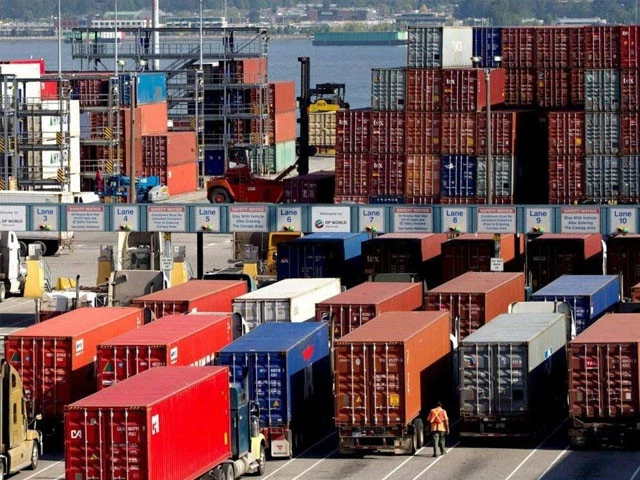
While Pakistan celebrates record-breaking remittances that touched $3.59 billion in December 2025, a troubling economic reality lurks beneath the surface. The country's export sector continues its downward spiral, exposing a dangerous dependency on overseas workers rather than productive economic activity.
The contrast has become evident as recent data showed remittances growing by 16.5% year-on-year in December, while exports plummeted 20.4% to just $2.32 billion during the same month. This stark divergence has raised alarm bells among industry leaders, who warn that the country cannot rely indefinitely on money sent home by migrant workers.
Mudassar Masood Chaudhry, former executive committee member of the Lahore Chamber of Commerce and Industry (LCCI), highlighted the structural weaknesses plaguing Pakistan's economy. According to Chaudhry, the country has suffered from an overvalued exchange rate for prolonged periods, while the investment-to-GDP ratio remains unusually low, indicating that consumption has reached unsustainable levels.
"The increase in remittances is welcoming, but on the other hand, the export sector is continuously weakening," Chaudhry said. He suggested that when remittances increase, the central bank should not allow them to flow unrestrictedly into consumption but should instead build foreign exchange reserves. "The government needs to create an FDI policy that channels capital into technology, export and productive sectors, while discouraging speculative investment in low-productivity sectors like real estate," he added.
Analysts and economists offered a more critical assessment of the situation, saying Pakistan's economic model has become dangerously lopsided. They noted that the economy is increasingly being sustained by poor workers who leave the country in search of better opportunities, while the domestic industrial base continues to erode due to the absence of an effective policy framework to reverse the trend. This, they argued, is not sustainable development but managed decline disguised as stability.
The numbers paint a sobering picture. During the first six months of FY26, Pakistan's trade deficit expanded by nearly 35% to $19.20 billion, as exports fell by 9% while imports rose by 11%. The textile sector, which accounts for more than half of Pakistan's exports, has also seen its share decline, signalling deeper competitiveness issues.
Remittances have become the lifeline of Pakistan's external account. In FY25, overseas Pakistanis sent home a record $38.3 billion, up from $30.3 billion the previous year. These inflows have helped stabilise foreign exchange reserves, which reached $21.01 billion by late December 2025, the highest level since March 2022. The reserves provide an import cover of approximately 2.6 months, offering a temporary cushion against external shocks.
However, Chaudhry pointed out a troubling irony in this arrangement. "The money sent by poor workers who leave the country in search of employment is being used to maintain the foreign purchasing power of the wealthy class," he said. "This practice must be abandoned; duties should be imposed on luxury imports as much as possible because this behaviour weakens the country's foreign exchange reserves."
The government has acknowledged the need to boost exports, with Finance Minister Muhammad Aurangzeb previously setting an ambitious target of $35 billion in remittances for the current fiscal year. However, concrete measures to revive the export sector remain elusive. Analysts suggest that without addressing fundamental issues such as high energy costs, outdated technology and a lack of innovation, Pakistan's export competitiveness will continue to deteriorate.
They added that Pakistan must transition from a consumption-driven economy propped up by remittances to a production-based economy that generates sustainable foreign exchange through exports. This, they said, requires policy interventions that incentivise productive investment, modernise industrial infrastructure and create an enabling environment for exporters.
"Correct policies can reverse these trends, but time is running out. The longer Pakistan delays structural reforms, the deeper it sinks into a dependency trap where overseas workers subsidise domestic consumption while productive sectors wither away. The question is not whether Pakistan can survive on remittances alone, but how long before this model collapses under its own contradictions," Chaudhry added.













This material may not be published, broadcast, rewritten, redistributed or derived from. Unless otherwise stated, all content is copyrighted © 2026 The Express Tribune.








COMMENTS (2)
Comments are moderated and generally will be posted if they are on-topic and not abusive.
For more information, please see our Comments FAQ