Gold drops by Rs5,200 per tola as global prices tumble
Updated 8 hours ago

Dar-led panel to review proposals as ministry pushes refunds, export dashboard
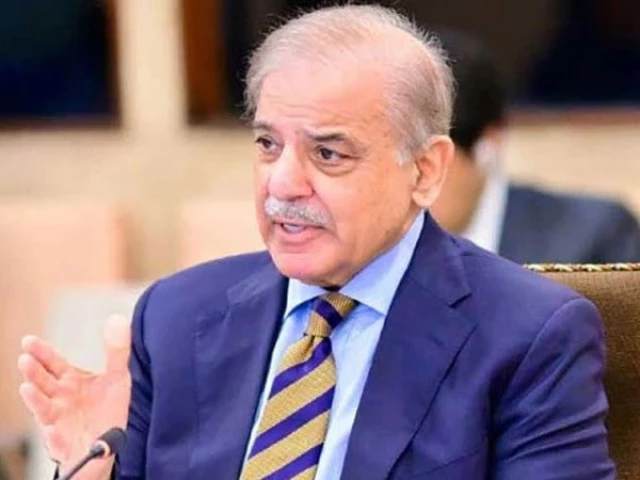
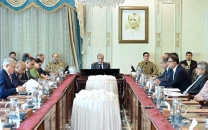
Prime Minister Shehbaz Sharif has established a high-level committee to consider a proposal to declare an export emergency to double earnings to $60 billion by removing bottlenecks such as delays in releasing genuine tax refunds, Planning Minister Ahsan Iqbal said on Monday.
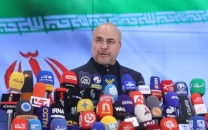
Addressing a press conference, Iqbal said a committee had been constituted under the chairmanship of Deputy Prime Minister Ishaq Dar to review proposals aimed at enhancing exports. The planning ministry had last month given a detailed briefing to the civil and military leadership on finding ways to end dependence on the International Monetary Fund (IMF). The proposals included doubling exports to $60 billion within four years.
The prime minister must declare an export emergency, establish a Prime Minister's Hotline for exports and maintain a PM's dashboard to ensure payment of tax refunds within 30 days, the planning minister said while addressing the press conference.
Iqbal addressed the media days after the Federal Board of Revenue (FBR) sustained a Rs330 billion tax shortfall despite paying 47% fewer refunds in December. The lower-than-estimated shortfall has reduced the chances of a mini-budget, but it has come at the cost of an already overburdened existing class of taxpayers.
Details gathered from field formations suggested that, in addition to income tax advances, the FBR's field formations in Lahore, Islamabad, Karachi, Multan, Peshawar and Rawalpindi collected around Rs100 billion in indirect tax advances to come close to the half-year target. Due to the FBR's poor performance, both provincial and federal governments are suffering, he said, adding that the Ministry of Finance had been withholding the release of the development budget.
Iqbal said that during the first half of the fiscal year only Rs210 billion, or 21% of the annual budget, could be spent. However, he said the trend was on an upward trajectory and spending would pick up in the second half after further releases by the finance ministry.
The planning minister said the Dar-led committee would submit its final recommendations to the prime minister next week to enhance exports.
He said the only way Pakistan could avoid approaching friendly countries and the IMF for bailouts was to raise exports to $60 billion in four years and to $100 billion over the next decade.
"If exports are not increased to over $60 billion, we will have to go to friendly countries and if they refuse too, we will again have to go back to the IMF," Iqbal said
Pakistan currently owes nearly $13 billion in short-term loans to friendly countries, taken by successive governments to avoid default or meet external financing requirements set out by the IMF.
Iqbal further said national holidays for the export industry should be declared optional in consultation with labourers, as disruption in the export cycle causes losses worth hundreds of millions of rupees. In a briefing to the prime minister, the planning ministry also suggested that PM Sharif should stand behind the top 200 firms with the highest export potential and visit one leading exporter every fortnight. The ministry sought directions for the Board of Investment to fast-track activation of high-quality special economic and industrial zones.
It also proposed directing the Ministry of Commerce and the Ministry of Foreign Affairs to present an economic diplomacy and restructuring plan to turn Pakistani diplomatic missions into trade missions.
The planning ministry sought directions for the Ministry of Overseas Pakistanis to provide a plan for partnering with the diaspora on investment, knowledge-sharing and export development.
Effective mobilisation of joint ministerial commissions and reviews of free trade agreements for export development were also suggested to the leadership.
According to other recommendations, the prime minister was requested to direct the ministries of industries and production, national food security and research, foreign affairs and commerce to restructure and reorganise their operations to align with the economic agenda through value addition, diversification of products and markets, and increased global market share.
The choice, Iqbal said, was between a business-as-usual approach that would increase the size of the economy to $600 billion by 2035 or adopting an aspirational approach to achieve a $1 trillion economy. Pakistan's exports increased only 4.1 times over the past 24 years, compared with Vietnam's 26-fold increase, according to the briefing to the prime minister.
Pakistan captures only a fraction of global potential across high-opportunity sectors. The largest gaps and highest leverage points are in value addition in textiles and agriculture, formalisation and scaling of information and services, and industrial diversification into engineering goods.
Iqbal reiterated that the economy had stabilised and posted first-quarter growth of 3.7%.
He said people were criticising the gradual increase in economic growth, but the government would not pursue an import- and consumption-led growth model that could again result in a balance-of-payments crisis. Iqbal said inflation had stabilised, while large-scale manufacturing grew 5% during the first four months of the current fiscal year.
Responding to a question about an Economic Policy and Business Development think tank's brief claiming the 3.7% growth existed only on paper, Iqbal said the growth figures had been finalised under an internationally attested and authentic procedure that ensured transparency.







This material may not be published, broadcast, rewritten, redistributed or derived from. Unless otherwise stated, all content is copyrighted © 2026 The Express Tribune.






COMMENTS (1)
Comments are moderated and generally will be posted if they are on-topic and not abusive.
For more information, please see our Comments FAQ