From Pulwama to Pahalgam
Updated 12 hours ago

What was once called the City of Flowers is now a city under siege
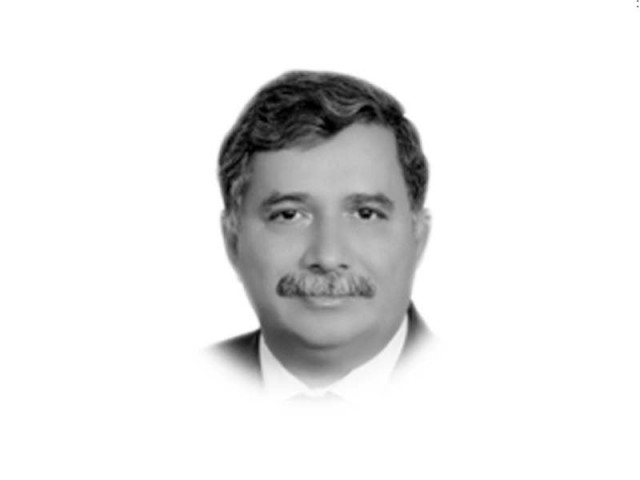
My beloved Peshawar! What was once proudly called the City of Flowers now lives like a city under siege. From time to time, the air reverberates with grim reminders of the age we inhabit: suicide bombings, armed assaults on security installations and sudden lockdowns that paralyse daily life. Not long ago, an attack targeting the Frontier Constabulary headquarters once again jolted the city, followed by reports of militants attempting to force their way in and exchanges of fire. For many, such incidents are shocking. For me, they are painfully familiar.
Having commanded operations in Swat, and later in Mardan, I have lived through such moments more times than I care to remember. I was once myself the target of a suicide attack. My guards embraced martyrdom; I survived by the narrowest of margins, the severed head of the bomber landing before my vehicle. Long before and long after that day, I found myself in fierce engagements with militants. In Swat during 2007-08, death was a daily companion. Even today, despite multiple operations — many of them successful — we continue to live under the choking pressure of terrorism. The cumulative psychological effect of this prolonged violence has been devastating.
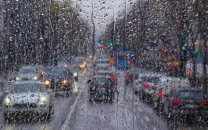
While traveling from Hayatabad towards University Road, or Ring Road towards Cantonment, I find every route blocked. Roads are choked, diversions stretched endlessly, and life in my beloved city appears frozen in fear. Scenes like these are no longer exceptional; they have become routine. I keep wondering: how long will Peshawar continue to bear the wounds of violent extremism? Why has our homeland remained a theatre of war for over four decades? Why are we trapped in cycles of regional conflicts and rivalries of global powers? Why do social orders elsewhere enjoy peace and stability while we reap the whirlwind — and who will answer for this?
Those questions weighed heavily on my mind as I find myself trapped in suffocating traffic near multiple check posts. Armed personnel moved with tense precision, their glances scanning each vehicle. The relentless honking of frustrated drivers, the metallic clang of barriers being opened and shut, and the oppressive air of suspicion create a scene far removed from the Peshawar I grew up in.
It was not always like this. There was a time — not too long ago, yet distant enough to feel like another lifetime — when the streets flowed freely, like rivers of possibility. I remember gliding through the city unburdened and unwatched. Shahi Bagh and Company Bagh were alive with the fragrance of flowers, the laughter of children and the melody of nightingales. Freedom was not a luxury; it was the air we breathed.
Then, gradually but decisively, terrorism altered everything. It crept into our lives like a poisonous fog and settled deep within the fabric of our existence. With every attack — whether a suicide bombing, a targeted killing or a security alert — another layer of trust was peeled away. Check posts appeared one by one, until they formed a parallel geography of fear across the city.
At places like the Michni Check Post on Warsak Road, the scene remains unchanged: long queues of vehicles inching forward, dust rising, engines overheating, tempers fraying. Drivers roll down their windows mechanically, flashing identity cards as if reciting a ritual. Uniformed men, burdened with heavy gear and heavier responsibilities, wave them on with expressions etched by exhaustion. The process is routine — yet each gesture is a stark reminder of how much our world has shrunk.
The rhythm of the city has shifted from the gentle cadence of ordinary life to the fractured beat of survival. Every journey, even the most mundane, carries an undercurrent of anxiety. Every checkpoint reminds us that it is not just the city that is under siege — it is our collective psyche.
And yet, amid this suffocating reality, the longing for the past persists. I yearn for a time when movement felt like poetry rather than a staccato sequence of stops and searches; when one could lose oneself in old bazaars without fear pressing on the shoulders.
As I stuck at these bottlenecks, I close my eyes and recall the Peshawar of my childhood: the scent of jasmine, the taste of fresh sugarcane juice, the call to prayer drifting gently across rooftops. For a brief moment, the horns fade and the chaos blurs — until reality intrudes again with a tap on the window and a demand for identification.
This siege is not merely physical. It is psychological. It has reshaped the character of our people. Where once hospitality defined us, suspicion now prevails. Where nights were alive with song and conversation, they are subdued, sometimes broken by sirens or sudden restrictions.
Yet even in this darkness, resilience endures. People adapt. They survive. A shared smile, a child's laughter, quiet gatherings that refuse to surrender humanity — these are the embers that keep the city alive.
Still, the heart aches for what has been stolen. It aches for the innocence of a time when Peshawar evoked flowers and poetry, not checkpoints and alerts. As I inch forward in yet another queue, I realise that remembering the past is both comfort and wound. But perhaps, in remembering, we keep alive the hope that one day the walls will come down, the guns will fall silent, and the city of flowers will bloom again.










This material may not be published, broadcast, rewritten, redistributed or derived from. Unless otherwise stated, all content is copyrighted © 2026 The Express Tribune.

COMMENTS (6)
Comments are moderated and generally will be posted if they are on-topic and not abusive.
For more information, please see our Comments FAQ