US-Iran conflict and global disorder
Updated 18 hours ago

.
The question posed in the title of this essay can only be answered speculatively. In doing so I will speculate about the world Pakistan will find at the beginning of 2026. The change in the global order Pakistan will face is the result of natural events as well as changes that are the result of what policymakers working from the world's major capitals have done in the year that is now a part of history. As I have written before, three of Pakistan's four immediate neighbours have adopted religion as the main force of governance. Afghanistan, China, India and Iran are the four neighbours. Of these, only China has remained secular.
Those who manage Pakistan's affairs must also take into account the possibility of an era of regional and global wars. By invading Venezuela and arresting Nicolas Maduro and his wife, Donald Trump has ignited a debate among historians about the origin of wars. The most quoted work on the subject of wars is the book by Carl von Clausewitz published in 1833. The book carried the simple title of On Wars. It is a description of the origin of armed conflict, and the writings of Clausewitz are being recalled by scholars who have studied wars and are studying them now.
Wars, according to a Princeton University historian, "are a continuation of policy by other means." Historians go back to the unravelling of the world order that had kept peace in the 19th century. The order ended with two catastrophic wars — the first and second world wars — fought between 1914 and 1918 and again between 1939 and 1945. Both wars claimed millions of lives not just among those who were fighting but also those who did not carry arms but lived in the areas of conflict. This human toll persuaded the leaders of the time to create structures that would lead to debate among nations before picking up arms to fight.
The first attempt was to create the "League of Nations", but the effort was derailed by the American leadership who decided not to participate. The second global conflict created institutional structures that have lasted for 80 years. These include the United Nations, which gave membership to all independent countries. As their number increased with decolonisation, so did the membership of the UN. The UN arrangement left war and peace matters to the Security Council that has five members who wield veto power, which meant any of these members could block moves by the Council. This has happened on many occasions.
The British economic historian, John Maynard Keynes, who had studied the arrangements put together by the victors of the First World War, convinced the victors of the second global conflict to create institutions that would not plunge the world economies into financial and economic chaos. This led to the founding of the International Monetary Fund, the IMF, and the International Bank for Reconstruction and Development, the IBRD. Over time, the IBRD developed into today's World Bank Group, WBG. The World Bank's success in promoting development led to the creation of regional banks and the Islamic Development Bank.
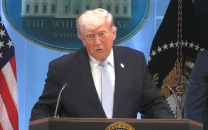
The post-Second World War global order has lasted for 80 years, from 1945 to the present. The seeds of its possible destruction were sown by the American president, Donald Trump, who took up residence for the second time in the White House on January 20, 2025. This was the beginning of his second term having lost the election to be re-elected in 2016 to Senator Joe Biden. Trump blamed the election he lost to rigging by the people who exercised enormous amounts of power in Washington. His claim that his loss was not legitimate led to the assault on the Capitol, the house of the US Congress, on January 6, 2017. This day would occupy an important milestone in the history of the United States.
Trump's actions in the nearly one year he has spent in office bring me to the work of Thomas Aquinas, in particular his 13th century work in which he laid down three cardinal requirements that came together to be called the "just war theory." The principles stated that wars must be waged though the lawful operation of a sovereign and must not be by a collection of individuals who are looking for personal gains. The latter defined the violence created by mafias. The second principle was that wars must be waged for a legitimate cause. The third, related to the second, was that the cause being pursued must be a just purpose, namely the advancement of good and the avoidance of evil.
David French, who writes columns for The New York Times, published one on January 8, 2026, six days after Trump ordered American troops to invade Venezuela. He wrote: "one way to think about the shifting patterns of warfare is that humanity seesaws between Acquinas and Clausewitz. Strong nations impose their will on the weak and then — eventually — try to impose their will on one another. When catastrophe results, as it invariably does, they turn back to Aquinas. You can actually see the results of this shifting approach across the sweep of history. An analysis of global deaths in conflict shows that war is always with us, but its intensity waxes and wanes. Periods of extreme suffering and death are followed by periods of relative calm, followed again by an age of horror."
Much of this analysis applies to Pakistan, a militarily weak state compared to the relative strengths of those that rule the world. Those who now rule include, in addition to the United States, China and perhaps Russia. I don't include India in that category after its encounter with Pakistan in May of last year when it attacked various bases in Pakistan to punish its neighbour for the deaths of many Hindu tourists in an attack for which New Delhi blamed Pakistan. This, it said, was carried out by groups Pakistan was hosting on its soil. Pakistan responded by sending into air the fighter aircrafts it is manufacturing with China's assistance. They brought down seven Indian fighter jets. This conflict could have turned into a nuclear encounter, but Trump"intervened", as he says. He spoke with those in policy-making positions in the Indian and Pakistani capitals to ask them to, as the Americans would say, "cool it." They did.









This material may not be published, broadcast, rewritten, redistributed or derived from. Unless otherwise stated, all content is copyrighted © 2026 The Express Tribune.


COMMENTS (6)
Comments are moderated and generally will be posted if they are on-topic and not abusive.
For more information, please see our Comments FAQ