Afridi awaits Imran's signal for Islamabad move
Updated 1 hour ago

Millions remain without affordable and adequate shelter, warn experts
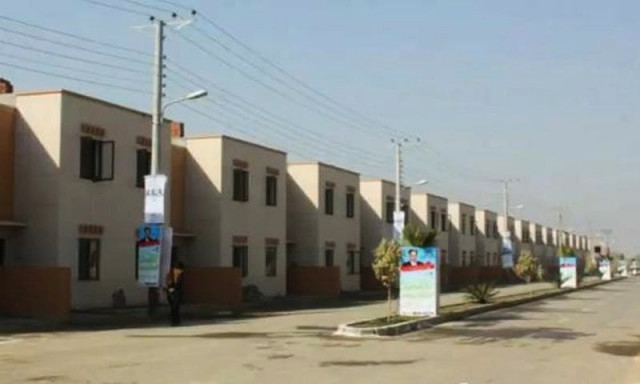
The Pakistan Institute of Development Economics (PIDE) hosted a policy seminar titled "National Housing Policy: A Framework for Affordable, Inclusive, and Sustainable Shelter for All" at its Islamabad campus to examine Pakistan's escalating housing crisis and discuss the policy measures needed to address it.
Dr Malik Asghar Naeem, Coordinator of the National Housing Policy Working Group and Chief Planner at the Federal Government Employees Housing Authority (FGEHA), delivered the keynote address. He emphasised that housing is a fundamental human right and a collective national responsibility.
Highlighting the severity of the situation, Dr Naeem noted that rapid population growth and accelerating urbanization have created a housing shortfall of nearly 910 million units. He further observed that around 50 per cent of Pakistan's urban population now resides in slums and informal settlements, including katchi abadis. Low- and middle-income households remain the most affected due to inadequate access to affordable housing, weak housing finance systems, regulatory deficiencies, and increasing climate-related vulnerabilities.
The seminar was moderated by Usama Abdul Rauf, Assistant Chief (Policy) at PIDE, and brought together policymakers, academics, researchers, and development practitioners. Participants explored the structural causes of housing shortages and considered strategies for promoting inclusive and sustainable housing development.
Speakers reiterated that housing is recognised as a basic human right under Article 25 of the Universal Declaration of Human Rights, to which Pakistan is a signatory. Despite this commitment, the country continues to struggle to provide adequate and affordable shelter to large segments of its population. Dr Naeem explained that the process of updating the National Housing Policy was initiated on the directive of the Prime Minister to revise the outdated policy framework introduced in 2001.
Providing insight into the policy formulation process, Dr Naeem stated that the National Housing Policy 2025 is currently in its final draft stage and is expected to be presented to the federal cabinet shortly. The policy has been developed through a multi-stakeholder, evidence-based approach, involving extensive consultations with experts from academia, urban planning institutions, civil society, and international development partners, including UN-Habitat, the World Bank, and the Japan International Cooperation Agency (JICA). These collaborations were aimed at ensuring practical relevance and alignment with global best practices.
Addressing governance concerns following the 18th Constitutional Amendment, Dr Naeem clarified that while housing is primarily a provincial subject, the national policy is intended to function as an overarching framework. It will facilitate coordination among federal, provincial, and local governments while preserving the autonomy of provinces to design and implement region-specific initiatives.
The seminar identified major shortcomings in the 2001 policy, such as the lack of compact, mixed-use, and high-rise development strategies; insufficient attention to land scarcity; absence of climate-resilient and energy-efficient housing provisions; limited corporate sector participation; weak land banking mechanisms; and inadequate implementation and monitoring systems.















This material may not be published, broadcast, rewritten, redistributed or derived from. Unless otherwise stated, all content is copyrighted © 2026 The Express Tribune.








COMMENTS
Comments are moderated and generally will be posted if they are on-topic and not abusive.
For more information, please see our Comments FAQ