Afghan hackers breach Indian media network, air political message rejecting Taliban-India ties
Updated 47 minutes ago

Lawyers question transparency of judicial appointments, say FCC's credibility already eroded
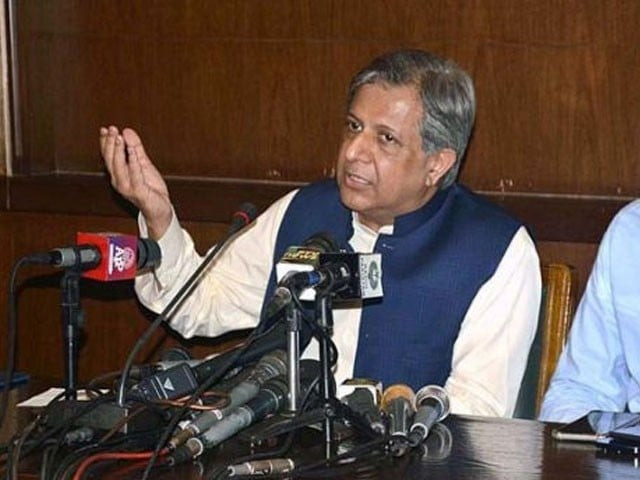
Responding to a critical report by Amnesty International, Law Minister Azam Nazeer Tarar on Thursday defended the 27th Amendment, arguing that the creation of the Federal Constitutional Court (FCC) — the central feature of the tweak has consolidated the federation rather than undermined judicial independence.
The law minister made the remarks while attending a book-launching ceremony of Talat Abbas at the Supreme Court Bar Association (SCBA).
During his address, Tarar referred directly to Amnesty International's report, which describes the 27th amendment as an attack on judicial independence, the right to a fair trial and the rule of law.
"The amendment violates international human rights law, particularly undermining the independence of the judiciary, right to fair trial and justice and accountability," the report says.
Rejecting these assertions, Tarar said that the creation of the FCC was envisaged in the Charter of Democracy (COD) signed by the two major political parties, Pakistan Muslim League-Nawaz (PML-N) and Pakistan Peoples Party (PPP).
He added that critics often ignore Pakistan's past, when, according to him, the Supreme Court misused the public interest jurisdiction under Article 184(3) of the Constitution and prime ministers were sent home through judicial orders.
Questioning the basis of the criticism, the law minister argued that a 13-member Federal Constitutional Court with equitable representation from all four provinces, along with one judge from Islamabad, promotes unity, transparency and fairness in the judicial system.
Tarar maintained that history would ultimately judge the parliamentary decision to establish the FCC as a positive and necessary step.
However, senior members of the legal fraternity believe that the law minister failed to address the core concerns raised by Amnesty International regarding the manner in which the FCC was constituted.
According to the Amnesty report, the first batch of judges of the Federal Constitutional Court and its chief justice were appointed by the president on the advice of the prime minister, bypassing the Judicial Commission of Pakistan (JCP) process under Article 175A of the Constitution.
The report states that these initial appointments raise concerns about direct political interference by the executive branch.
The report further notes that concerns persist for future appointments given the composition of the JCP after the 26th constitutional amendment, where members of parliament outnumber judicial members and can therefore dictate future appointments.
It cites the UN Special Rapporteur on the independence of judges and lawyers, who observed that "there is a risk of court capture when laws establish that political branches should be involved in selecting judges to hear certain politically sensitive cases".
Amnesty also pointed out that the president has the authority to determine the number of judges of the FCC, allowing the ruling government to alter the court's composition if certain judges are considered unfavourable.
The report adds that these apprehensions deepened when the chief justice and the first four judges of the FCC were sworn in on November 14, less than 24 hours after the amendment became law.
It states that no criteria or justification for the appointments were provided, noting that the UN Basic Principles on the Independence of the Judiciary require that judicial selection processes "safeguard against judicial appointments for improper motive".
Lawyers argue that the selection of judges perceived as aligned with the executive has severely eroded the credibility of the newly established FCC.
Justice Aminuddin Khan was appointed chief justice of the FCC just two weeks before his retirement. Last year, while heading the Constitutional Bench, he delivered judgments that granted major relief to the federal government by endorsing the trial of civilians in military courts and overturning a SC ruling that had held PTI entitled to reserved seats.
Another FCC judge, Hasan Azhar Rizvi, was also a signatory to the judgment endorsing civilian trials in military courts. He likewise overturned his own earlier opinion in the reserved seats case.
Justice Aamer Farooq and Justice Ali Baqar Najfi were also signatories to the reserved seats judgment, which ultimately enabled the ruling parties to secure a two-thirds majority in the National Assembly.
Legal experts have further questioned why the executive ignored senior judges of the Sindh High Court and selected Justice K.K. Agha for appointment to the FCC, without considering Supreme Court judges belonging to Sindh.
Similarly, the prime minister did not consider three Supreme Court judges from Balochistan and instead selected the then chief justice of the Balochistan High Court for appointment to the FCC.
Serving judges of the SC and Peshawar High Court were also bypassed, with Justice Arshad Hussain Shah selected for the FCC instead.
Lawyers insist that the appointment process requires transparency to restore confidence in the new constitutional court.
Barrister Asad Rahim Khan said that Pakistanis do not need foreign organisations to explain what is already clear domestically.
"Pakistanis don't need foreign agencies to tell them what is more than clear from their own domestic consensus: the 26th and 27th amendments' changes to the judiciary have been a complete disaster. Far from benefiting the provinces, the principal reason for the Federal Constitutional Court's creation was to destroy the Supreme Court," he said.
Referring to historical precedent, he added, "As for history's verdict, has a single amendment seeking to subordinate the judiciary aged well? Each one of them – Bhutto's fifth to seventh; Zia's eighth, and Musharraf's seventeenth – has been repealed by posterity and reviled by the historian. Seeing as the twenty-seventh has inflicted more damage on the judicature than all of those amendments combined, we can be quite confident as to what history shall say".
















This material may not be published, broadcast, rewritten, redistributed or derived from. Unless otherwise stated, all content is copyrighted © 2026 The Express Tribune.






COMMENTS (2)
Comments are moderated and generally will be posted if they are on-topic and not abusive.
For more information, please see our Comments FAQ