CDF Munir concludes Iran visit, urges de-escalation and dialogue for peace in Mideast
Updated 2 hours ago

Earth's Rotation Day encourages students to engage with physics, astronomy, space sciences
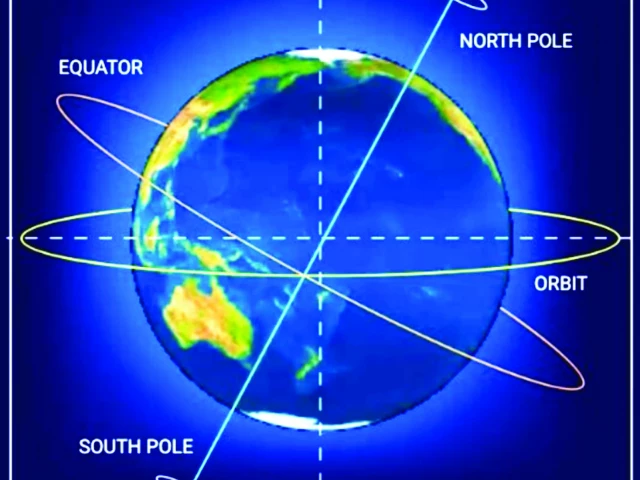
Like the rest of the world, Pakistan marked Earth's Rotation Day on Thursday, a day dedicated to highlighting the importance of science education and observation.
According to SUPARCO, Earth's rotation is central to understanding the natural world and advancing national development. From satellite-based weather monitoring and disaster management to navigation and space research, knowledge of Earth's movement is essential. The day also encourages students to engage with physics, astronomy, and space sciences.
Earth's Rotation Day is celebrated globally on January 8 to commemorate a key milestone in scientific history. On this day in 1851, French physicist Léon Foucault demonstrated Earth's rotation with a large swinging pendulum in Paris. As the pendulum swung, its plane of oscillation gradually shifted-not because the pendulum itself was moving, but because the Earth was rotating beneath it. This simple yet powerful experiment provided the first visible, tangible proof of Earth's rotation that anyone could observe, bridging the gap between abstract theory and direct experience.



















This material may not be published, broadcast, rewritten, redistributed or derived from. Unless otherwise stated, all content is copyrighted © 2026 The Express Tribune.






COMMENTS
Comments are moderated and generally will be posted if they are on-topic and not abusive.
For more information, please see our Comments FAQ