The Governor General and the numbered abuses
Updated 14 hours ago

Power, not law, now defines global order as US aggression reshapes geopolitics
George W Bush, President of the US between 2001 and 2009, had a veritable group of hawks around him. Dick Cheney served as his Vice President; Colin Powell, otherwise a reasonable man, had to go along with the group and provide Cheney and Donald Rumsfeld, the Defence Secretary, a public cover to attack Iraq for carrying weapons of mass destruction in his address to the UN Security Council, which ultimately turned out to be a lie. Though unrelated to the Iraq or Afghanistan adventures, the group was able to get a declaration, Responsibility to Protect — famously called R2P — from the UNSC in 2005, as a legal and moral cover for attacking a state from which the US felt threatened.
Although this had definite qualifying conditions to become applicable, those were broad enough to enable hubris. Since then, the world has literally trashed any pretension to a rule-based order, or international law, or notions of sovereignty. This set the stage for the age of impunity.
Terror and terror financing are the two other additions to the international obligations, which make it incumbent upon all member states to cooperate when someone indicted or convicted by the alleging state finds refuge or space in another state. It thus makes for a perfect alibi for a state to aggress against another when it suits its interests. Israel's war in Gaza and Lebanon, and against Iran, makes a perfect example; as does India's brazen offensive using its military might against Pakistan in May 2025.
The recent US foray into Venezuela is the most recent example. It may serve America's genuine concerns or interests, but what it also does is to stamp global acceptability for such aggression if one has the means to undertake the adventure and get away with it. That may not be the case all the time, as India learned from its experience against Pakistan. This is not a first in American historical experience; Manuel Noriega, the President of Panama, was similarly whisked away in 1990 when he challenged American preeminence by dallying with increased notions of sovereignty. A common Urdu proverb suggests befriending the crocodile if you live by the river.
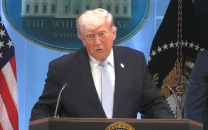
President Trump announced to the world on the eve of the Venezuelan invasion that the US remains the sole and most dominant power in the western hemisphere. The message was clear: nobody messes with the US in this part of the world, or he/she will be fair game for the US. No other competing power may attempt to exercise influence in America's zone of influence — this is a clear warning to nations like China or even Russia, attempting to gain a foothold or slowly expand their presence in the region. The American 'zone of exclusive influence' would primarily consist of all of America, North, Central and South, and the waters surrounding them.
Any deviant over time has faced the wrath of American power, sometimes in the shape of internal disturbances resulting in a change of government, and at others, direct intervention by American forces to impose conformance. Cuba continues to rankle, though, a mere hundred miles off the coast of Florida, but having been at the centre of superpower confrontation is now reduced to a footnote in the power matrix of the region. Brazil, Colombia, and any other will make the right noise but keep the decibels low. All, hence, faithfully subscribe to American goodwill.
The Western Hemisphere — 0-180 degrees Longitude — when looked at on the globe, places the Americas in the middle, with all the Atlantic Ocean, most of the Pacific Ocean, and Western Europe, including the UK, France, Germany and the Iberian Peninsula. This is Trump's declared fief. It also includes Greenland. Denmark, watch out. Be quashed or negotiate a reprieve. Any attempt by competing nations like China and Russia to carve a foothold, if for no other reason than to push back against American advances elsewhere, will not be tolerated. Whether the policy of blatant aggression is embraced through the American political system or will be recalibrated under another administration remains moot, but for the moment, the world shall face an assertive Trump.
Venezuela is known to have had Chinese and Iranian presence on its soil. That is impious to American sensitivity. But then that has been the case for some time now — Americans quote twenty years; why act now? One, this is a pugnacious group at the top. Two, this is America's backyard, and the impudent nature of Maduro might have encouraged others to break ranks if order was not restored. Three, it is about oil and its easy availability to America's competition at highly favourable terms.
Venezuela has just been such a thorn when only extracting one per cent annually of its huge reserves, the world's twenty per cent of proven reserves. It will outlive the rest at this rate as the sole proprietor of oil when the rest of the world has exhausted its, enabling it to have unmatched importance and influence. Venezuela was also selling its oil to America's competition in currencies other than the USD, diluting the dollar's centrality in the global financial system. The US needed to restore order and reassure its primacy.
There are other effects that the Venezuelan aggression (virtual occupation) has unleashed: It is okay to aggress against a weaker neighbour or nation militarily if you have the wherewithal and it is needed to secure your interests. By that count, Russia is within its rights to keep its offensive against Ukraine going till it has successfully subdued Ukraine and its independent will. China can similarly exercise its right to incorporate Taiwan, which remains its most vital interest and object of imperative concern. If the world were to be so divvied up among the three top powers — the US as a superpower of note, Russia with its exceptional military strength, and China as an unparalleled economic giant with a fast-developing military capability — there would be three 'zones of influence' led by each of the three principals.
Within each sphere, there would be a chief patron and dependents who will live in cooperative coexistence under a set of unwritten rules, which some might resent depending on their respective heft in direct correlation with the patron, while most others will find comfort within it to pursue a qualified agenda. There will always be some rebels in the ranks who might need some corrective measures, kinetic or otherwise. Just as in the post-WWII Bretton Woods order, most nations would live by some commonly agreed arrangement and understanding. Except that without an organisation like the UN, which had been entrusted with the task of an arbiter in most matters of international concern and attention, there will not be such an institutional recourse in the new arrangement. It will render the entire scheme arbitrary, impulse-driven and xenophobic. It will only ensue widespread conflict. The age of impunity would have done a full circle.








This material may not be published, broadcast, rewritten, redistributed or derived from. Unless otherwise stated, all content is copyrighted © 2026 The Express Tribune.


COMMENTS (1)
Comments are moderated and generally will be posted if they are on-topic and not abusive.
For more information, please see our Comments FAQ