India accused of using legal process as punishment
Updated Feb 15, 2026

If Pakistan legalizes crypto, it can learn key lessons from UAE, Singapore, and India’s experiences
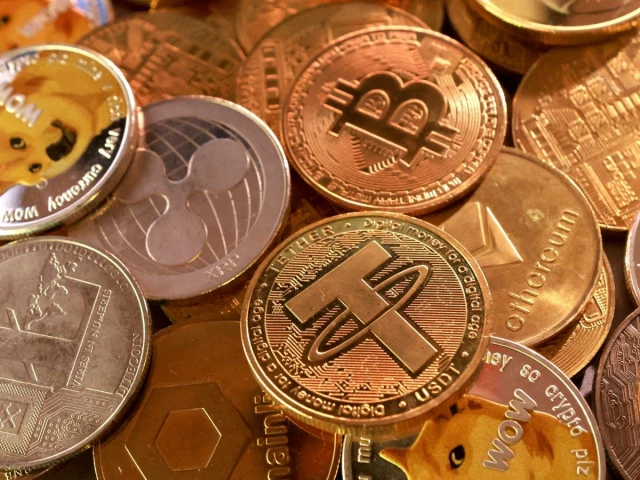
Pakistan’s move to tokenize government assets and welcome crypto into our system via its MoU with Binance places it in a global race of crypto adoption already shaped by clear winners and costly laggards.
Pakistan signed a Memorandum of Understanding (MoU) with Binance earlier in December, setting the groundwork for the tokenization of $2 billion of sovereign assets. While the agreement is ultimately non-binding, it’s clear Islamabad is bullish about crypto.
But what does this mean for Pakistan's unregulated crypto market, which is often said to be one of the biggest in the world?
There is presently no clear set of rules in place in Pakistan regarding cryptocurrencies. However, the government has stated that it intends to build one in the coming years.
Bilal Bin Saqib, Crypto Czar, is at the centre of this campaign. As Chairman of the Virtual Assets Regulatory Authority, his primary task is to now help design a workable regulatory framework for crypto in Pakistan.
This is where Pakistan's massive retail cryptocurrency sector comes into play. We are a country where more than 64% of the population is under the age of 30, and more than 40 million of our citizens use cryptocurrency. Regulating this vast market has the potential to boost digital innovation in Pakistan, attract foreign investment, and help address issues faced by the country's large informal economy.
Pakistan is not the first country with such an ambitious crypto agenda. If policymakers move toward legalizing crypto in Pakistan, international examples from the UAE, Singapore, and India offer important lessons. These countries show how crypto adoption can thrive or fail based on regulatory design.
The UAE has quietly established itself as the Arab world's most prominent cryptocurrency hub. Between July 2023 and June 2024, the country received an estimated $34 billion in crypto inflows, representing a 42% year-on-year increase. Daily active crypto trades in the UAE currently exceed 500,000, indicating widespread adoption across both retail and institutional sectors of the economy.
What distinguishes the UAE's rise to become the Gulf's crypto capital is the structures that support it. As part of a broader plan to diversify its economy away from oil, the UAE has explored an appropriate regulatory system for virtual currencies. Rather than depending on a single authority, it has built alternative but consistent frameworks to control this gold rush throughout its major financial centres.
Abu Dhabi Global Market's regulation and Dubai's Virtual Assets Regulatory Authority established laws for crypto trade early. The UAE has managed to alleviate much of the confusion around cryptocurrency seen in many countries. Having more than one regulated financial centre allows enterprises to select the system that best suits their operations and risk tolerance, making it easier for giant global investors and smaller fintech startups to operate under clear, predictable standards. Additionally, the UAE’s anti-money laundering regime is working to meet international standards for AML enforcement.
Singapore has also positioned itself at the forefront of cryptocurrency adoption. It is the most crypto-obsessed nation in the world, with a combined score of 100, owing to 24.4% population ownership and remarkable search activity of 2,000 crypto enquiries per 100,000 people.
Singapore began supervising crypto firms in 2019 with the Payment Services Act, which brought digital assets into its financial regulatory framework. This approach helped Singapore achieve a careful balance between supporting innovation and preserving the stringent standards that have made it a credible business hub.
Of course, Singapore's crypto journey has not always been straightforward. In 2022, the global failure of the Terra blockchain's cryptocurrency forced Singapore to confront the vulnerabilities of the crypto sector. Critics wondered if the city-state had been overly lenient, ignoring the risks of courting an industry built on extreme volatility.
Understanding the limits of permissive rule-making, Singapore made significant investments in teaching and research. The National University of Singapore introduced blockchain courses, and polytechnics introduced Bitcoin sections in their curriculum. This emphasis on developing domestic skills ensured that Singapore's crypto boom was more than a passing fad, but rather a long-term transformation in the economy.
The third case study is India. India has the world's largest retail cryptocurrency sector, yet the country faces significant regulatory challenges when it comes to virtual assets.
India levies a flat 30% tax on crypto gains, with a 1% tax deducted at the source on each crypto trade. The government has not categorically prohibited the use of crypto, but it has also refused to offer regulatory certainty for crypto assets.
The Reserve Bank of India (RBI), India's central bank, remains highly cautious about digital assets and their integration into the financial system. Deputy Governor T Rabi Sankar recently rejected the idea of classifying cryptocurrency as legal currency, calling it a "pure gamble based on mathematical bets."
The absence of regulation and excessive taxes has resulted in a significant loss of potential revenue for India. Major Indian crypto businesses relocated to the UAE, Singapore, or Europe, and potential investors were scared away by the government's tough position on cryptocurrency. The ambiguous regulation also heightened the potential for money laundering, as seen in the Chinese loan apps controversy in 2021, in which illegal Chinese-controlled instant loan apps laundered money using Bitcoin.
The takeaway for Pakistan from these experiences should be that a strong regulatory framework, with AML compliance up to international standards, is critical to avoiding the risks associated with legalizing cryptocurrency in a market of 40 million users. It is equally crucial to educate people about blockchain and cryptocurrency. The government must provide information on how to invest responsibly, as well as online videos/courses to properly educate the large consumer market about crypto. Though it is an opportunity for the government to levy taxes, the primary goal should be to make it a cryptocurrency-friendly market in order to attract investment.
Crypto has the potential to generate growth and innovation in Pakistan, but our policymakers must learn from other countries' achievements and mistakes as they develop a regulatory framework for Pakistan's digital assets.















This material may not be published, broadcast, rewritten, redistributed or derived from. Unless otherwise stated, all content is copyrighted © 2026 The Express Tribune.






COMMENTS (2)
Comments are moderated and generally will be posted if they are on-topic and not abusive.
For more information, please see our Comments FAQ