Pentagon assesses clearing Hormuz mines could take 6 months: report
Updated 1 hour ago

Video goes viral on TikTok containing content offensive to Muslim sentiments, police arrest two youths
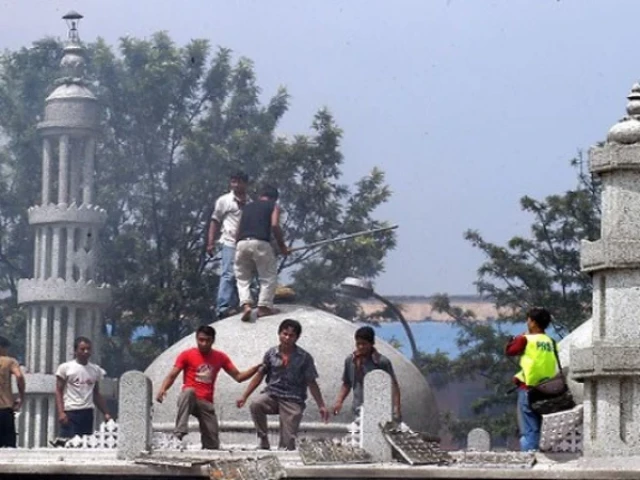
Authorities have imposed a curfew in Birgunj, a city in southern Nepal bordering India, after tensions flared between Hindu and Muslim groups following the vandalism of a mosque over the weekend.
Curfew orders issued by the Parsa District Administration ban all movement, gatherings and demonstrations, warning that violators could face lethal force. Armed soldiers and police have been deployed across Birgunj, which lies about 130 kilometres south of Kathmandu and serves as a critical entry point for oil, goods and supplies from India.
Initially, the curfew was enforced in the evening. While no major clashes or serious injuries have been reported so far, tensions have remained high, prompting authorities to extend the curfew with only limited hours of relaxation.
Police have also held meetings with Muslim and Hindu leaders and have appealed to the public to exercise restraint.
According to an international news agency, the unrest was triggered by a TikTok video that went viral, containing religious remarks that were deemed offensive by respective communities. Police, with the help of local residents, detained two youths accused of making the video and attempted to defuse the situation. Despite these efforts, a mosque was vandalised and religious books were desecrated, intensifying anger within the local Muslim community.
Muslim groups began protesting on Sunday, blocking roads, burning tyres and chanting slogans. Hindu groups later staged separate demonstrations on the same day. As protests continued, police used tear gas, detained several demonstrators and reported injuries to some officers.
Read: Nepal estimates millions in damages from Sept protests
Clashes between Hindus and Muslims are rare in predominantly Hindu Nepal, where most of the Muslim population resides in southern border regions.
Previously, the youth-led demonstrations, initially triggered by anger over a brief government ban on social media, were fuelled by deeper frustration over economic hardship and corruption.
After a police crackdown killed young protestors, the riots spread, and on the second day, more than 2,500 structures were torched, looted or damaged.
The committee formed to assess the damage caused during the protest submitted its report to Prime Minister Sushila Karki.
The report said that a total of 77 people died during the movement, 20 people on 8 September, 37 on the following day and another 20 later.
"In terms of total physical damage, the committee estimates the loss to be equivalent to 84 arab 45 crore 77 lakh rupees ($586 million)," the statement said.










This material may not be published, broadcast, rewritten, redistributed or derived from. Unless otherwise stated, all content is copyrighted © 2026 The Express Tribune.




COMMENTS
Comments are moderated and generally will be posted if they are on-topic and not abusive.
For more information, please see our Comments FAQ