Govt says month-long efforts to engage K-P administration preceded emergency
Updated 2 hours ago

CTD says three suspects were arrested, and large quantity of urea fertiliser, used to make bombs, was also recovered
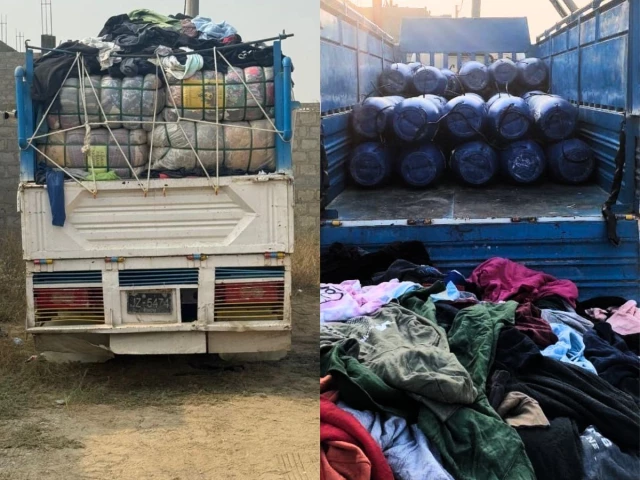
Intelligence and law enforcement agencies have uncovered a large quantity of urea fertiliser, which is used to make bombs, along with more than 2,000 kilograms of highly destructive explosive material in a foiled terror plot in Karachi.
Urea fertiliser has been used in the past to make bombs, with major evidence of this emerging during attacks in the early 2000s, including the attack on a convoy of the Corps Commander Karachi in 2004. Sources indicate that in the past, religious extremist groups such as the proscribed Jundallah (Pakistan), Tehreek-e-Taliban, and Al-Qaeda used urea for terrorism, but now its use by Baloch terrorist elements has come to light.
The foiled plot was uncovered following a complex, weeks-long intelligence operation. Acting on timely inputs, security agencies and the Counter Terrorism Department (CTD) took decisive action that prevented a major act of sabotage in the city.
Read: Two martyred as CTD foils bank heist in Panjgur
Briefing the media, Additional Inspector General CTD Zulfiqar Lark and Deputy Inspector General CTD Captain (retd) Ghulam Azfar Mahesar said that one terrorist was initially arrested following intelligence efforts. Upon his identification, two more suspects were arrested. The arrested terrorists were identified as Jalil Ahmed alias Farid, Niaz Qadir alias King, and Hamdan alias Farid.
The recovered explosive material was transported out of Karachi and neutralised in the Hub area. According to police officials, more than 2,000 kilograms of explosives were recovered, stored in over 30 plastic drums and five metal gas cylinders. The material was intended for large-scale terrorist activity.
Investigators said the suspects had rented a house approximately 35 to 40 kilometres from Karachi, which was being used to store the explosives. Preliminary investigations suggest the explosive material was transported from Afghanistan into Balochistan and subsequently brought to Karachi.
Officials stated that the plot was linked to terrorist groups working in the interest of India, with Indian proxies, including the Baloch Liberation Army (BLA) and the Baloch Liberation Front (BLF), using safe havens in Afghanistan. Evidence has also linked the network to Bashir Zeb, the leader of the BLA, Fitna al Hindustan, and the Majeed Brigade.
Security agencies said breaking the supply chain of explosive materials, including preventing the illegal use of urea and other chemicals, remains a top priority. Investigations have revealed the involvement of local facilitators who assisted the terrorists in return for financial gain.
All those involved in the terror plot are being pursued, officials said, adding that further details will be shared as investigations progress. Authorities have also stressed the need for stricter monitoring and verification of rental arrangements.
Read More: Three terrorists killed in CTD operation in Peshawar
A senior Karachi police officer, speaking informally, requested journalists to avoid asking questions, stating that the premature airing of information had allowed some suspects to evade arrest. The officer assured, however, that search operations were underway.
Sindh Home Minister Zia-ul-Hassan Lanjar also issued a statement regarding the incident, stating that, according to initial investigations, the terrorists had civilian targets. He noted, however, that further interrogation would provide clarity on which areas were planned to be targeted.
Lanjar cited the 2024 attack by the BLA on Karachi’s Jinnah International Airport, which claimed the lives of Chinese citizens. He said that since the airport attack, no major incident of terrorism has occurred in Karachi, which is proof that intelligence agencies, the CTD, and law enforcement institutions remain active and are taking timely action.
The home minister acknowledged that threats do exist and that Karachi is an extremely important city in Pakistan, being not only a hub of commercial and business activities but also home to a port that serves as the backbone of the country’s economy.






This material may not be published, broadcast, rewritten, redistributed or derived from. Unless otherwise stated, all content is copyrighted © 2026 The Express Tribune.








1727268465-0/Untitled-design-(42)1727268465-0-208x130.webp "the poor man s burden")


COMMENTS
Comments are moderated and generally will be posted if they are on-topic and not abusive.
For more information, please see our Comments FAQ