UAE says it has voluntarily ended counterterrorism mission in Yemen
Yemen council chief declared emergency, scrapped UAE security pact after Abu Dhabi separatists seized land

The United Arab Emirates' defence ministry said on Monday it has ended the mission of its counterterrorism units in Yemen voluntarily, state news agency WAM reported. It said the decision came after a comprehensive assessment.
Earlier, the leader of Yemen's presidential council declared a state of emergency and cancelled a security pact with the United Arab Emirates on Tuesday after Abu Dhabi-backed separatists seized swathes of territory.
"The Joint Defence Agreement with the United Arab Emirates is hereby cancelled," a statement said, while a separate decree announced a 90-day state of emergency including a 72-hour air, sea and land blockade.
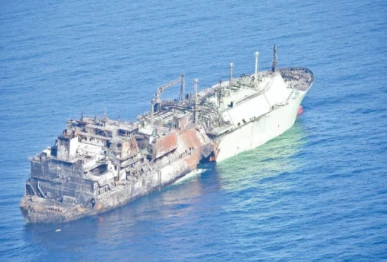
The announcements by Rashad al-Alimi, head of the Presidential Leadership Council, come after the Saudi-led coalition fighting in divided Yemen said it struck a UAE weapons shipment destined for the separatists.
Read More: Saudi-led coalition targets Mukalla dock in Yemen over alleged STC arms delivery
The UAE-backed Southern Transitional Council (SCT) forces have swept through the south of Yemen this month, taking most of resource-rich Hadramawt province and swathes of neighbouring Mahrah.
Alimi ordered the SCT to hand over the territory to Saudi-backed forces, calling the separatists' advance an "unacceptable rebellion" in a televised address.
The confrontation risks tearing apart the already fractured Yemeni government, which has different factions backed by oil-rich Gulf powers Saudi Arabia and the UAE.
It also threatens slow-moving peace negotiations with the Iran-backed Houthi rebels, who ousted the government from the capital Sanaa in 2014, triggering a military intervention by the Saudi-led coalition.
In remarks reported by the Saudi Press Agency, Coalition Forces spokesperson Maj. Gen. Turki al-Maliki said two vessels arriving from the UAE port of Fujairah entered the port of Mukalla on Dec. 27-28 without securing official authorization from the coalition’s Joint Forces Command.
Alimi said the latest Emirati move represents “a continuation of a systematic approach over years, including sustained pressure on the STC to act unilaterally, exploit the just southern cause, and attempt to paralyze constitutional state institutions represented by the Presidential Leadership Council and the government.”
He added that pressure exerted by Abu Dhabi on the STC “to undermine state authority and rebel against it through military escalation, attacks on armed forces positions, repeated assaults on Hadramout tribes and innocent civilians” resulted in the grave violations against the Yemeni people.
"The southern issue is a just cause and lies at the heart of the project to build the state, and no one holds an alternative mandate on behalf of the people of the South," Alimi said.
Also Read: Saudi Arabia calls national security a red line, urges UAE exit from Yemen
“No one has the right to exploit the southern issue to achieve political objectives,” he added.
He called on the STC to withdraw its forces from the south, noting that they refrained from responding to dialogue calls “at a time when the country was in greatest need of dialogue.”
Alimi also expressed appreciation for Saudi efforts to de-escalate tension in support of the Yemeni people.
The Yemeni government, for its part, welcomed measures taken by the presidential council chairman to protect security in the country and across the region.
In a statement, the government said unilateral steps taken by the STC and the entry of weapons and forces from outside official frameworks constitute “a serious security breach and a blatant violation of the principles of the transitional phase and de-escalation efforts.”
It hailed what it called Saudi Arabia’s “historic and steadfast position” and its pivotal role in supporting Yemen’s security and stability and commitment to protecting civilians and reducing escalation.
The government also welcomed a Saudi Foreign Ministry statement that considered Hadramout and Mahra as integral parts of the Yemeni state.
Tension has escalated in Yemen after the STC took control of Hadramaut and Al-Mahra early this month after clashes with government forces.
The STC repeatedly claims that successive governments have politically and economically marginalized southern regions and calls for their separation from the north – claims rejected by the Yemeni authorities, as they insist on preserving the country’s territorial unity.
No weapons were in Yemen shipment, says UAE
The UAE denied shipping weapons to Yemeni separatists on Tuesday after Saudi-led forces said they had bombed arms sent by Abu Dhabi.
"The shipment in question did not contain any weapons, and the vehicles unloaded were not intended for any Yemeni party," government spokesperson Afra Al Hameli wrote on X, adding the arrival of the shipment had been coordinated with Riyadh.


COMMENTS (1)
Comments are moderated and generally will be posted if they are on-topic and not abusive.
For more information, please see our Comments FAQ