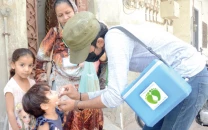
PM Shehbaz reaffirms commitment to eradicate polio as cases drop sharply in 2026
Updated 2 hours ago

Both sides step back from public rhetoric to reset ties; Pakistan insists on verifiable counterterror steps
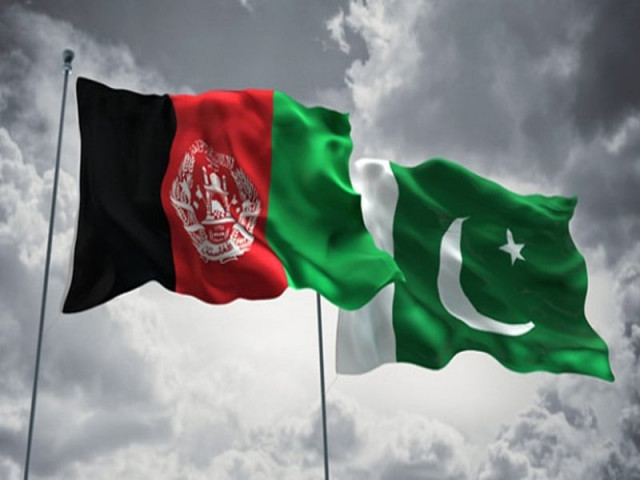
Pakistan and Afghanistan appear to be making a renewed but cautious push to overcome their deep-seated differences over the banned Tehreek-e-Taliban Pakistan (TTP), with recent developments suggesting a deliberate effort by both sides to tone down public posturing even as a broader breakthrough remains elusive.
While a visible stalemate persists on core security concerns, particularly Islamabad's demand that Afghan soil must not be used for cross-border attacks, behind-the-scenes diplomacy seems to have yielded at least one tangible outcome: a lowering of rhetoric and an emphasis on dialogue over confrontation.
Sources said mediators wanted both sides to at least lower public rhetoric in order to create a positive atmosphere for talks. According to them, mediators persuaded the Taliban regime in Kabul to take certain steps such as issuing Fatwa and unambiguous public statement from their leadership on addressing Pakistan's security concerns.
This shift has been reflected in a series of carefully worded statements from Kabul and Islamabad over the past week, following a significant religious intervention by Afghan clerics.
Afghan Ulema recently issued a fatwa barring Afghans from carrying out attacks beyond the country's borders, a move welcomed in Islamabad as a potential confidence-building measure rather than a definitive solution.
Shortly after the fatwa, Afghanistan's Interior Minister Sirajuddin Haqqani publicly reassured Pakistan that Afghan soil would not be used against any other country. His remarks were widely viewed by Pakistani officials as part of a broader attempt to de-escalate tensions and rebuild a minimum level of trust.
On Saturday, Deputy Prime Minister and Foreign Minister Ishaq Dar welcomed Haqqani's statement, praising his emphasis on resolving outstanding issues through negotiations rather than confrontation.
The response from Kabul came swiftly.
On Sunday, Sirajuddin Haqqani welcomed Dar's remarks as well as a separate statement issued by Pakistani religious scholars in Karachi, who had urged both governments to resolve their differences through dialogue. Haqqani underlined the importance of engagement, signalling Kabul's receptiveness to non-military avenues for easing tensions.
Earlier, Afghanistan's Foreign Minister Amir Khan Muttaqi welcomed the scholars' call, noting that religious leaders have historically played a constructive role during periods of tension and have often helped guide societies toward prudent decisions.
The growing involvement of religious voices on both sides appears to be aimed at creating political and moral space for de-escalation at a time when formal diplomatic channels have struggled to deliver results.
Despite multiple rounds of talks, progress has been limited. Following the inconclusive end to recent discussions between delegations of Taliban regime and Pakistan, Dar confirmed that further engagements had taken place in Saudi Arabia.
However, he acknowledged that those talks, like earlier ones hosted by Turkiye and Qatar, failed to yield concrete outcomes.
The admission underscores the depth of the impasse. Pakistan has repeatedly insisted that improved ties hinge on verifiable action against the TTP, which Islamabad says operates from Afghan territory.
Kabul, for its part, has maintained that it does not allow its soil to be used against any country, while often framing the issue as an internal Pakistani challenge.
Speaking about recent security developments, Dar said Islamabad was closely monitoring events over the past weeks and months, stressing that any improvement in relations depends on the Afghan side's adherence to its commitments.
"What happened last month, what changed last week, and what improvements follow those actions they know very well that if some of our requests, especially on counterterrorism, are fulfilled, the impact will be very substantial," Dar said.
The foreign minister emphasised that Pakistan was not seeking rhetorical assurances but concrete steps, particularly in the realm of counterterrorism cooperation. According to officials, Islamabad believes even limited, visible action could help alter the current trajectory of bilateral ties.
Dar also welcomed the fatwa issued by Afghan religious scholars prohibiting fighting beyond Afghan territory, describing it as a positive signal. He expressed appreciation for Haqqani's statement reaffirming that Afghan soil would not be used against other countries.
"I believe that if they seriously implement the commitments made in the two fatwas and the recent statement by Sirajuddin Haqqani, and if a noticeable difference is seen within the next two to four weeks, I am confident that our government, the Prime Minister, and the Field Marshal will be happy to reconsider the matter," he said.
The reference to a defined time window suggests Islamabad is seeking early indicators of change, rather than open-ended assurances. For now, both sides appear to be calibrating their approach, avoiding escalation in public, welcoming conciliatory language, and allowing religious actors to play a mediating role.
Whether this softer tone translates into concrete action on the ground remains uncertain. Still, the recent exchange of statements marks a departure from the sharp rhetoric that has characterised much of the past year, offering a narrow opening for engagement at a time when both Islamabad and Kabul face mounting internal and regional pressures.






This material may not be published, broadcast, rewritten, redistributed or derived from. Unless otherwise stated, all content is copyrighted © 2026 The Express Tribune.



COMMENTS
Comments are moderated and generally will be posted if they are on-topic and not abusive.
For more information, please see our Comments FAQ