Nationwide heatwave warning issued
Updated 8 hours ago

With provision of electricity, sanitation, safe housing still a dream, locals suffering neglect
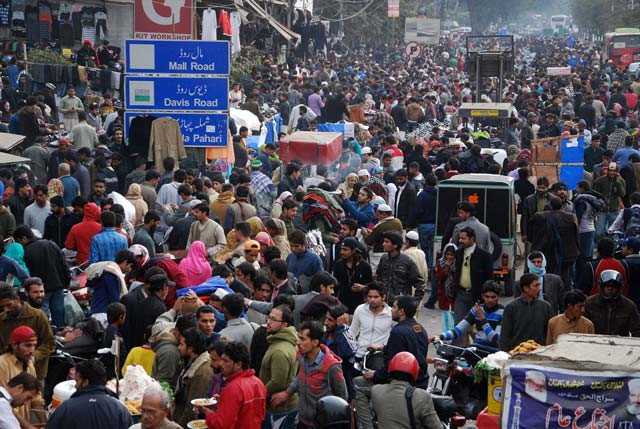
As the government struggles to complete long withstanding urban development projects in the port city, other neglected areas of Sindh continue to fall further behind in basic services and infrastructure, with their local populations surviving overcrowded housing alongside a lack of sanitation and electricity arrangements.
A combined population of 15.67 million across 18 districts of the country faces overlapping climate and structural vulnerabilities, according to a new study. Residents of eight districts in Sindh are among the worst affected by this dual burden. These include Sujawal, Thatta, Qambar Shahdadkot, Jacobabad, Jamshoro, Khairpur, Dadu, and Kashmore, while the remaining highly vulnerable districts are located in Balochistan.
These findings are part of the District Vulnerability Index for Pakistan (DVIP), a study conducted by the non-governmental organization, Population Council in collaboration with UK International Development. The report measures and compares relative vulnerability across districts using indicators related to housing, communication, transport, livelihood, access to health, and public education.
"Reducing the compound risks of environmental, social, and economic shocks in doubly stressed districts requires investment in climate-resilient infrastructure. Efforts should also be directed towards strengthening basic services, housing, communication networks, demographic resilience, and health systems," the report recommended.
In the worst-performing districts in the housing domain, over 65 per cent of households live in temporary or makeshift structures with 50 per cent lacking toilet facilities and 40 per cent having no access to improved water sources.
At least six Sindh districts, Umerkot, Sujawal, Tharparkar, Badin, Thatta, and Mirpur Khas are the most affected in terms of housing vulnerability. More than 65 per cent of households in these districts live in katcha or semi-pakka structures, heightening their exposure to climatic hazards. In Umerkot, 70 per cent of households live in single-room dwellings.
"Overcrowded housing conditions are associated with adverse health outcomes such as respiratory diseases, including asthma, cardiovascular diseases, injuries, mental health problems, and the spread of communicable diseases. When entire families are confined to a single room, they are more vulnerable to these risks especially when this is compounded by limited access to health services," claimed the report.
Three Sindh districts, including Kashmore, Sujawal, and Tharparkar are categorized as the most vulnerable in terms of livelihood. Tharparkar also ranks as the most demographically vulnerable district. Additionally, about 58 per cent of households in Umerkot and Tharparkar lack toilet facilities.
Many districts in Balochistan and Khyber-Pakhtunkhwa (K-P) also score poorly on demographic indicators, although Tharparkar remains the most vulnerable nationwide. High fertility levels, measured by the proportion of children under the age of five, are a key driver of demographic vulnerability.
Commenting on the report, Islamabad-based researcher and social scientist Naseer Memon opined that lagging human development in these areas reflected a longstanding indifference from the ruling elite. "The state has both a moral and principal obligation to make targeted investments in human development in the most vulnerable districts of Pakistan. Such glaring disparities in human development across districts and provinces carry serious social and political implications," Memon told The Express Tribune.
Karachi-based environmentalist Afaq Bhatti noted that vulnerability can only be reduced if governments address fundamental issues such as poverty, lack of education and healthcare, and unequal economic opportunities particularly for marginalized communities. "Both provincial and federal governments must take immediate steps to provide basic facilities in the most vulnerable districts of Sindh and Balochistan," implored Bhatti.











This material may not be published, broadcast, rewritten, redistributed or derived from. Unless otherwise stated, all content is copyrighted © 2026 The Express Tribune.



COMMENTS
Comments are moderated and generally will be posted if they are on-topic and not abusive.
For more information, please see our Comments FAQ