Brand reliability fetches demanded price
Updated 16 hours ago

Owing to spike in demand, per-truck freight rates have risen sharply
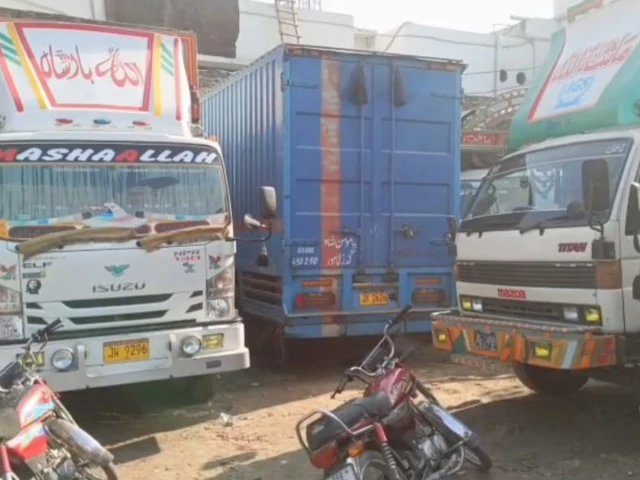
Even a week after the end of the goods transporters' 10-day strike, the movement of import and export containers from various container terminals at Karachi Port has not returned to normal.
According to Sheikh Waqas Anjum, General Secretary of the Karachi Customs Agents Association, the arrival of thousands of consignments that remained stuck at the port during the strike onto city roads has exposed serious weaknesses in the traffic management system.
With the influx of cargo trucks, traffic pressure has increased not only on the roads surrounding the port, but congestion has also reached alarming levels on major heavy-traffic routes, including Keamari, Gulbai and Mauripur.
Despite a week having passed since the strike ended, the Karachi city administration has failed to manage the traffic flow effectively.
Anjum stated that access to the largest terminal, South Asia Pakistan Terminals (SAPT), for the delivery and receipt of goods has become extremely difficult. He further said that immediately after the strike ended, an unusually sharp increase in transportation demand caused a shortage of cargo trucks in the city.
As a result, per-truck freight charges for transporting import and export goods within the city have risen from Rs20,000-30,000 to as high as Rs50,000-60,000.
He added that delays in the delivery of import containers from various terminals operating at ports have left the trade sector facing heavy demurrage and detention charges. Demurrage, detention charges and the recent steep increase in freight rates have led to a significant rise in overall business costs.
The Karachi Customs Agents Association has demanded that transporters, in the public interest, provide trucks to the trade sector at the mutually agreed rates for a smooth supply of goods.









This material may not be published, broadcast, rewritten, redistributed or derived from. Unless otherwise stated, all content is copyrighted © 2026 The Express Tribune.













COMMENTS
Comments are moderated and generally will be posted if they are on-topic and not abusive.
For more information, please see our Comments FAQ