Brand reliability fetches demanded price
Updated 6 hours ago

Gold, silver surge as safe-haven demand intensifies on fear-of-missing-out
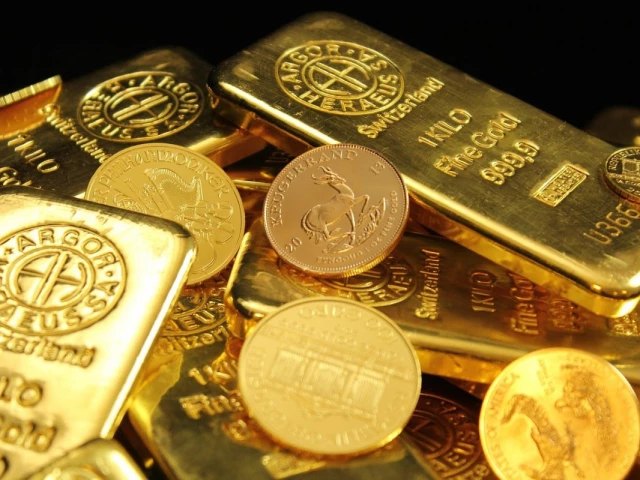
Gold prices in Pakistan climbed further on Wednesday, extending their strong upward momentum in line with record gains in the international bullion market, as investors continued to flock to precious metals amid currency weakness, expectations of easier global monetary policy, and heightened geopolitical uncertainty.
In the domestic market, the price of gold per tola rose by Rs2,000 to reach a fresh all-time high of Rs472,862, according to rates released by the All-Pakistan Gems and Jewellers Sarafa Association (APGJSA). This marked another sharp increase following Tuesday's surge, when gold per tola jumped by Rs8,500 to settle at Rs470,862.
Similarly, the price of 10-gram gold increased by Rs1,714 to stand at Rs405,402. Market participants noted that bullion prices have been hitting successive records over recent sessions, reflecting strong spillover from global markets as well as persistent demand for safe-haven assets at home.
Silver prices also posted gains, with the price per tola rising by Rs500 to Rs7,505. Analysts pointed out that silver has dramatically outperformed gold in percentage terms this year, with prices up more than 140% year-to-date, compared with gold's gain of over 70%. As a result, the gold-to-silver ratio, a key metric watched by investors, has narrowed sharply to around 64, down from about 105 in April, highlighting silver's recent outperformance, according to Reuters.
Adnan Agar, Director at Interactive Commodities, said this is the "year of metals," as all major metals have surged, with gold emerging as the favourite first among banks and later among individuals, driven by fear of missing out (FOMO).
Internationally, gold surged close to the $4,500-per-ounce mark on Tuesday, while silver hovered just below $70, as expectations of looser US monetary policy and simmering geopolitical tensions propelled both metals toward historic highs. Spot gold touched a record intraday high of $4,497.55 per ounce, while silver climbed to a peak of $69.98.
Market analysts say gold's rally ranks among the strongest advances in the metal's modern history, with prices scaling unprecedented highs amid a potent mix of macroeconomic and geopolitical drivers. A weaker US dollar, heightened global uncertainty, accommodative monetary policy, and sustained central bank buying have combined to push investors decisively toward traditional stores of value, reinforcing gold's role as a cornerstone hedge.
One of the most influential factors behind the surge has been the steady weakening of the US dollar. The US Dollar Index (DXY), which measures the greenback against a basket of major currencies, has slipped to around 98 amid softer economic data and growing expectations that US interest rates will continue to trend lower. Because gold is priced in dollars, a softer greenback reduces the cost for international buyers, lifting demand and supporting higher prices. This dynamic has once again underscored the historically inverse relationship between gold and the dollar.
Concerns over fiscal sustainability have further strengthened gold's appeal. Rising public debt, persistent budget deficits, and questions surrounding long-term economic management in major economies have increased investor unease toward fiat currencies. In response, capital has rotated toward hard assets perceived as offering protection against currency debasement and systemic risk.
Monetary policy expectations have also played a central role. The US Federal Reserve has already delivered multiple interest rate cuts, and markets widely anticipate further easing in 2026 as inflation cools and economic growth moderates. Lower interest rates reduce the opportunity cost of holding non-yielding assets such as gold, making bullion more attractive relative to bonds and other income-generating instruments. Some analysts believe markets are also pricing in a longer-term shift, with central banks potentially tolerating higher inflation, a scenario that would further bolster gold's long-term investment case.
Geopolitical risks have added urgency to gold buying throughout the year. Conflicts involving major powers, disruptions to energy supplies, trade and tariff uncertainties, and rising tensions along key shipping routes have sustained an environment of elevated risk. During such periods, investors typically prioritise capital preservation, reinforcing gold's safe-haven status.
Another critical pillar supporting prices has been the continued demand from central banks. Central banks worldwide have added hundreds of tonnes to their gold reserves this year, particularly in emerging markets seeking to diversify away from dollar-denominated assets. Although the pace of buying has moderated from post-pandemic peaks, it remains historically robust.
Silver has mirrored gold's strength, albeit with greater volatility, benefiting from both safe-haven demand and strong industrial use in renewable energy and technology. While near-term technical indicators suggest bullion markets may be overbought, many investors view any pullbacks as buying opportunities rather than signs of a trend reversal.
Meanwhile, the Pakistani rupee edged up marginally against the US dollar on Wednesday, closing at 280.20 in the inter-bank market compared with 280.21 a day earlier.









This material may not be published, broadcast, rewritten, redistributed or derived from. Unless otherwise stated, all content is copyrighted © 2026 The Express Tribune.













COMMENTS
Comments are moderated and generally will be posted if they are on-topic and not abusive.
For more information, please see our Comments FAQ