Afridi awaits Imran's signal for Islamabad move
Updated 8 hours ago

Partly cloudy skies with light rain or storms expected
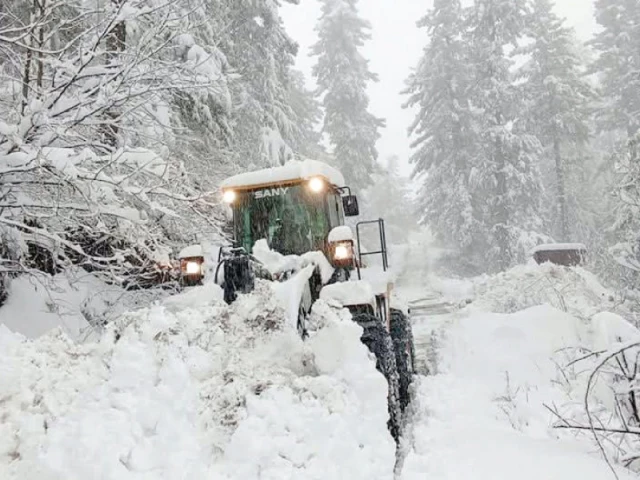
The Pakistan Meteorological Department (PMD) on Friday issued a weekend weather alert, forecasting rain, thunderstorms, and snowfall in northern and western parts of the country.
According to the Met Office, a shallow western disturbance is expected to reach western Pakistan on the night of December 12. Under its influence, light to moderate rain accompanied by thunderstorms and snowfall over hilly areas is likely in parts of Khyber-Pakhtunkhwa and Balochistan, including Chitral, Dir, Swat, Shangla, Kohistan, Malakand, Mansehra, Abbottabad, Haripur, Buner, Gilgit-Baltistan, and Kashmir from December 13 to 15, with occasional breaks.
Rain-Thunderstorm (snowfall over the hills) predicted in western and northern parts of Pakistan during the weekend.
— Pak Met Department محکمہ موسمیات (@pmdgov) December 12, 2025
Foggy conditions are likely to intensify over plain areas.#SnowfallAlert #RainAlert #WeatherAdvisory #NorthernAreas #GilgitBaltistan #Swat #Dir #Kohistan pic.twitter.com/ifpgXyGFhK
Meanwhile, partly cloudy conditions with light rain or storms are expected in Bajaur, Mohmand, Khyber, Orakzai, Kurram, Waziristan, Quetta, Ziarat, Zhob, Sherani, Chaman, Pishin, Qilla Abdullah, Qilla Saifullah, and Noshki on December 14 or 15.
The PMD also predicted light drizzle in Islamabad, Rawalpindi, Peshawar, and the Potohar region, along with rain or snow in Murree and Galliyat over the weekend. Additionally, moderate to dense fog is expected to form over plain areas of Punjab, K-P, and upper Sindh from the night of December 12 until December 16.
Looking ahead, the Met Office warned that another western disturbance may impact western and northern parts of the country from December 19.
The alert comes amid broader climate concerns. In October, a report on Pakistan’s monsoon floods, compiled by the Intersector Coordination Group in collaboration with other partners, warned that this winter could be one of the coldest in decades due to the La Niña phenomenon. La Niña, caused by unusually cool Pacific Ocean temperatures, can trigger extreme weather patterns worldwide.
Colder-than-normal conditions could further strain households affected by recent floods, particularly in mountainous regions of K-P and G-B.














This material may not be published, broadcast, rewritten, redistributed or derived from. Unless otherwise stated, all content is copyrighted © 2026 The Express Tribune.












COMMENTS (1)
Comments are moderated and generally will be posted if they are on-topic and not abusive.
For more information, please see our Comments FAQ