Pakistan LNG seeks three spot cargoes in first tender since December 2023
Updated 20 minutes ago

NAB's record recoveries, digital reforms transform country's accountability landscape
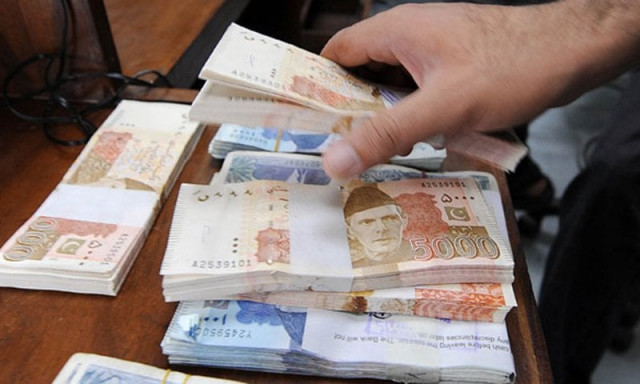
Anti-corruption efforts in Pakistan have been recast through an assertive push that officials say has delivered unprecedented financial recoveries, strengthened institutional capacity and repositioned the country's credibility within global accountability networks, marking what they describe as a decisive shift in direction.
The National Accountability Bureau's (NAB) total recoveries have crossed Rs12.3 trillion, a milestone authorities describe as the first instance of any Pakistani institution restoring such a vast sum to the state, signalling a scale of enforcement not previously recorded in the country's history.
Officials cite Rs11.4 trillion recovered in just two years and nine months as evidence that reforms have accelerated the bureau's operations, giving it what they call global-standard speed, accuracy and documentation unmatched across the region.
They argue that NAB's financial efficiency has reached a point where every rupee allocated to its budget has yielded Rs643 back to the national treasury, a return ratio the bureau promotes as an effective, low-cost model drawing international attention.
A central focus of recent action has been the recovery of 4.85 million acres of state land, which authorities say reflects decisive operations against land-grab networks and secures the reclaimed tracts for national development, agriculture and public-welfare projects.
The bureau adds that Rs207 billion has been returned transparently to victims of fraud and unregulated housing schemes, delivering financial relief that officials believe has strengthened public trust and enabled faster access to justice. Record recoveries of Rs6.1 trillion in 2025 are being framed as the strongest evidence of an institutional overhaul that has positioned NAB as a high-performance anti-corruption body capable of handling complex, large-scale investigations.
Under the Digital NAB initiative, e-investigation, e-office systems and electronic statement recording have been deployed to accelerate inquiries while enhancing transparency, record protection and limiting human error in case processing.
A stricter scrutiny system has sharply reduced fake and unnecessary complaints, ensuring that action is confined to verifiable cases only — a shift officials say has helped reinforce the bureau's credibility among stakeholders.
In 21 high-profile money-laundering cases, investigators have traced assets worth Rs118 billion, which NAB cites as proof that Pakistan is pursuing cross-border corruption and illicit wealth in line with international enforcement standards.
Cooperation with Interpol, ARIN networks and other global bodies has strengthened Pakistan's profile in international anti-corruption efforts, opening new pathways for asset recovery and improving the country's standing in multilateral initiatives.
Officials maintain that a transparent, non-political policy has restored confidence among the business community and bureaucracy, encouraging decision-making based on law and policy rather than fear, while contributing to stronger governance standards.
Payments totalling Rs165 billion to victims over the last 11 months are being highlighted as a key public-trust milestone, while swift arrests and rapid recoveries in major cases have reinforced the state's assertion that its resolve against corruption remains firm.
The establishment of the Pakistan Anti-Corruption Academy is being presented as an institutional investment designed to strengthen research, training and investigative capacity, ensuring accountability processes evolve with modern, scientific and internationally aligned practices.
Officials argue that new international partnerships and agreements have boosted Pakistan's credibility.













This material may not be published, broadcast, rewritten, redistributed or derived from. Unless otherwise stated, all content is copyrighted © 2026 The Express Tribune.






COMMENTS
Comments are moderated and generally will be posted if they are on-topic and not abusive.
For more information, please see our Comments FAQ