BLA’s nexus with Al-Qaeda, TTP fuelling terrorism and women exploitation in Balochistan
Updated 7 hours ago

Global lender okays nearly $1.1b under extended fund facility and $220m under resilience and sustainability facility
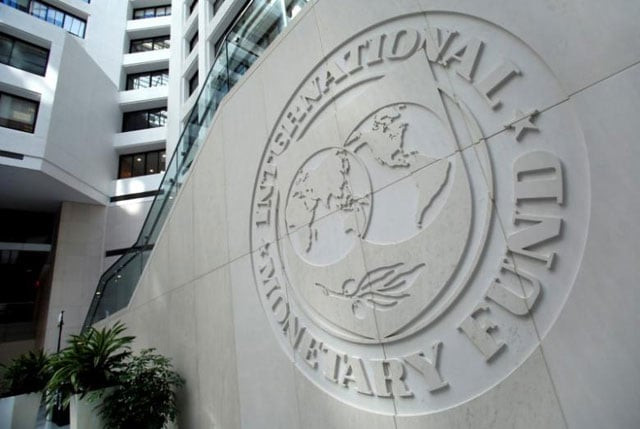
The International Monetary Fund board on Monday approved a $1.3 billion loan by granting waivers for missing a few core conditions and securing a fresh commitment from Pakistan to introduce new tax measures to offset the impact of a huge revenue shortfall.
To secure the IMF board meeting date, the Pakistani authorities had agreed to fulfill two prior actions – a guarantee to issue an order to restructure an undercapitalised bank and the publication of the Governance and Corruption Diagnostic Assessment report – the latter costing the government political capital.
The global lender approved nearly $1.1 billion under the Extended Fund Facility (EFF) and another $220 million under the Resilience and Sustainability Facility (RSF), according to the decision that would keep the two loan programmes worth $8.4 billion on track.
The Ministry of Finance had to face criticism from within, as it remained glued to the conditions agreed with the IMF. The bureaucracy of the Finance Ministry played a key role in keeping the programme on track.
The IMF’s programme has stabilised the economy, and the Finance Ministry showed the first primary budget surplus in years and halted the exponential increase in public debt. The prime minister has praised the performance of the economic team, particularly Finance Secretary Imdad Ullah Bosal.
The $1.1 billion is the third tranche under the $7 billion economic stabilisation package, approved on the basis of Pakistan’s economic performance for the January–June period of the last fiscal year.
But to pave the path for approval and continuation of the programme, the board accepted Pakistan’s request for waivers on missing some conditions for the end-June period and also relaxed at least three conditions for the next review.
The IMF programme has brought economic stabilisation, but the structural reforms have yet to take root, even as the national coordinator of the Special Investment Facilitation Council calls for a growth plan.
Government sources said the IMF board waived the quantitative performance criterion of spending Rs599 billion under the Benazir Income Support Programme, as the spending remained below target. However, the central bank overperformed on another condition of building net international reserves after buying $8.4 billion from the local market.
The sources added that the IMF also relaxed the end-December condition on the primary budget surplus due to the impact of the floods and adjusted the target for the filing of new income tax returns and for BISP spending.
The government also missed the conditions on achieving the tax target and on provincial spending for health and education. But it met the conditions on restricting power sector circular debt and on enhancing the maturity of domestic debt to reduce refinancing risks.
Read More: Bringing $3b investment back to PSX
The government managed to meet eight structural benchmarks related to improving areas critical for addressing economic vulnerabilities.
However, it could not achieve a few other structural conditions related to amending state-owned enterprises laws, imposing federal excise duty on fertilizer and pesticides, and timely publishing the Governance and Corruption Diagnostic Assessment report.
The corruption assessment report was published with a lag, which the chairman of the National Assembly Standing Committee on Finance described as an “indictment of the government and the Parliament.”
The IMF board was told that the report’s publication was delayed due to needed consultations with government agencies. The Board on Monday also relaxed the deadline for publishing the action plan by the end of this month to address corruption- and governance-related weaknesses.
The government has assured the IMF that it will amend the SOEs laws by August next year and stands ready to impose the federal excise duty on fertilizer and pesticides as part of contingency measures to offset the revenue shortfall.
The Federal Board of Revenue missed its first five months’ tax collection target by Rs413 billion and has promised to impose a mini-budget from January. However, FBR Chairman Rashid Langrial said last month that although the contingency measures had been agreed with the IMF, there would be no need to trigger them.
Sources said the government also missed the condition of not granting any new tax exemption, as it gave an exemption on the import of sugar, which had first been exported, creating a shortfall in the local market.
The central bank told the IMF board that it exercised its right under the Banking Companies Ordinance to restructure and wind up an undercapitalised bank as part of the IMF prior actions.
The board has been assured that, for the completion of the next review of the $7 billion deal, the government will introduce new tax policy measures, if needed, to offset the revenue shortfall. It has also assured that appropriate monetary policy will continue to keep inflation in check.
However, Lt General Sarfraz Ahmad, the national coordinator of the SIFC, recently urged the central bank to cut interest rates to reflect the groundrealities of low inflation of around 6%.
The federal government has promised the IMF that it will regularly adjust electricity and gas prices and reduce the footprint of the state. The central bank also assured the IMF board that it would maintain a flexible exchange rate.














This material may not be published, broadcast, rewritten, redistributed or derived from. Unless otherwise stated, all content is copyrighted © 2026 The Express Tribune.






COMMENTS (1)
Comments are moderated and generally will be posted if they are on-topic and not abusive.
For more information, please see our Comments FAQ