Brand reliability fetches demanded price
Updated 9 hours ago

For foreigners to genuinely return, Pakistan must show consistent progress
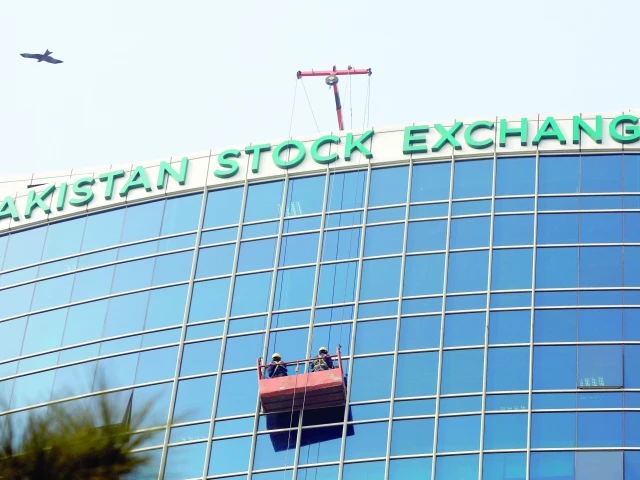
"Only Pakistan's stock market is booming." This is the line echoing across business circles still recovering from a decade of painful economic stabilisation. And yet, the KSE-100's rise from the low 40,000s to nearly 170,000 – over 300% return in just a few years – cannot be dismissed as a coincidence or speculation.
It is fuelled by a combination of deep liquidity, capital market reforms, resilient corporate profitability, strong dividends, and a valuation base so low that blue chips were trading at 3x price-to-earnings (P/E) ratios.
But this naturally triggers the uncomfortable question: if Pakistan's market is so strong, then why did foreigners withdraw $3 billion from PSX in the last 10 years? The answer, like Pakistan's economic trajectory, is layered and complex.
A booming market doesn't erase a decade of broken trust
Pakistan's most impressive era of foreign investor confidence was 2002-2007, when the economy was grouped with rising Asian growth stories like Vietnam, Thailand, Malaysia and the Philippines. But the years that followed brought turbulence: multiple IMF programmes, a ballooning circular debt, rising fiscal deficits, mounting debt-to-GDP, stagnant exports, surging gas and electricity tariffs, political upheavals, security stress on western borders, and chronic SOE losses. Foreigners gave Pakistan a chance after the 2008 crash, but consistent policy reversals hardened their scepticism from 2012-13 when large foreign investors quit Pakistan's story.
Today's foreign fund managers seek 5-10 year thematic stories, not 12-18 month macro reprieves. Despite deep-value valuations, Pakistan rarely re-rates beyond 10-12x P/E because global managers see heightened volatility – sharp interest rate swings, persistent currency depreciation, repeated credit rating downgrades, thin FX reserves, and heavy reliance on bilateral support from GCC and China. Add to this our removal from MSCI EM, and Pakistan looks more like a "tactical trade" than a long-term strategic bet.
Cheap valuations cannot compensate for volatile foundations
Yet the next five years offer a generational opportunity – if reforms hold. Pakistan can realistically attract $400-500 million per year in foreign portfolio flows simply because the investable universe has widened, regional markets have matured, and Pakistan is starting from a significantly low base.
But this requires credible movement on privatisation, especially PIA and loss-making DISCOs, controlling circular debt, enhancing LNG and gas allocation efficiency, raising the tax-to-GDP ratio, and ensuring continuity in economic direction through deeper civil-military policy alignment. Strengthening ties with GCC, Central Asia, and a pragmatic US engagement – particularly around critical minerals and tech – can reshape perceptions.
The immediate priority is simple yet demanding: 4-5% sustainable GDP growth driven by exports and FDI, not borrowing. The next growth runway lies in IT, agriculture value chains, minerals, services, logistics, and energy transition industries – not the legacy subsidy-fed sectors of the past.
Growth without exports, taxation reforms is just a temporary illusion
For foreigners to genuinely return, Pakistan must show three to five years of consistent, irreversible progress. That means maintaining a 1-2% primary surplus every year for five years until debt-to-GDP falls below 50%. Exports must grow 5-10% annually, remittance flows must be pulled fully into the formal channel, and skilled manpower must be positioned for global markets. Achieving B+ (S&P) and B1 (Moody's) sovereign ratings – levels seen in the mid-2000s – would signal long-term credit stability. And yes, let's repay bilateral loans from "friends".
Tax reforms must be broadened, not reversed. Loss-making companies must be privatised or handed to professional operators. Corporate taxes and super taxes must move to competitive regional levels. Tax credits for IPOs and industrial capex should be restored to deepen PSX listings. And above all, foreign investors must see predictable dividend repatriation, clarity on exit rules, and an end to reactive policymaking driven by short-term pressures.
Credibility compounds – but so does uncertainty
Domestic industries must also shift direction. Pakistan must stop exporting raw minerals and instead build value-added clusters with global partners. IT, fintech, pharmaceuticals, healthcare, and logistics can attract foreign strategic investors if capital repatriation is seamless and policy continuity is guaranteed. Capital tied in real estate projects, gold and banks shouldn't be half as lucrative as exporting and import-substituting industries. Foreigners want to be partners in long-term value creation, not temporary witnesses to cyclical booms.
Pakistan today sits at a rare inflexion point: the stock market is signalling confidence, but foreigners will only return when reforms survive politics, cycles, and crises. If Pakistan can sustain three to five years of structural discipline – not just stability – the country can permanently shift from being an opportunistic trade to a credible emerging market story.
Our neighbour and arch-rival has $690 billion of FX reserves; we need to up our economic game as much as our military equilibrium. The next chapter depends entirely on policy continuity, export-led growth, and the courage to complete reforms that were previously abandoned halfway.
The writer is an independent economic analyst









This material may not be published, broadcast, rewritten, redistributed or derived from. Unless otherwise stated, all content is copyrighted © 2026 The Express Tribune.












COMMENTS
Comments are moderated and generally will be posted if they are on-topic and not abusive.
For more information, please see our Comments FAQ