Gold prices rise in local, global markets
Updated 5 hours ago

Trade policy causes economic instability, fuels inflation, stalls innovation, worsens farmers, businesses plight
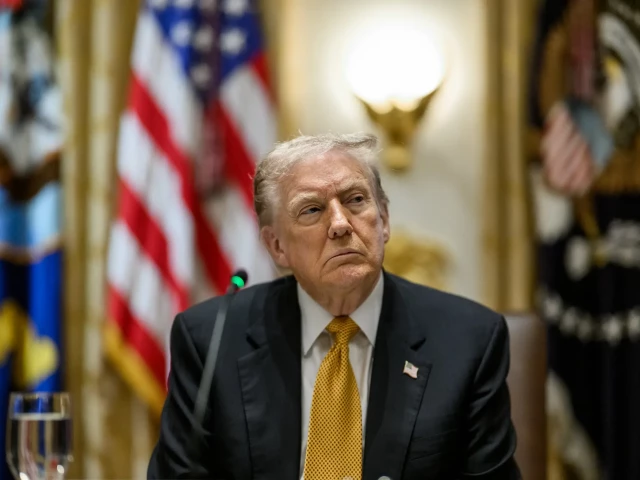
Before his election, Donald Trump pitched trade tariffs to his supporters as the most powerful weapon in his arsenal for waging the battle to 'Make America Great Again.' He expected his strategy would rake in billions of dollars in duties, discourage imports to reduce trade deficit, and help revive US industries, thereby creating more job opportunities for American workers.
However, what he may not have factored in were the unintended consequences of his approach. Little did he know the costs of this strategy would far outweigh its intended gains!
After his return to the White House, President Trump followed through on his promise, announcing sweeping tariffs on friends and foes alike. He assured the Americans that they would benefit from his strategy while foreign countries would bear the brunt of the costs. Studies and surveys, however, reveal a different reality – it is, in fact, US consumers and businesses that are largely paying the price for these tariffs.
Harvard Business School Professor Alberto Cavallo, who is tracking prices of over 350,000 goods in real time, found that imported goods have risen about 5% in price since March 2025, compared with 2.5% for domestic goods. Against pre-tariff deflationary trends in 2024, the impact is even sharper: imported goods are 6.6% higher and domestic goods nearly 3.8% higher.
"The Trump administration has always believed that if they put on the tariffs, foreign exporters will be pressured to lower their prices," Cavallo said in the Oct 2024 Harvard study. "But we find that it's mostly US firms and the US consumers who end up paying."
A survey of companies in Europe, the Middle East, and Africa backed up Cavallo's assessment, finding that 72% of these manufacturers have jacked up their prices since Trump's tariffs took effect. Major American companies have followed suit, passing on higher costs to buyers.
A recent financial analysis by the global investment firm Goldman Sachs projects that US consumers will absorb 55% of tariff costs by year's end, with businesses taking on 22% and foreign exporters only 18%. This "pass-through" effect is driving up inflation, at a time when the Federal Reserve is already grappling with rising costs and slowing growth.
The dollar's depreciation against foreign currencies has only exacerbated the problem. According to researchers at Yale University, foreign producers have raised their prices in dollars, further escalating costs for American consumers. As a result, American buyers, especially low- and middle-income households, are bearing the brunt of a trade policy that Trump promised would protect them.
However, the worst hit by Trump's trade policy are, arguably, American farmers, a key part of his voter base. Agricultural exports, particularly to China, had taken a huge hit during Trump's first tenure. The US exported about $22 billion in agricultural products, especially soybean, to China in fiscal year 2017, but by 2019, that number plummeted to just $6.5 billion.
When Trump reignited the trade war with China in 2025, he believed Beijing would succumb like other countries that came "begging for a deal." Beijing, however, reciprocated with its own tariffs. In March 2025, Beijing suspended import licences for several US soybean exporters following new tariffs on Chinese goods.
While a deal in Oct 2025 promised China would purchase 25 million metric tons of US soybeans annually, the relief has been mostly symbolic. Before the 2018-19 trade war, China regularly imported 30 million to 36 million metric tons of US soybeans annually – more than one-third of all US soybean exports. Now, China has signed long-term contracts with Brazil and Argentina, leaving US farmers with dwindling overseas demand and record levels of unsold soybeans. Many farmers are now facing the grim reality of lower prices, fewer export opportunities, and limited government support.
Labour shortages are another pressing issue for American farmers. According to the National Agricultural Workers Survey, roughly 42% of US crop workers lack legal status. As Trump's administration has ramped up immigration enforcement and slowed visa processing, the pool of available farm labour has shrunk. At the same time, labour costs have surged, with hired-labour expenses rising 14.4% from 2021 to 2022, and another 15.2% the following year.
Trump's strategy also geopardised renewable energy projects, which was another source of income for farmers in rural America. Wind and solar energy has become a lifeline for many family farms, providing steady income through land leases for turbines and solar panels. In states like Iowa, Texas, Oklahoma, and Kansas, renewable energy has brought jobs, tax revenue, and financial stability to farmers who have been hit hard by declining crop prices.
However, Trump's policy changes have imperiled this sector. In August 2025, the US Treasury froze billions in rural investment for renewable energy projects, pushing many wind and solar initiatives into limbo. This freeze has dealt a huge blow to farmers, who relied on this supplemental income, compounding the financial difficulties many are already facing due to low crop prices and tariffs.
Trump's tariffs are also stalling innovation in critical sectors of the US economy. His decision to withdraw from the Trans-Pacific Partnership (TPP) has left a vacuum that China has filled, undermining US competitiveness in key markets. The TPP was intended to open new markets for US agricultural products, promote high-quality trade in the Asia-Pacific region, and foster stronger economic ties with nations like Japan, Vietnam, and Malaysia.
In the tech sector, tariffs on Chinese products have disrupted the global supply chain, increasing costs for US companies that rely on Chinese-made components. As a result, innovation in fields like renewable energy, artificial intelligence, and high-tech manufacturing has been hindered. The increased cost of materials has made it more expensive for US firms to invest in new technologies, potentially giving global competitors an edge in these critical industries.
While Trump's tariffs were intended to reduce the trade deficit and protect American jobs, the reality has been quite the opposite. The tariffs have caused economic instability, fueled inflation, stalled innovation, and worsened the financial plight of farmers, businesses and consumers. If Trump genuinely wants to 'Make America Great Again', he must return to the principles of economic integration, open markets, and multilateral cooperation that have traditionally served the United States well.
The writer is an independent journalist with a special interest in geoeconomics












This material may not be published, broadcast, rewritten, redistributed or derived from. Unless otherwise stated, all content is copyrighted © 2026 The Express Tribune.






COMMENTS
Comments are moderated and generally will be posted if they are on-topic and not abusive.
For more information, please see our Comments FAQ