PSX jumps over 3,680 points as oil prices retreat
Updated 12 hours ago

Under changed architecture, economy endures trade deficit in goods and services
The post-war Bretton Woods system was based on exchange rate stability, where the Official Development Assistance (ODA) was used to provide necessary development finance to the developing countries. The system ran successfully during the 1950s and 1960s, when developing economies achieved high rates of capital accumulation.
However, the collapse of the Bretton Woods system in the early 1970s brought a turn in development finance, where private international finance started to take a driving seat. The private turn in international development finance has changed the international financial architecture. Under the new global financial architecture, private capital flows are calling the shots.
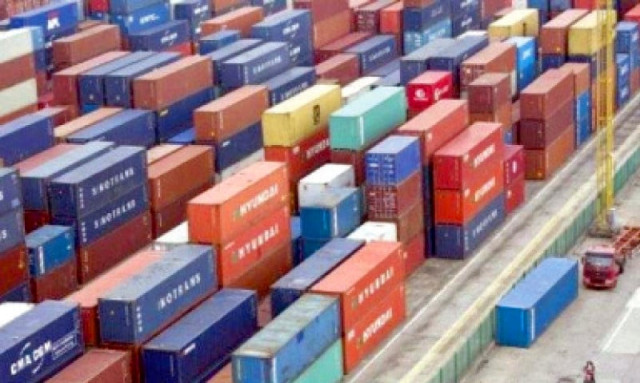
Under the changed international financial architecture, the economy has been experiencing a trade deficit in goods and services. Remittances cover a large part of the trade deficit, while the remaining deficit requires capital inflows, which are financed by external debt. In the event of a high economic growth rate, the external deficit deteriorates fast, and the country requires higher capital inflows. This implies the accumulation of external debt, which also increases debt servicing.
When economic growth is high, imports grow faster than exports, so demand for foreign currency increases relative to supply. The demand is met through dollars, which are in short supply. Hence, foreign exchange reserves decrease if additional borrowing is not forthcoming. As the foreign currency reserves plummet, the country approaches the International Monetary Fund (IMF).
The IMF programme provides funding along with the conditionality clause. The conditions require following a macroeconomic framework. The purpose of the framework is to restore balance to repay the loans borrowed from the IMF. So, the country adheres to good macroeconomic policies.
A combination of tight fiscal and monetary policies is used to reduce aggregate demand, which results in import compression. In addition, GDP/national income and the rate of inflation also decrease. However, the debt servicing remains as such.
The tight monetary policy is implemented through a high policy rate. The domestic policy rate is kept high vis-à-vis international policy rates, which creates interest rate differentials.
The interest rate differentials attract capital/financial flows. These flows appreciate the real exchange rate. The appreciation of the real exchange rate increases the profits of private international financial investors. The appreciation makes imports cheaper and reduces the competitiveness of exports. Hence, the current account turns into a deficit. Moreover, the cost of travel to developed countries becomes cheaper.
The so-called good macroeconomic fundamentals also bring asset price inflation. In the Pakistani context, equities, real estate and commodities fall into the category. Financial capitalists keep moving their capital from one asset class to another.
For instance, the Pakistan Stock Exchange (PSX) has been witnessing a historic boom since FY 2024. PSX index has already crossed 170,000 and now hovers around 167,000. Stocks are valued highly as investors are confident, and a low inflation rate is supporting them in this regard.
The appreciation of the real exchange rate also promotes luxury consumption. Investors feel as if they are wealthy and spend on luxury goods. In FY 2025, a higher number of automobiles were sold compared to FY 2024. The uptrend continues in FY 2026.
Investors have been buying SUVs and other expensive imported items. Since most of the automobiles fall into the luxury goods category, this is fueling import-led consumption.
In short, private international capital/financial flows make imports cheaper and fuel import-led luxury consumption. Under this international financial architecture, foreign lending substitutes domestic borrowing, which, in turn, increases external debt accumulation. This external debt accumulation will increase the cost of debt servicing in future, which would become a challenge for policymakers in the years to come.
The writer is an independent economist and authored a book: Pakistan's Structural Economic Problems in the era of Financial Globalisation













This material may not be published, broadcast, rewritten, redistributed or derived from. Unless otherwise stated, all content is copyrighted © 2026 The Express Tribune.







COMMENTS (2)
Comments are moderated and generally will be posted if they are on-topic and not abusive.
For more information, please see our Comments FAQ