BLA and the digital weaponisation of women
Updated 22 minutes ago

Pakistan needs to go beyond attracting capital to strengthen its economic balance sheet

Rather than being drawn into increasingly complex geostrategic conflicts, Pakistan has sought to leverage its geoeconomic potential, but unlike regional peers, it has struggled to attract significant foreign investment. Traditional investors like the UK, the US and Gulf states have contributed only modestly, leaving Pakistan in search of new economic partners.
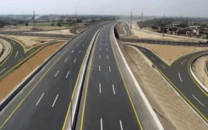
More than a decade has passed since Pakistan persuaded China to launch CPEC. Alongside closer military cooperation, China has become Pakistan's largest foreign direct investor. Chinese investments have expanded beyond infrastructure and energy to include mining, agriculture and renewable energy projects. This deepening Chinese engagement with Pakistan has prompted concern in India and the US, both of which seek to counter China's influence.
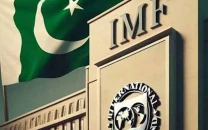
US-supported initiatives examining Chinese influence in the Global South, such as the AidData project at William and Mary University, offer a cautious assessment of Chinese investment in Pakistan. While acknowledging that Chinese financing has supported major infrastructure projects, AidData notes that most of this funding comes in the form of loans, adding to Pakistan's already significant debt burden. While Pakistan is also a long-time borrower from US-backed lending agencies such as the World Bank and IMF, Pakistan's debt to China is not as concessional. Recently, however, China has begun to focus more on stabilising Pakistan's finances through deferred loan repayments, rather than expanding productive infrastructure.
Similarly, the Taiwan-based thinktank, DoubleThink Lab, tracks China's influence in more than 100 countries across multiple domains, including academia, economy, foreign policy, media, military and technology. This research entity ranked Pakistan among the countries most exposed to Chinese influence at the end of last year, alongside Cambodia and Singapore.
However, the expected benefits of Chinese investments have yet to become tangible for ordinary Pakistanis. CPEC's special economic zones have not become bustling centres of productivity. Gwadar port, under Chinese control, has not been transformed into a commercial gateway. For the people of Gwadar, Chinese largess remains limited to small-scale initiatives in health, education, vocational training and water filtration, which are insufficient to reshape the local socioeconomic landscape.
In the attempt to diversify its options, Pakistan is attempting to woo other sources of foreign investment. There are reports of Pakistan offering the US commercial port access in Pasni to woo greater American investment in Balochistan's critical minerals. However, newly articulated policies to accelerate foreign investment largely neglect the need to enhance labour rights, strengthen local capacity and protect environmental standards. Pakistan's history of elite capture risks channelling the benefits of incoming investments to the privileged few, while allowing multinational companies to reap outsized profits. Top-down approaches of this kind are unlikely to ensure national or regional prosperity.
If Pakistan cannot leverage foreign investment to improve the lives of its citizens, it is unrealistic to expect Chinese, American or other foreign investors to prioritise anything beyond profits.
Investments that promote accountability, transparency and inclusion can reduce friction and ensure projects are more locally grounded. Even DoubleThink Lab's research focused on Pakistan, emphasises the importance of governance reforms, socially responsible technology integration and inclusive policy implementation.
Rethinking foreign direct investment in Pakistan needs to go beyond attracting capital to strengthen its economic balance sheet. Instead, the incoming resources must be leveraged to maximise benefits to Pakistani citizens, which is the only path to securing long-term growth.










This material may not be published, broadcast, rewritten, redistributed or derived from. Unless otherwise stated, all content is copyrighted © 2026 The Express Tribune.


COMMENTS (6)
Comments are moderated and generally will be posted if they are on-topic and not abusive.
For more information, please see our Comments FAQ