Macron says Trump marriage jibe does not 'merit response'
Updated 1 hour ago

Lawmakers push for Imran Khan’s release, other political prisoners, and an official state response
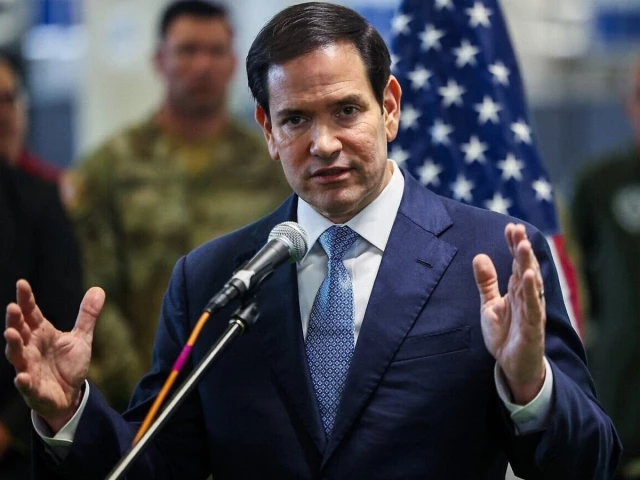
Forty-four Democratic US lawmakers have written to Secretary of State Marco Rubio calling for targeted sanctions against Pakistani officials, citing what they described as an “escalating campaign of transnational repression and worsening human rights abuses.”
The letter, led by Democratic Congresswoman Pramila Jayapal and Congressman Greg Casar, calls for visa bans and asset freezes on officials held responsible for human rights abuses under Prime Minister Shehbaz Sharif and Chief of Army Staff (COAS) Field Marshal Syed Asim Munir.
The lawmakers described Pakistan as facing “an escalating crisis of authoritarianism,” warning that opposition leaders are held without charge, independent journalists face harassment or exile, and ordinary citizens have been jailed for social media posts. They also highlighted disproportionate violence and surveillance against women, religious minorities, and ethnic communities, particularly in Balochistan.
Congressmen stated Pakistan as facing “an escalating crisis of authoritarianism,” with civil society and democratic institutions under mounting pressure. Opposition leaders reportedly face prolonged pretrial detention, independent journalists are harassed or forced into exile, and ordinary citizens have been jailed over social media posts.
There has been no prompt comment from Pakistan’s Foreign Office or the embassy in Washington.
In the letter, Journalist Ahmed Noorani is mentioned who faced harassment after releasing a controversial report on military corruption and a purported leaked audio of former Chief Justice Saqib Nisar, including threats to his family. In November 2021, his wife was attacked in Lahore by unidentified assailants issuing death threats.
— Ahmad Noorani (@Ahmad_Noorani) December 5, 2025
Musician Salman Ahmad is also mentioned who faced legal and extralegal intimidation, including PECA charges for social media posts critical of the military and threats to family members. The letter notes these cases reflect a broader pattern of harassment against critics of Pakistan’s military, both domestically and abroad.
Read: Govt cracks down on individuals spreading propaganda against state institutions on social media
Women, religious minorities, and ethnic groups, particularly in Balochistan, face disproportionate violence and surveillance. The letter also raises alarm over judicial independence, citing the Supreme Court’s approval of civilian trials in military courts as undermining the judiciary and entrenching impunity.
The congressmen, in the letter, also urged the release of former Prime Minister Imran Khan, who remains jailed on multiple cases, including alleged corruption and charges accumulated since leaving office in 2022. According to Reuters, charges include alleged corruption involving land worth up to 7 billion rupees and accusations of abetting violence following his May 2023 arrest, which triggered nationwide protests.
Former Prime Minister Imran Khan, who remains in jail on multiple cases since leaving office in 2022, was described by his sister Uzma Khanum as being physically healthy but under significant stress due to limited access to visitors. He continues to face solitary confinement and restrictions on meetings, while charges including alleged corruption and accusations related to violence remain pending.
Read More: Amnesty calls out Pakistan for mass telecom surveillance
It further raises alarm over judicial independence, noting that the Supreme Court, under military pressure, allowed civilians to be tried in military courts, a move the lawmakers say “erases judicial independence and entrenches impunity.” The Supreme Court ruled that civilians can be tried in military courts if procedural safeguards are followed, and recommended Parliament set up an independent appellate mechanism to protect judicial independence.
The congressmen warn that Pakistan’s reach extends beyond its borders, citing US citizens and residents who have faced threats due to criticizing the military, often targeting their families in Pakistan. Such actions, they argue, violate Article 19 of the International Covenant on Civil and Political Rights (ICCPR), which guarantees freedom of expression.
Citing the 2024 elections, criticized for irregularities and documented in the Pattan Report, the letter states the process “installed a pliant civilian façade.” The US State Department had also publicly called for a full investigation into the elections, reflecting a pattern of democratic backsliding.
Also Read: Imran Khan sent on judicial remand in seven new cases
Lawyer Mirza Shahzad Akbar and activist Mehlaqa Samdani shared the letter on social media, calling for accountability for human rights abuses.
🚨🚨 A major development has emerged in the United States: the current regime’s influence in Washington appears to be weakening, as 44 members of the U.S. Congress have called for targeted sanctions against Asim Munir. This comes at a critical moment, when he is navigating new… https://t.co/P1WBARpvg6
— Mirza Shahzad Akbar (@ShazadAkbar) December 4, 2025
🚨44 Members of Congress Demand Trump Administration Hold Pakistan’s Military Regime Accountable for Transnational Repression and Gross Human Rights Abuses
— Mehlaqa Samdani (@MehlaqaCAPJ) December 4, 2025
General Asim Munir, who has been waiting anxiously for his “notification,” has now received it--from 44 Members of the… pic.twitter.com/jV2geJGExm
The congressmen requested a formal response from the State Department by December 17, including information on any sanctions already imposed under the Global Magnitsky Human Rights Accountability Act and conditions that would trigger further measures, allowing the US to block assets and restrict travel for those involved in serious human rights abuses or corruption.
They also want clarity on conditions that would trigger further measures, how Americans threatened by Pakistan-linked harassment are being protected, and how current diplomatic engagement is being used to push for respect for human rights and democratic governance.
The letter was signed by 44 Democratic House members, including Pramila Jayapal, Greg Casar, James McGovern, Rashida Tlaib, Maxine Waters, and Ilhan Omar.
There has been no immediate comment from Pakistan’s Foreign Office or its embassy in Washington. Analysts note that while Pak–US ties have seen economic and trade engagement, the lawmakers’ letter underscores rising concern in Congress over human rights and transnational repression.
Against this backdrop, the letter concludes by urging the US to apply consistent human rights standards, noting that Washington has previously taken action against transnational repression elsewhere and emphasising the need to protect fundamental rights.













This material may not be published, broadcast, rewritten, redistributed or derived from. Unless otherwise stated, all content is copyrighted © 2026 The Express Tribune.






COMMENTS
Comments are moderated and generally will be posted if they are on-topic and not abusive.
For more information, please see our Comments FAQ