Gold drops by Rs5,200 per tola as global prices tumble
Updated 5 hours ago

Deficit reaches $15.5 billion in five months; exports stay muted
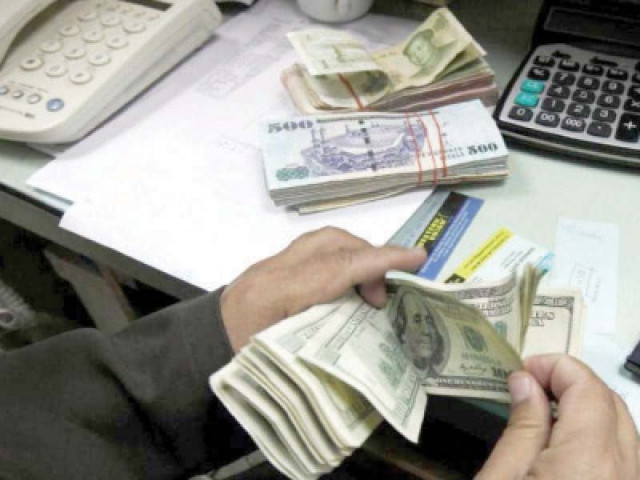
Pakistan's trade deficit widened at a faster pace of 37% to $15.5 billion in five months of the current fiscal year after exports plunged and imports grew in double digits amid disruption in the export of oranges due to suspension of trade with Afghanistan.
The Pakistan Bureau of Statistics (PBS) reported on Tuesday that the gap between imports and exports reached $15.5 billion during the July-November period. The deficit was $4.2 billion, or 37%, higher than the same period of last fiscal year. The five-month trade deficit was equal to 29% of the gross foreign exchange reserves.
Exports remained in negative territory while imports grew in double digits on the back of duty relaxation in the budget. Imports grew to $28.3 billion during the July-November period, a jump of $3.3 billion, or 13.3%, compared to a year ago. PBS stated that exports fell to $12.8 billion in five months, down 6.4% year-on-year. In absolute terms, exports were $877 million less than the same period of last year.
The national coordinator of the Special Investment Facilitation Council last week called for making the exchange rate regime more reflective of the ground realities. Exporters have been claiming that the rupee is overvalued by 4%, or Rs11 per dollar, which is eroding their competitive edge and keeping them focused on the local market. The rupee-dollar parity remained around Rs280.47 to a dollar on Tuesday. People were also facing problems in buying foreign currency from the local market. There are also apprehensions that exporters are keeping part of their proceeds overseas by understating the value of their goods, according to sources.
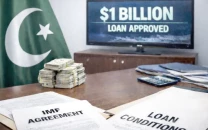
Under the IMF programme, the government has committed to cutting import taxes by 52% over five years, with the first phase implemented in July. However, trade liberalisation is not yet supported by an increase in exports, putting the external sector under pressure. Tight import controls until June had eased pressure on Pakistan's foreign exchange reserves, but unless exports recover, the government may have to reconsider its liberalisation policy.
PBS data showed that exports decreased to $2.4 billion in November, down $435 million, or 15.4%, from the same month of last year. This was the fourth consecutive month of falling exports. Imports grew 5.4% to $5.3 billion in November. It was the fifth consecutive month when imports stayed above $5 billion. In absolute terms, imports increased $270 million last month. As a result, the trade deficit widened one-third to $2.9 billion, up $705 million. On a month-on-month basis, the trade deficit contracted nearly 12%, but the impact of $384 million reduction was not very large.
Looming crisis
Meanwhile, Pakistani kinnow exporters are facing difficulties in selling their product to the landlocked Central Asia after the disruption of trade with Afghanistan. Sources said that the State Bank of Pakistan (SBP) has refused to waive the condition of financial instruments for kinnow export via Iran. There are no banking relations between Pakistan and Iran due to the US sanctions.
The Sargodha Chamber of Commerce and Industry and the All Pakistan Fruit and Vegetable Exporters, Importers and Merchants Association had approached the central bank to waive the financial instrument condition. However, the SBP said, "Waiving the requirement of a financial instrument not only encourages settlement of trade transactions outside the formal payment systems, thereby reducing the visibility, but it also distorts the balance of payments position of the country from a financial and logistical perspective," according to the central bank's documents. Pakistan's kinnow export potential remains in the range of $150 million to $200 million. Owing to low yields and low prices, exports stood at $31 million during the July-December period of last year.
This year, farmers are witnessing the highest kinnow output in a decade due to minimal disease attack and better yields. Exporters say that due to closure and uncertainty surrounding the Afghan transit route, one of the sub-par alternatives is the Iranian route.
The SBP said that it would allow the financial transaction, only if all the trade was conducted via formal channels, with E-Forms and financial instruments. In its correspondence with the Ministry of Commerce, the central bank also said that transit trade with Iran was prohibited by the US.











This material may not be published, broadcast, rewritten, redistributed or derived from. Unless otherwise stated, all content is copyrighted © 2026 The Express Tribune.






COMMENTS (3)
Comments are moderated and generally will be posted if they are on-topic and not abusive.
For more information, please see our Comments FAQ