Mahira Khan, Hina Rabbani Khar and more to attend Harvard conference
Updated 39 minutes ago

Falling attendance and streaming competition force independents to innovate with modular screens, luxury upgrades, and
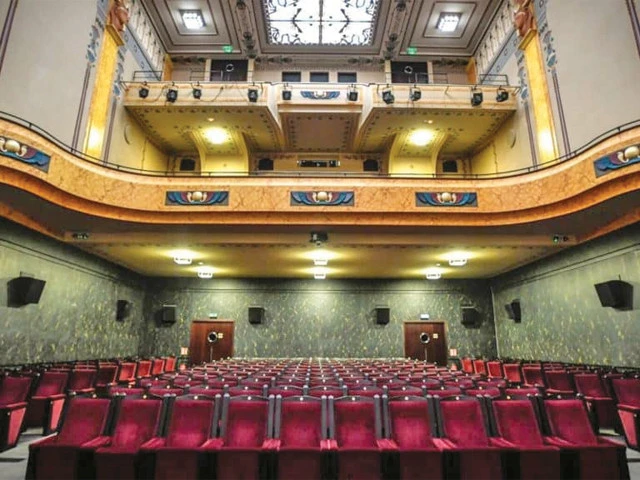
Paris is one of the world's arthouse cinema hotspots, but falling attendance means its beloved independent operators must innovate and invest to survive.
The centre of the City of Light has the highest density of cinema screens per capita anywhere, and arguably one of the most cinephile local populations. That has long sustained its dense network of picture houses - around 80 today - where film lovers catch classics and auteur titles in sometimes cramped spaces with minimal décor.
But the rise of streaming, the spread of high-end home-cinema equipment and fierce competition from deep-pocketed multiplex chains have pushed independents into an existential crisis.
Nowhere is the sector's transformation clearer than around the Champs-Élysées. In 2014, cinemas on the famous avenue sold 1.9 million tickets; 10 years later, sales had plunged to just 133,000, according to Paris city hall, which subsidises the sector. Only a handful of cinemas remain, with many replaced by luxury boutiques and tourist-oriented shops.
In 2019, the owners of the Elysées-Lincoln - one of the survivors - debated whether to close, repurpose or radically rethink the venue, said Louis Merle, who runs the cinema with his brother Samuel and manages two others.
"We decided it would remain a cinema because we are passionate, but we had to find a new economic model," he told AFP. After exploring ideas abroad, the brothers opted for a "modular" cinema. One screen can be converted into a reception room for up to 200 people "within an hour".
To match the upmarket neighbourhood, they undertook extensive renovations and created a "luxury cinema" with carefully designed interiors at a cost of nearly 2.3 million euros. "It was unthinkable to see another cinema close on the Champs-Élysées," Merle said, calling the commitment to culture on the avenue an "activist" act.
Their project reflects a wider trend of converting cinemas into premium venues with enhanced comfort and upgraded visual and sound systems. "The audience is becoming increasingly scarce. You have to win it back by offering exemplary conditions in terms of welcome, comfort and projection quality," said Richard Patry, president of the National Federation of French Cinemas (FNCF).
Cinema attendance has fallen by around 15% in 2025 compared with 2024, and experts warn the sector may never return to pre-pandemic levels. The Covid-19 closures in 2020 reshaped habits, while this year's figures also suffer from a lack of strong French-language releases or major Hollywood blockbusters to draw crowds.
Paris remains an outlier, recording an average of 8.03 cinema entries per inhabitant per year, compared with 2.73 nationwide, according to the National Centre for Cinema (CNC). Other independents are reworking their already limited spaces to add screens and boost capacity.
Fabien Houi, who runs the Brady cinema in the 10th arrondissement, hopes to raise annual admissions from 65,000 to nearly 100,000 with the opening of a third 34-seat screen.
"You have to come up with things within your means and possibilities, even in terms of space, to try to survive," he said, speaking amid construction dust at the worksite.
Opening a new screen amid falling attendance may seem counter-intuitive, but the Grand Action in the Latin Quarter near Notre-Dame cathedral has seen similar success.
Since adding a 27-seat screen in 2022, owner Isabelle Gibbal-Hardy said she has almost doubled the number of releases she can programme each year, and "attendance has risen far more than expected" - all while maintaining an arthouse lineup.









1725429132-0/Untitled-design-(12)1725429132-0-208x130.webp "widespread rain thunderstorms expected across country from april 1 pmd")






This material may not be published, broadcast, rewritten, redistributed or derived from. Unless otherwise stated, all content is copyrighted © 2026 The Express Tribune.






COMMENTS
Comments are moderated and generally will be posted if they are on-topic and not abusive.
For more information, please see our Comments FAQ