Seraiki-speaking people deserve a province for their historical claim by virtue of language, culture and customs.
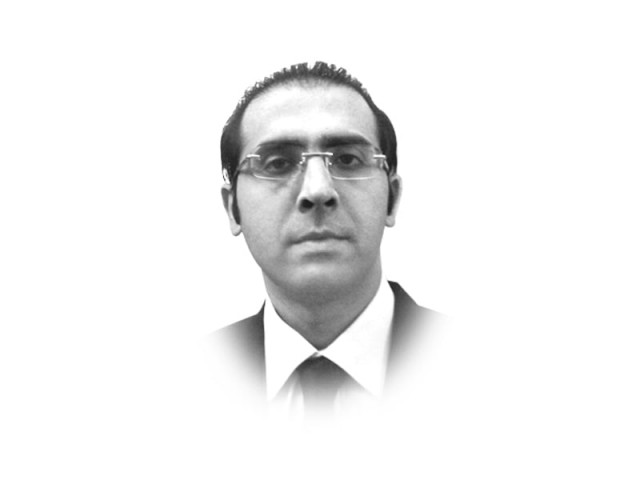
The writer is a lawyer and a partner at Ijaz and Ijaz Co
in Lahore
[email protected]
The prime minister has recently announced that the formation of Seraiki or a south Punjab province will be part of the manifesto for the next election. The response to the demand of a Seraiki province is uniformly met with a strange ambiguity. It seems all the major political parties either agree to or are at least sympathetic to the demand of a separate province for the Seraiki-speaking people. At the same time, almost all political parties want a division on administrative grounds and not on ethnicity-linguistic grounds. The underlying fear is that demanding a partition on the basis of culture, ethnicity and language would be detrimental to national unity and identity (or more accurately, in this case, to Punjabi identity). The not so subtle irony here is that a nation brought into existence by a partition for similar reasons is fearful of further partitions. Admittedly, the reasons are not identical since Pakistan was ostensibly formed for the reasons of religion alone.
One of the inimitable WH Auden’s best poems “Partition” is about the inglorious yet somewhat godly task of Sir Cyril Radcliffe of dividing Punjab and Bengal. The last stanza of the poem goes: “Shut up in a lonely mansion, with police night and day/Patrolling the gardens to keep the assassins away/He got down to work to the task of settling the fate/Of millions. The maps at his disposal were out of date/And the Census Returns almost certainly incorrect/But there was no time to check them, no time to inspect… But in seven weeks it was done, the frontiers decided/ A continent for better or worse divided/The next day he sailed for England, where he quickly forgot/The case, as a good lawyer must…”.
The point of reproducing this rather large chunk of Auden is not to highlight the competence or lack thereof of Radcliffe, but rather to draw attention to another irony. Almost all political parties in Pakistan are unanimous in their unadulterated loathing of the West, yet the salience attached to a week’s work of one British lawyer is staggering.
Punjab is a province that has become ungovernable due to its sheer size, and hence division on administrative grounds is a perfectly rational argument. However, the Seraiki-speaking people deserve a province not due to the failure of the Punjabi administrative machinery, but rather because they have a historical claim to their land by virtue of their language, culture and customs. The claim of the Seraiki people to a separate homeland predates Pakistan by centuries. Syed Ali Usman Hajvery (more famously known as Data Sahib) in his magnum opus “Kashf-al-Majoob” described Lahore as a suburb of Multan.
Ethnicity has become a foul word in Pakistan, conjuring up images of blood sprinkled streets in Karachi. And the easy and absurd solution devised by the state is to deny any and all ethnic differences and sweep it under the blanket cover of a singular religious identity. The problem with this monolith, grossly inaccurate generalisation is not only that it is dishonest, it also does not work. Parachinar, the capital of Kurram Agency, is exhibit A. There is genocide of the Shia Muslims that is taking place in Parachinar. Almost as tragic as the loss of innumerable human lives is the deadly silence. The Taliban have effectively taken the place over, yet, apart from solitary, vague news reports there is what seems to be a very deliberate attempt to ignore. It seems it is less interesting since it is Muslims killing Muslims (although the Taliban would differ about the Shias) as opposed to the mythical drone attacks.
A deep and unarticulated fear is the admission of the failure of a Pakistani identity to evolve. The Pakistani identity was originally supposed to be Muslims living in a tract of land with almost arbitrary lines being drawn by the likes of Sirs Radcliffe and Durand. The fall of Dhaka should have put an end to that, but curiously not only did it not, it also intensified the parochial identity. Balochistan is an example of enduring violence of genocidal proportions to homogenise the national identity. One of the most noticeable aspects of the otherwise banal Azad Kashmir election was the rhetoric of ownership employed by all political parties. The term azad seems irregular in this context. The fact that you have to appropriate, conquer and claim dominion to declare a land azad is paradoxical. Amidst two azad and two maqbooza Kashmirs, the Kashmiri and her wonderful, rich history and the right to her land is conveniently ignored.
The opposition to the case of the Seraiki and the Hazara is partially due to the fear of dilution of authority and partially due to the self-righteousness in guarding the feeble Pakistani identity. One would have thought the cause of the Hazaras would have been supported by the Khyber-Pakhtunkha’s nationalist ruling party, who themselves fought for the right to have a name that depicts them as a proud people having a distinct history and culture.
The basic failure of the state is the stubbornness in recognising that national identities cannot be imposed from a top-down model. It is almost as irrational as religious leaders calling for a ‘return’ to not only Islamic values but peculiarly to the culture of the Arabian Desert. Well, the problem is many of us have never seen the culture of the Arabian Desert, and hence find the call for return diabolical. Being a Seraiki is not in conflict with being a Pakistani. Punjabis and Seraikis both have long glorious literary and historical traditions with a significant overlap, yet that does not make them one. One of the most succinct definition of a nation was given by Stalin in Marxism and the National Question: “A nation is a historically constituted, stable community of people, formed on the basis of a common language, territory, economic life, and psychological make-up manifested in a common culture.” There are numerous nationalities in Pakistan as per this or any other definition. The state has to realise the only sustainable option is cherishing these distinct nationalities and not suppressing them, if the aim is to evolve even a semblance of a Pakistani identity.
Published in The Express Tribune, July 6th, 2011.
on Twitter, become a fan on Facebook
Those who advocate a “Pakistani identity” should realise that they are imposing their views on others. Just because we have not been able to manufacture a “Pakistani identity” does not mean that Pakistan has failed. Recognizing the diversity within our nation, accepting that an identity cannot be imposed from the top, does not mean Pakistan has failed, it only means that we are becoming a more tolerant and cooperative state which moves towards managing the aspirations of all its constituents.Recommend
Well researched and well written piece Mr. Ijaz. As you said, most of us haven’t seen Arabian deserts, neither have we seen the Siraiki deserts or Balochi hills either. Have you? The poverty, the illetracy, the agriculcture, the inftrastructure, the administration, the politician, the floods … Everything in these lands is miserable. They’d welcome any positive change and this Naara of a seperate identity is a convinient hope. If it can indeed bring solution to the problems, most welcome. But I am afraid, as it usually is in Pakistan: devolution of power is devolution of corruption! Make provinces or not, they need some serious attention. Your article might help!Recommend
I Totally agree. Very well written, and it seems enough research had been done prior to writing such a valuable article. Much appreciated.Recommend
Do not mix failure to govern with your nation identity. The fact that we are indeed a nation torn with lingual nationalism does not mean that a Pakistani identity is impractical. The fact that our political parties, for their own good and for no one else, divide people on these lines is an issue that needs to be addressed.
As for Hazara, i belong to the region and one thing i can tell you is that as soon as this sorry excuse of a name is reverted back to NWFP (which i find perfectly ok, as do most pashtuns) and people of Hazara get some of the due rights, for example, a part of the massive money they generate for the province spent once on them too. Or the CM visiting the area on a more regular basis then once in 3 years would help. Besides the ANP struggle has been a dangerous one. They want to join parts of Pakistan to Afghanistan. They too are absorbed with Pashtu Lingual Nationalism in which they can for go anything, even religion. They have sided with India on many occasions. So much so, Bacha Khan happens to be the only non-Indian to receive a Bharat Ratna. I think that speaks volumes about their loyalties. Recommend
@Syed Nadir El-Edroos
Pakistani identity is not a natural progression but an identity we were forced to forge due to some political adjustment. Pakistani identity will not sustain in front of the proud nationalistic feelings of people who form part of Pakistan. The only way you can tell if the experiment has passed is if you instead of coercion give people open right to opt in or out and then we will find how true all this facade is.Recommend
Completely agree with the author. Imposing homogeneity on such a diverse nation will never work [as we can see from our state of affairs]. This homogeneity is derived from religion which is a sure-shot way of disintegration of society and culture. Recommend
as usual mr “liberal” has made some remarks which does not make any sense. First time I have learned the term “return”. quite funny. you can not force a pakistani identity on the people because it didnt exist before 1947. In fact the actual identity was muslims of sub-continent. While preserving all the ethnic identity and their culture , only muslim identity can unite us.Recommend
Punjabi-Seraiki-Sindhi are ethnic groups off shoot from same Indus valley civilization. In fact Punjabi,seraiki and sindhi languages are sister languages as well. So much so,Upper Punjab and central punjab in areas such as sargodha and Jhang,people mostly speak seraiki as well so what about those areas ?
Fact remains that Punjabi,sindhi and seraikis are heterogeneous groups with MANY Nations residing. Rajputs like Bhuttos,Samma,Rana,Rao,Khaan,Daultana etc live both in sindh and Punjab respectively,then you have Gujjars,Jatts,seraikis of baloch lineage etc etc as well.
Second,there is NO “Punjabi identity” as Urdu have been IMPOSED on Punjabis as well. Children are allowed to learn Pashto and Sindhi in their respective provinces but since 150 years,Punjabi is banned in schools in Punjab. and that is EXACTLY why Punjabi nationalist parties are making way as well such as “Punjabi Language movement” or “Punjab watan party”.Punjabis have realized that outsiders have imposed their system on them by “USING” Punjab hence everyone have always blamed Punjab and in my opinion very wrongfully.
New provinces are needed and being seraiki maternally as well,I support the cause of new “Roohi-Soobah” in southern Punjab but all on administrative basis provided punjab ALONE is not divided.Even Karachi should be declared a separate province,Balochistan too should be divided with upper balochistan annexed into KPK.
Also,we MUST recognize Punjabi,seraiki,sindhi,Pashto and Balochi as National languages like urdu. ONLY THEN we will be able to get rid of differences among us and then can Pakistan be strong.Recommend
Interpreting Data Sahib”s work describing “Lahore as a suburb of Multan” could never have those meanings for which attempts have been made to deduce out of that…If someone describes “Karachi as a suburb of Hyderabad or Hyderabad in the suburb of Mirpurkhas” could it have the same sense which has been manipulatively inculcated just to speak own mind…Had all the above described administrative units not been located in the mentioned ones’ suburbs???
How it was inferred that “Punjabis and Seraikis both have long glorious literary and historical traditions with a significant overlap, yet that does not make them one.” Has any so-called Saraiki nationalist party ever won a single seat???
According to the quoted definition “One of the most succinct definition of a nation was given by Stalin in Marxism and the National Question: “A nation is a historically constituted, stable community of people, formed on the basis of a common language, territory, economic life, and psychological make-up manifested in a common culture.” All the ethno-linguistic entities within the land of five rivers share the SAME/COMMON language having different diverse dialects, territory, economic life associated by and large with agriculture and psychological make-up in terms of un-deniable binding forces of Khawaja Fareed, Shah Hussain, Bulla, Waris Shah, Mian Mohammad Buksh, Baba Fareed, Pir Mehr Ali Shah and many others… I wonder, what else in needed???
Implying towards Stalin’s above definition vis-a-vis a nation; having coined Saraiki nation out of Punjab, an implication towards other similar sort of nationalities been given by saying that, “There are numerous nationalities in Pakistan as per this or any other definition.” May I know what are those???
As I am sure that there are no such nations as all the 4 existing national entities/provinces do have other ethno-linguistic groups living amicably in a peaceful environment having no conflicts whatsoever among major group in the said 4 entities of this federation in ideal pluralistic societies…Yes for the last couple of decades some mercenary writers of this federation have been trying their utmost to create some nations among all the said 4 national entities through fabrication and distortion of history at the behest of establishment just to linger on it’s de facto rule by fueling some of the ethno-linguistic sub-entities…and in this regard Punjab is nothing short of a sitting duck…
Interestingly the rulers of almost all parties in Punjab are supportive of it…why? Because by doing so they would have more ruling opportunities not only in Punjab but also in center and then their other ulterior desires like the building of Kalabagh Dam could be accomplished with an un-defeat able edge in senate over all other 3 entities…
One should remember that, attempts of diluting the centuries old pluralistic societies of any one of the national entities/provinces of this federation just to suppress & undermine their genuine “NATIONAL QUESTION” under the pretext of forging a pluralistic Pakistani nation would only beget dismemberment of a fragile state…! Recommend
Mr.Ijaz you need to study further on linguistic geography and linguistics in general. The language spoken from Jummu To Ludhiana and from DG Khan to Bahawalpur and from Lahore to Hazara is the same either you call it Punjabi or Saraiki or Photohari or Hindko. Ofcourse there are regional variations but that does not mean that Saraiki and Punjabi are two different languages. Your article lacks logic indeed. Recommend
Well, sounds interesting. Seems like i will be reading you in future regularly.
Instead of waiting for next election, shouldn’t PPP initiate the proceedings right now? They are federal government after all. And many MPAs voice their support for siraiki province.Recommend
@kashif manzoor
A dumb attempt to impose Urdu on Bengalis triggered a Bengali Language Movement that morphed into a Bengal Nationalist movement. Bengalis were Muslims, so are the Baloch separatists and 100,000 settlers who have migrated from Baluchistan. All sectarian killings involve Muslims. Target killings in Karachi between different ethnic parties involve Muslims. If being Muslim is enough to unite us, then all Muslims of the world should have united under a single political authority.Recommend
The author draws a facile parallel between the proposed partition of the Punjab and the partition of the British Indian Empire in 1947. The British Indian Empire was an entity created by the force of arms of a foreign conqueror. It did not posses any kind of unity; not religious, not ethnic, not cultural, not linguistic, nothing. Punjab, on the other hand, is a nation united by ethnicity, language, culture, geography, literature, everything. If in modern Pakistan former Punjabis are now calling themselves something else it points to something very deeply wrong with the state of Pakistan and its national ideology. This is what needs changing , not the borders of an ancient nation.
The logic here is simply appalling. All this quote, if correct, proves is that at that time Multan was a more important city than Lahore. Nothing more. It says nothing about any ‘Siraiki’ identity. Data sahib lived nearly a thousand years ago whereas the word ‘Siraiki’ entered Punjab hardly 30 years ago.
Genocide? I suggest the author invests in an English language dictionary,Recommend
@kashif manzoor:
If that be so then why did Bangladesh happen? and what about Balochistan ? Pls learn to respect peoples’ ethnicity.Recommend
@faraz:
“If being Muslim is enough to unite us, then all Muslims of the world should have united under a single political authority.”
Ibrahim Gardi – the Muslim General of the Maratha empire said “kaumon ki buniyaad mazahab pe nahin hoti hai”
If muslim is not sufficient basis to forge a national identity, then what is the basis of Pakistan which was a sub-continents home for muslims. What is the basis of a two nation theory.
Please do not beat me up in the replies – the question is a serious one and request only Pakistanis to reply – Indians would only beat their chests on thisRecommend
sorry to say but we don’t have any identity at all. whenever i used to tell someone that I am a Pakistan people used to step away from me and whoever knows that I am Pakistani won’t prefer to talk to me at first but later on when they come to know me, they would say, OH ! we never knew there are GOOD PEOPLE in PAKISTAN ALSO.Recommend
“Pakistani identity” – Simple “Anti India”. That is the only glue which binds it.Recommend
Brilliant article. It is disturbing to see people denying the existence of different ethnic groups like serikis and hazaras. it is the same mindset which prompts people to deny the genocide in Balochistan.Recommend
@Chacha
A cursory look at the history of partition reveals the contradictions of two nation theory. First, Islam has not provided for division of territories to settle populations on the basis of faith. Islam is a universal ideology that transcends all borders. Second, clergy opposed the Muslim league. Jinnah wasn’t a particularly religious man. He belonged to a minority sect; people of the same sect are under siege in Parachinar, yesterday an operation was launched to life that siege. Third, half of Muslim population remained in India and preferred their local identity of religion. In fact, it wasn’t about preferring religion or not, because there is no such obligation in religion to migrate to a Muslim majority area. Fourth, Jinnah never demanded partition till the very end. He accepted the Cabinet Mission Plan 1946 which prescribed a federation with 3 autonomous groupings. It was Nehru and Patel who rejected the plan. If Jinnah wanted a state for the Muslim nation, why did he accept autonomy? And if he didn’t want a separate state, why did he invoke the two nation theory? Fifth, Jinnah’s entire struggle was over constitutional rights. He never quoted verses from Quran or Hadees to justify his politics. Sixth, regarding division of Punjab and Bengal, Jinnah remarked that he won’t accept this moth eaten Pakistan. So he contradicted himself by opposing division of land on the basis of religion. Seventh, Jinnah supported the idea of an independent undivided Bengal. This again negates the two nation theory.
Many writers have offered different explanations for partition like piece of land to enforce sharia, British conspiracy, Cold war geopolitics, Muslim landed aristocracy using religion, a fluke, stubborn Nehru, Indus valley civilization, welfare state for Muslims, salariat etc. But all these explanations have loopholes.
But I think we don’t need to create an artificial identity. We should adopt the concept of modern state, where every citizen is equal regardless of religion, caste or creed. A functioning state that delivers welfare and security will economically integrate people belonging to different identities. We can become a stable state through proportionate distribution of wealth and provision of rights to individuals and communities. Recommend
To manage smaller units is always better and more practical. This is an accepted fact all over the world except Pakistan. In Pakistan, Feudal lords have always been in power and will remain, for long times to come. Therefore the feudal thinking is prevailing amongst most of the common citizens. Feudal Lords always try to increase their domain and thus, will not allow to make smaller units on one or the other pretext. If Jagirdari and Jirga system is either abolished or weakened then Pakistanis and Pakistani society will prevail and will be able to govern their land with approachable offices and provincial capitals. See capital of sindh province and its distance from Kashmor and Jacobabad. Similar is the position of Lahore , Quetta and Peshawar. Most interesting is location of Islamabad, on the other corner of Pakistan, While Rajanpur or Kashmor would have been best e.g in centre of Pakistan and nearly at meeting point of all provinces. But reasons of selecting Potowar, as a capital, was something else and also wherein billions of dollars have been spent to develop and build a splendid city, suitable for rulers, and away from the reach of a common citizen. Remember it is very difficult and costly to visit Islamabad and one day stay there. In these circumstances, we should forget making smaller units (provinces) and continue to live like slaves. My dear friends, difficulty is that the power and money, both together, have gone into wrong hands. Recommend
the discussion over identity is academic.
when the people get roti,kapra, makaan and qanoon (law and order) they will live like insaans and what they call themselves will become irrelevant mostlyRecommend
Obviously religionhasn’t worked. maybe its time to go back to our cultural roots and celebrate our similarities as well as differences and use our common cultural values to bring us together. After all we are all children of the Indus, it touches every province and brings all together.
Pakistanhas been created, it can’t be undone easily now. We have to make it work for our own survival. We need to recognise ALL local languages and cultures and give each one its respectful place, only then will each nation be happy to be part of the Pak federation as it is treated with equal respect and dignity. Recommend
“…only muslim identity can unite us.” Kashif Manzoor, I wonder why that didn’t work with East Pakistan. Recommend
One of the best columns ever on the subject. Pakistanis need this kind of intellectually honest people if they dream for a civilized future.Recommend
The issue of national identity is a complex one. To bring it down to a single denominator (e.g race,religion,language) can lead to s sort of ghettoisation. On the contrary ideals like
equality,justice,civil liberty,freedom of expression,human rights etc. if upheld by the state, can bring people from diverse socio-economicalal,religious,ethnic background together and instil in them a sense of belonging.Recommend
@faraz
On your rejoinder @Chacha
In a long long time I came across a comment on a blog discussing partition, which is dispassionate,sober,level-headed and most importantly without rancour.
Quite different from the usual chest thumping variety that both Indian and Pakistani bloggers
bring into the discource.Recommend
Interesting discussion, but why so much confusion? Aren’t all muslims supposed to be one ummah and all Pakistanis arabs?Recommend
Even Arabs, who are the real indigenous “muslims” and whose culture and values comprise Islam, cannot unite under a single political country. What are the chances that converts, who have a superficial and imposed relationship, will bond together in the name of the same religion?!!!
“Ethnicity” based on a combination of genetic and culture is a far stronger bond and identity as it is inherent, unique, permanent and unchangeable. Religion, specially a non-indigenous one, is an acquired superficial trait which is changeable at will, almost instantaneously.Recommend
Pakistan is an artificial creation by British with one border fixed by Mutamar Durand and the other by Mr. Ridcliff and without any legitamcy as for the formation of nationhood and national identity as an evolutionary process is concerned. My mother was a British Indian just one day before the partition but as she she woke up next morning on August 14, she had become Pakistani. And the poor soul didn’t have any idea what had happened to her.
If reliogion is to be the basis of nationhood, why does Pakistran abruptly ends at Khyber and why is Bangladesh today a separate nation and why did Jannah oppose the partition of Bangal and Punjab? If Pakistan was meant to be a home for Indian Muslims, why were as many Indian Muslims out in India—not to mention the non-Indic origin of Baluchis and Pashtuns (who are Iranic people not Indic)? If Pakistan was to be the union of Muslim majority regions of the British Empire, why did Urdu-speakers migrate to Pakistan.
The fact is, no reasonable definition of Pakistan is conceivable except the one in which it is considered and transformed to be a union of historical nations e.g. Punjabi, Siraiki, Pashtun, etc. bound by a constitution that guarantees, preserves, develops, and celeberates the cultures, political rights, economic well-being, and identities of component nations and at the same time provides these nations the political environment for mutual, interdependent development and security in the broader region.
Siraiki province is the right of Siraiki people and must be respected. Satus-quo only benefits Punjab. Provinces based on administrative consideration again favors until accompanied by the de-Punjabization of Pakistan military and federal instutions. Recommend
The identity of a nation can’t be a religion, ethnicity, culture, language alone. These identities just help forge some geographical boundaries.
But, the identity of a nation – is how the citizens of that nation forge unity by relating to each other’s aspirations, how they are bound together in a cause of combined prosperity, peace and growth.
If a citizens of a state can’t do that, then it fails to be a nation (thus a failed state).Recommend
Good article however I dont understand what’s so mythical about drone attacks?? Has the author ever talked to those affected??
Excellent comment by Mr. Nadir El-Edroos.
Recommend
During my visit to the gulf an Arab proudly said that “we are several nations but one religion”. I humbly told him that India is one nation with many religions and sects and many more languages. According to B R Ambedkar identity emerges out of a sense of shared destiny.
Do Pakistanis not have a sense of shared destiny of the Ummah? Then what is the problem?
Recommend
Our main problem today is ethnic bigotry (see what’s happening in Karachi!) and not following Islam correctly (see what is happening in Peshawer or Lahore or Sewan). If we had followed Islam correctly and obeyed the sunnah of Prophet (SAW), we would have welcomed and loved each other as muslims regardless of our ethnicity. Pakistan would have become a strong fort of Islam..but alas the Pakistanis have an ethnic mindset and a distorted religious mindset.
If only we had a true Islamic mindset similar to the sahaba, Pakistan would have been a heaven. Zardari/Sharif/Musharraf would have been going out to people’s houses at night to ensure no one was hungry (like Hazrat Abu Bakr (RA) and Hazrat Umar (RA) did when they were Caliphs)
Recommend