
(Un)successful attempt: Oil price cut has nothing to do with govt policies
Govt tries to take credit, but reduction comes as a result of global market plunge.
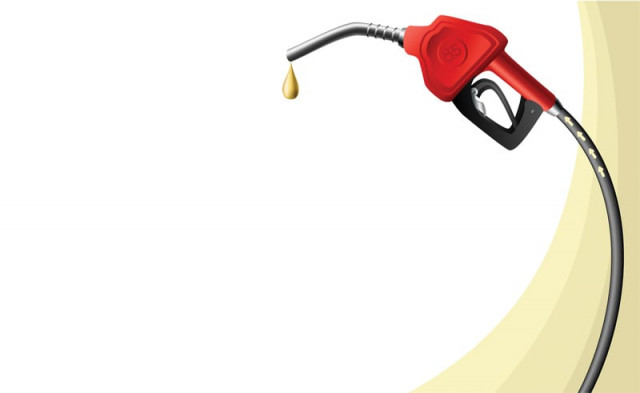
With the boom in US shale oil production and sales and the resultant dip in crude prices, global oil politics is picking up momentum. Pakistan is no exception as the ruling PML-N government, in a smart move, is taking credit of the drop in energy prices in the country.
Officials of the ministries dealing with oil and gas issues are keeping mum and have refrained from disclosing the decisions about downward revisions in oil and power prices following directives from the prime minister. The premier himself wants to make such announcements to improve his administration’s image in the face of allegations of bad governance and poll rigging by the opposition Pakistan Tehreek-e-Insaf (PTI).
The National Electric Power Regulatory Authority (Nepra), which takes a decision every month on revision in power tariff based on fuel price movements, reduced the tariff by Rs0.48 per unit for the month of October. This prompted an announcement from the premier, who was quoted by newspapers as saying that the tariff came down because of the measures taken by the government. In the case of oil prices too, his men are boasting of providing a relief to the people by making a massive reduction.
However, there would only be a few takers of these views. With the spread of means of communications, people know very well that global oil prices have fallen by more than a third to around $72 per barrel since June and that has left its impact on prices at home.
Some also are aware of the heavy taxes on petroleum products and there seems to be no space for more. Otherwise, the government would have been happier to increase the levies in order to collect higher revenues and meet its runaway expenses.
Recoveries and shortfalls
Let us take a look at the picture of energy sector and steps taken by the government to pile on the pressure on people and force them to pay the cost of unpaid loans and inefficiency of power companies as well as energy theft.
Official figures show average collection of bills by power distribution companies fell 10 percentage points from 90% in 2012-13 to 80% in 2013-14. Separately, receivables of energy companies rose Rs101 billion as they reached Rs485 billion compared to Rs384 billion when the current government took over in June last year. Now, the receivables stand at Rs600 billion.
Most of the time, honest consumers bear the brunt of shortfall in recoveries. In October last year, power tariff was increased by doing away with the slab benefits to recover Rs350 billion from the consumers. The tariff rose up to 28% for the consumers using 101 to 300 units per month and 52% for those using 301 to 700 units.
In fact, the power regulator had slashed the tariff for 2013-14, but instead of implementing the decision, the government slapped an equalisation surcharge twice – first 30 paisa per unit and then Rs1.50 per unit. The 30-paisa surcharge brought down circular debt by Rs90 billion and the second move led to the collection of Rs136 billion to repay the loans acquired by power distribution companies.
In the oil and gas sector, the situation is not too different. The inter-corporate debt in the energy chain, which the government cleared immediately after coming to power when the amount stood at Rs384 billion, has piled up again. Receivables of Pakistan State Oil, which were cleared in June last year, have soared to Rs220 billion in the wake of delay in payments by power producers.
Among gas distribution companies, Sui Southern Gas Company (SSGC) is in a relatively better position. But Sui Northern Gas Pipelines Limited (SNGPL), which covers Punjab and Khyber-Pakhtunkhwa, is experiencing difficult times as it has failed to control gas theft.
Old horses
In an instance of driving on old horses instead of searching for new talent, the SNGPL managing director has been given extension in its contract for the second time.
On the other side, the SSGC managing director was forced to resign as the Ministry of Petroleum and Natural Resources wanted an unconditional support from him for the award of liquefied natural gas (LNG) handling contract to Elengy Terminal Pakistan Limited (ETPL).
Rather than checking gas theft, the government is going to put a burden of billions of rupees on the consumers who are regularly paying their bills. Prices across the globe are going down whereas in Pakistan they could be increased by over 30% on January 1, 2015, which will lead to an additional collection of around Rs100 billion.
It would not be an exaggeration to say that this is a corporate government which is running the country like a corporate entity by taking cosmetic measures.
THE WRITER IS A STAFF CORRESPONDENT
Published in The Express Tribune, December 1st, 2014.
Like Business on Facebook, follow @TribuneBiz on Twitter to stay informed and join in the conversation.


MOST READ
Gold, silver prices surge again, local rates hit new highs

Apple to manufacture iPhones in Pakistan
'Air Punjab to take to the skies in April'

Applications open for 2027 Fulbright scholarship program
'I like this guy': Trump praises PM Shehbaz, CDF Munir at inaugural 'Board of Peace' summit on Gaza









COMMENTS
Comments are moderated and generally will be posted if they are on-topic and not abusive.
For more information, please see our Comments FAQ