
Vital energy supplies: TAPI pipeline – a project that is still alive
Turkmenistan aims to start pipeline construction next year.
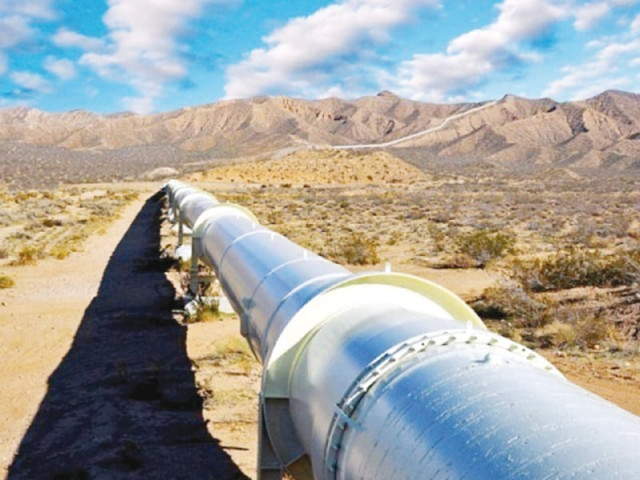
The project was started in 1995 but due to instability in Afghanistan it could not be pushed through for the last 19 years. However, this 1,735km pipeline with a maximum discharge of 33 billion cubic metres of gas per year is still feasible and supported by both Pakistan and Turkmenistan with a memorandum of understanding signed in 2010.

In April, Turkmenistan President Gurbanguly Berdimuhamedov demanded that all agreements required for launching the TAPI pipeline should be completed by the end of this year and construction will begin in 2015.
Pakistan’s Ambassador to Turkmenistan Tasadduq Hussain, while commenting on the security of the pipeline in the first week of May, highlighted the efforts made to persuade the Turkmenistan government.
He cited the experience of gas and electricity supply to northern Afghanistan from Turkmenistan over the past few years without any security threat. He stressed the need for adopting the same mechanism and formula for gas supply to Pakistan.
Hussain also commented that if gas, which would come from Turkmenistan to Pakistan via Afghanistan, was provided on low tariffs to the people in specific areas of Afghanistan, then in return they were expected to promise security for the pipeline. This will ease energy shortages and ensure economic prosperity not only in Afghanistan but also in Pakistan.
“We are waiting for the outcome of national elections in Afghanistan before launching and completing the TAPI pipeline, the cost of which has increased substantially from $2 billion to $8 billion,” he said.
However, in the meantime, Turkmenistan has signed various gas supply agreements with China, but it is still committed to the TAPI pipeline.
Turkmenistan’s progress
Earlier, I went to Turkmenistan in 1997. At that time, the new government was young and clueless. There was no sensible and credible economic policy due to which the business community was facing hurdles and suffering huge losses.
The cultivated land was only 20% and the rest was desert. Old ways of commerce such as barter system were in vogue to trade with new states of Central Asia that were formed after the breakup of the Soviet Union.
In 1997, Ashgabat, the capital of Turkmenistan, was a deserted city, which is now lush green with plenty of birds, a majority of whom have migrated from neighbouring Afghanistan and Iran. At present, Ashgabat is the largest city in the world constructed with white marble tiles.
Mannat, the official currency of Turkmenistan, stood at 6,000 per US dollar. But amazingly, now, it can be exchanged for 2.85 to a dollar.
In the recent visit, in the last week of April, on an invitation of Turkmenistan national association “Turkmen Atlary” as they celebrated Akhalteke Horse Day, I found a different and very developed country with a population of nearly six million and land area of 188,456 square miles.
Not so long ago, it had an inadequately developed economy. Today, it is quite different. It is developing fast with investments pouring in, attracting the attention of the world and breaking growth records.
With huge natural gas and oil deposits, Turkmenistan offers great investment potential and has become attractive for energy giants. The fact that the country is virtually a “peace area” with economic and political stability has fairly enhanced its standing among energy-rich countries.
Turkmenistan, swarmed by foreign companies in recent years, has recorded massive investments in various areas. With the help of development thrust, it is fast advancing on the path of becoming an economic power by collaborating with countries such as Russia, China, France, America, Japan and Turkey.
Joint projects
The Chinese government has made a commitment to grant natural gas credit to Turkmenistan and provide financial support for commissioning of the second phase of Galkinis field, which is called the second biggest natural gas field in the world.
China National Oil Company will construct a natural gas facility with a capacity of 30 billion cubic metres during the development of the second phase of Galkinis field. Furthermore, China will buy, within the scope of signed contracts, 25 billion cubic metres of gas, in addition to the previous deal for 40 billion cubic metres annually.
Apart from Beijing, Turkmenistan has also joined hands with technology-rich Japan whose corporate giants will build natural gas and chemical industries in the Central Asian state. It is anticipated that the cost of these installations, some of which will be built in association with Turkish companies, will be around $10 billion.
In the same way, Pakistan can tie up with Turkmenistan in the gas pipeline project to curtail the widening gap in energy demand and supply, which is vital for industrial and overall economic growth in the country.
The writer is general manager of FM-93 and FM-94 Radio Dilber Charsadda and Swabi Network
Published in The Express Tribune, July 14th, 2014.
Like Business on Facebook, follow @TribuneBiz on Twitter to stay informed and join in the conversation.


MOST READ

Gold drops by Rs5,200 per tola as global prices tumble

Monsoon preparations begin in Rawalpindi
Govt to offer electric bikes on easy instalments to employees up to grade 16
Govt denies solar licensing claims

'Clock is ticking': Trump says Iran deal will happen only when 'appropriate' for US








COMMENTS
Comments are moderated and generally will be posted if they are on-topic and not abusive.
For more information, please see our Comments FAQ