
Maldives faces democracy test after 'coup' violence
Nasheed, won the Maldives' first free vote in 2008, but resigned last year after a mutiny by police officers.
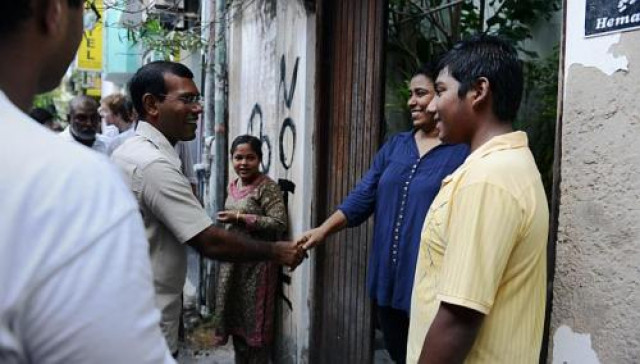
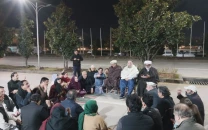
Former Maldivian president and presidential candidate Mohamed Nasheed (first from left) greeting residents of Male while he toured a neighborhood of Maldives' capital on September 4, 2013, three days before some 139,000 voters will go to the polls to elect a new president.
PHOTO: AFP.
Political unrest in February 2012 briefly threatened the country's vital tourism sector, which draws a million well heeled visitors a year, following the ousting of former president Mohamed Nasheed.
Nasheed, a scuba diving former democracy activist, won the Maldives' first free vote in 2008, but resigned last year after a mutiny by police officers.
The 46 year old denounced it as a coup, saying he was forced to step down at gunpoint, and accused then vice president Mohamed Waheed of conspiring with former dictator Maumoon Abdul Gayoom to replace him.
Waheed's ascent to the presidency sparked months of protests and violent clashes, meaning observers particularly regional power India are anxious for a clear and uncontested result on Saturday.
"They (Maldivians) saw how the government was changed and I don't think the majority of people were happy about it," Nasheed told AFP while campaigning on Wednesday in the capital Male.
"What they are trying to do is to bring a legitimate government back."
Looking relaxed as he posed for photos with supporters, held babies and stroked a kitten, Nasheed said he was confident of winning an outright majority in the first round.
Thoriq Hamed, from Transparency Maldives, an election monitoring group, said campaigning by Nasheed, Waheed and the two other candidates had so far taken place "smoothly and peacefully".
But he admits the country's history of coups means there is "some apprehension and confidence issues about the security forces".
Waheed, a Stanford-educated former UN diplomat who lacks his own political base, is widely forecast to come last in Saturday's election. He declined to be interviewed by AFP for this article.
The other candidates are Gasim Ibrahim, a resort tycoon and one of the country's richest men, and Abdulla Yameen, the wealthy half-brother of former autocrat Gayoom.
That the election is taking place on schedule is seen as an achievement by foreign diplomats, who have pressured the administration to ensure a court case against Nasheed did not prevent him from campaigning.
Nasheed says the abuses of power charges against him are politically motivated.
UN Secretary General Ban Ki moon has called for a "credible and peaceful" vote a hope shared by Maldivians, who know the country's relative prosperity relies on tourists.
Sim Ibrahim Mohamed, the longtime former head of the Maldives Association of Tourism Industry, says that the unrest last year caused alarm as mobs torched police stations and government buildings.
LATEST
11 Palestinians killed in Israeli strikes amid ceasefire violation claims

Carnival tribute to Brazil's Lula in Rio sparks political backlash
Iran open to compromises to reach nuclear deal with US, minister tells BBC
Obama deplores lack of shame after Trump’s racist monkey clip

Taiwan FM says China ‘real threat’ after Munich remarks
Rubio to visit eastern Europe, bolster ties with pro-Trump leaders
MOST READ

Gold rises Rs7,000 in Pakistan, $70 on world markets
Petrol, diesel prices likely to increase from February 16

LHC declines to stay net metering reversal
Strategic opportunity for Pakistan
Jeffrey Epstein: Polio work, intelligence briefings and a shadowy presence in Pakistan’s tribal belt





COMMENTS
Comments are moderated and generally will be posted if they are on-topic and not abusive.
For more information, please see our Comments FAQ