
Understanding the order: The ‘what-ifs’ of a PM’s arrest
An assembly member cannot be arrested from Parliament premises without speaker's permission.
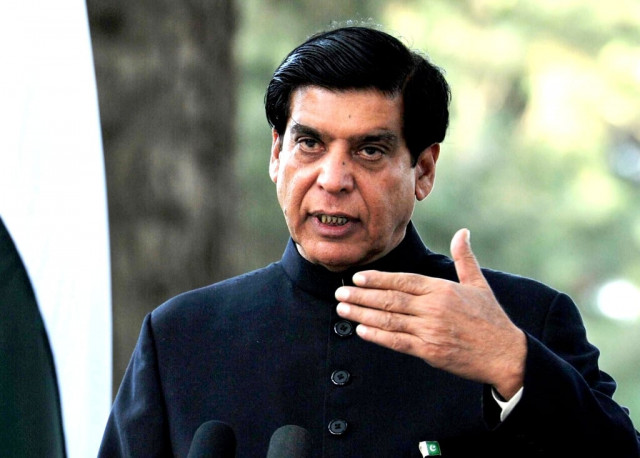
Contrary to the office of the president, which enjoys immunity under the Constitution, the office of the premier does not have any such immunity. PHOTO: AFP/FILE
While Pakistan Peoples Party’s (PPP) legal wizards have disputed interpretations of the Supreme Court order against Prime Minister Raja Pervaiz Ashraf, the more pressing concern is whether the chief executive can be arrested without permission from the National Assembly speaker at all.
Contrary to the office of the president, which enjoys immunity under the Constitution, the office of the premier does not have any such immunity. However, under parliamentary rules of business, a member of the assembly cannot be arrested from the premises of Parliament without the permission of the speaker.
Law minister Farooq H Naek claimed there was no mention of the prime minister’s arrest in the court order, but majority of the legal experts dispute his claims.
He stated that only the National Accountability Bureau (NAB) chairman can issue orders for the arrest in cases under the anti-corruption watchdog’s preview.
Advocate Dr Abdul Basit claimed that the permission of the speaker would be needed to arrest the prime minister even if the assembly is not in session. According to him, a member of the assembly can only be arrested without the speaker’s permission if he is accused of a “cognisable offence” — which, according to him, was not the case in Premier Ashraf’s case.
An official of the National Assembly said that authorities only need to inform the speaker if an arrest is made outside the premises of Parliament. However, no member can be arrested inside the premises without the speaker’s permission.
He said even if a member is behind bars, the speaker can summon him to attend sessions of the assembly.
“The speaker can also intervene if a member is obstructed from attending the house when it is in session,” claimed the official.
Some legal experts are of the opinion that the prime minister can perform his duties as the chief executive of the country even from the confines of a prison cell.
“The prime minister would remain the chief executive unless he is removed from the office through the procedure laid down in the Constitution,” said Dr Basit while talking to The Express Tribune. “If there is a vote of no-confidence against Ashraf, he can act as the premier even from behind bars,” he added. However, he clarified that the PM, if arrested, would not be able to officiate during the period of physical remand.
Meanwhile, Advocate Salman Akram Raja said that after the decision the premier was bound to take interim bail within 24 hours. There were several other options including going for a review instead of pre-arrest bail, he said.
(With additional reporting by Qamar Zaman and Zahid Gishkori in Islamabad)
Published in The Express Tribune, January 16th, 2013.
LATEST
Joint enforcement drive targets illegal Afghan residents during Ramazan
PM meets DFC CEO Benjamin Black to boost investment cooperation

PHF lifts Ammad Butt ban, promises fresh start for Pakistan hockey

PHF interim chief vows to restore hockey's glory, lifts ban on captain Ammad Butt
Pakistan, Philippines hold second Joint Economic Commission meeting
PM Shehbaz meets global leaders at 'Board of Peace' summit in Washington
MOST READ

Apple to manufacture iPhones in Pakistan

Punjab’s quiet acquisition of luxury Gulfstream jet spurs scrutiny

Gold, silver prices surge again, local rates hit new highs
'I like this guy': Trump praises PM Shehbaz, CDF Munir at inaugural 'Board of Peace' summit on Gaza

Imaan Mazari, Hadi Ali Chattha granted bail by ATC in police scuffle case










COMMENTS
Comments are moderated and generally will be posted if they are on-topic and not abusive.
For more information, please see our Comments FAQ