Air pollution accelerates deterioration of historic buildings
Updated 16 minutes ago

Lahore Fort, Shalimar Gardens, Badshahi Mosque and historic buildings remain exposed to environmental damage
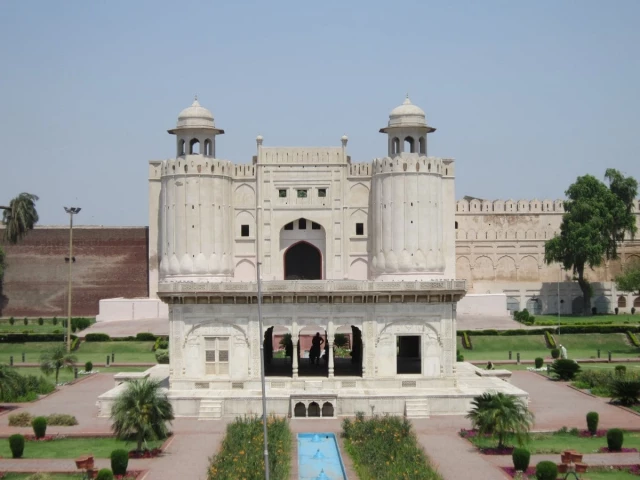
Lahore’s historic buildings, an important part of the city’s cultural and architectural identity, are increasingly exposed to environmental threats, including rising air pollution, dust, moisture, rainfall and changing temperatures. Pollutants accumulating on the surfaces of historic structures can affect stone, marble, lime plaster and intricate architectural details, while certain chemical compounds react with moisture and accelerate the deterioration of construction materials.
The Lahore Fort, Shalimar Gardens, Tomb of Jahangir, Shahi Hammam, Badshahi Mosque and historic buildings in the Walled City are among the heritage sites facing continuous exposure to environmental and climatic pressures. Experts warn that the damage caused by air pollution is not limited to the appearance of these structures but can also affect their original construction materials and structural integrity over time.
Former Director of Punjab Archaeology Malik Maqsood Ahmed said fine particles released by vehicles and industrial emissions, along with dust and various chemical compounds, accumulate on the surfaces of historic buildings. These deposits not only alter the colour and appearance of structures but, under certain conditions, can also damage stone, lime plaster and historic decorative features.
He said pollutants containing sulphur and nitrogen compounds could react with rainwater and moisture, triggering chemical processes that damage the surfaces of stone and other construction materials. The accumulation of salts, swelling of plaster, formation of cracks and flaking of building materials were among the major threats to the conservation of historic structures.
A 2018 reactive monitoring report by UNESCO on the Lahore Fort and Shalimar Gardens identified air pollution as a significant threat to the city's cultural heritage. The report recorded a particulate matter reading of 460 micrograms per cubic metre per hour near Shalimar Gardens and identified vehicular emissions and dust as major sources of pollution. It warned that airborne pollutants could stain historic stone, metal and other materials, while also damaging their surfaces.
Experts say cleaning historic buildings requires considerably more care than cleaning modern structures. The original construction material, condition of the surface and nature of the pollutants must be assessed before selecting a cleaning method to avoid causing further damage to historically significant materials.
Director of Conservation and Design at the Aga Khan Cultural Service Pakistan, Wajahat Ali Khan, said cleaning generally began with the removal of loose particles using soft brushes, followed, where necessary, by the controlled application of small quantities of water or suitable cleaning solutions. Different techniques were assessed for removing stubborn deposits and chemical contaminants, but every method was first tested on a limited section of the structure before being applied more widely.
He cited the restoration of the Picture Wall at Lahore Fort as an important example of conservation work, involving documentation, 3D laser scanning, material testing and trials of different restoration techniques. Restoration of the northern section was completed in April 2026. The project focused on preserving historic tiles, frescoes, decorative details and original construction materials through a combination of traditional techniques and modern scientific methods.
Sandblasting, which involves propelling abrasive particles against surfaces under pressure, has been used by the Walled City of Lahore Authority in the restoration of historic buildings, including the Cathedral Church on Mall Road and Sacred Heart Cathedral in 2022.
However, conservation experts warn that the technique can damage historic brick surfaces and remove their protective layers, increasing their vulnerability to moisture and pollution.
Protecting historic buildings requires more than cleaning. Regular maintenance, timely repairs, moisture control, compatible construction materials and measures to reduce air pollution are essential to preserving Lahore’s architectural heritage.















This material may not be published, broadcast, rewritten, redistributed or derived from. Unless otherwise stated, all content is copyrighted © 2026 The Express Tribune.





COMMENTS
Comments are moderated and generally will be posted if they are on-topic and not abusive.
For more information, please see our Comments FAQ