'Blade Runner' gets a female reboot
Updated 50 minutes ago

'The Further Mis-Adventures of Cliff Booth' brings together familiar characters, sharp dialogue and a fresh director
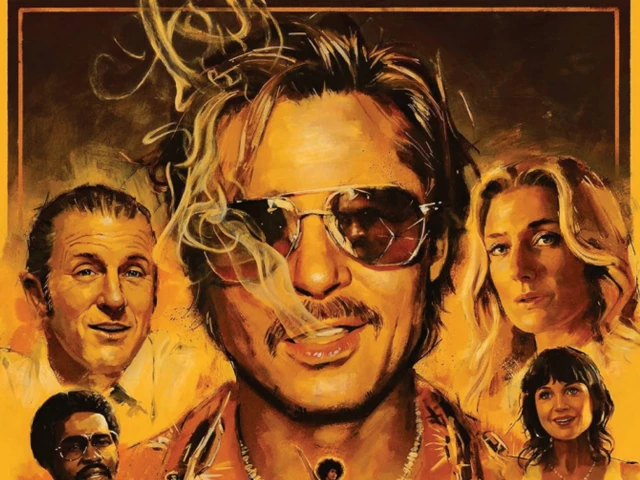
Brad Pitt is back as Hollywood's effortlessly cool stuntman Cliff Booth, but his latest screen adventure comes with an unusually formidable creative partnership: Quentin Tarantino supplies the screenplay while David Fincher takes the director's chair.
Titled 'The Further Mis-Adventures of Cliff Booth', the Netflix film reunites Pitt with two filmmakers who have played significant roles in his career. The trio is brought together for a new chapter in the world introduced by 'Once Upon a Time... in Hollywood'.
Pitt won an Oscar for his portrayal of Booth in Tarantino's 2019 film, while his collaborations with Fincher include acclaimed productions such as 'Fight Club' and 'Se7en'. The new project marks a fresh combination of their distinctive filmmaking sensibilities.
The story unfolds over one week in June 1977, eight years after the events of the original film. With Leonardo DiCaprio's Rick Dalton having relocated to Australia, Booth has moved away from stunt work but remains connected to Hollywood.
He works as a cinema projectionist, serves banana margaritas at a bar and quietly helps friends in the film industry resolve their problems, occasionally resorting to violence. For Pitt, the attraction of the project lies partly in the contrast between Tarantino's dialogue and Fincher's approach to filmmaking.
His latest assignment comes through talent agent Karen Crosby, played by Elizabeth Debicki, and her client, television star Charlie Peters, portrayed by Scott Caan. Their problem involves two Filipino hitmen, prompting Booth to step in, although his interest in Crosby appears to provide an additional motivation.
Speaking at the Los Angeles premiere, the actor, who also produced the film, described the screenplay as rich and distinctive, while praising Fincher for bringing an additional layer of precision and depth to the material.
"You've got Quentin's dialogue, which is just as chewy as you're ever going to get, and then you've got Fincher, who's filling in this undercurrent with a fine scalpel and kind of grounding it more," Pitt told Reuters. "It makes a really interesting combination."
Debicki, meanwhile, described Tarantino's screenplay as a gift, particularly highlighting a lengthy scene she shares with Pitt. The actress said the prospect of delivering such densely written dialogue brought considerable pressure, prompting her to prepare extensively and approach the material almost as she would a theatrical performance.
"It's like a 10-page scene. I felt the pressure. I thought, OK, this is as good as it gets with writing, so what are you going to do with it?" she said.
The film also offers its supporting cast an unusual acting challenge, with characters appearing within fictional productions featured in the story. Caan and Yahya Abdul-Mateen II, who plays former footballer-turned-actor Roderick "Hot Rod" Harrison, had to portray performers taking on other roles within the film's Hollywood setting.
"I'm taking advantage of as many Quentin Tarantino-David Fincher characters I can," Caan said, explaining that he approached each character as an actor attempting to deliver a convincing performance.
Abdul-Mateen II similarly welcomed the additional layers involved. "It's fun," he said, adding that the experience brought more acting responsibilities, choices and creative possibilities.
Peter Weller, best known for starring in 'RoboCop', plays Booth's father, Gus, and found the film particularly evocative of his early experiences in Hollywood. Having arrived in the industry in 1977, the actor recalled an atmosphere of excess, parties and unpredictability that the production brought vividly back to life.
"When I arrived in 1977, I thought, this place is like Jackson Pollock. It's a smear of paint thrown at a wall. It was an explosion of party time and it was wild," Weller said.
However, the film's creative conversation has extended beyond its performances and its unusual combination of filmmakers. Fincher has also discussed the use of artificial intelligence during post-production, explaining that the technology helped combine the strongest elements of different performances without requiring actors to return repeatedly for additional dialogue recording.
Speaking on The Ringer's 'The Big Picture' podcast, Fincher said artificial intelligence was used to synchronise the best line readings with the strongest visual performances when the two did not match in the original footage. He said only about 5% of the film involved automated dialogue replacement, while the remaining work used AI-assisted techniques.
Fincher described the technology as a way of giving filmmakers greater flexibility rather than replacing human performers. He argued that actors and traditional production crews would remain central, with digital tools helping address technical imperfections and reduce the number of repeated takes.
He envisaged a filmmaking process in which actors would still perform on carefully constructed sets, but technology could help correct issues such as missed focus or hair obstructing a performer's face. The objective, he suggested, would be to preserve authentic human movement while making production more efficient.
'The Further Mis-Adventures of Cliff Booth' opened in IMAX cinemas worldwide on Wednesday, before beginning its Netflix streaming release on December 23. For Pitt, the film represents another return to a character audiences embraced, while its Tarantino-Fincher partnership gives the familiar Hollywood setting a distinctly different creative direction.













This material may not be published, broadcast, rewritten, redistributed or derived from. Unless otherwise stated, all content is copyrighted © 2026 The Express Tribune.






COMMENTS
Comments are moderated and generally will be posted if they are on-topic and not abusive.
For more information, please see our Comments FAQ