PM seeks plan for loss-making SOEs sell-off
Updated 11 minutes ago

Zeeshan boards China's Tiangong space station as part of broader cooperation Services chiefs felicitate nation
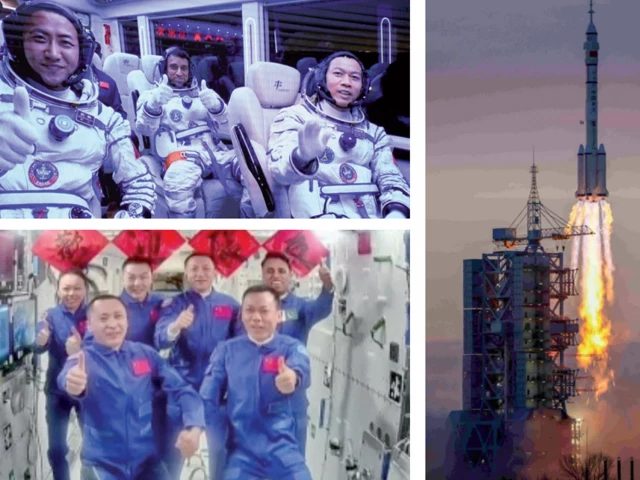
Pakistan's Zeeshan Ali on Wednesday became the first foreign astronaut to board China's Tiangong space station, marking a historic moment for his country's science ambitions and Beijing's efforts to extend its space diplomacy.
The Shenzhou-24 space flight's three-man crew entered Tiangong at 2:35 p.m. (0635 GMT), roughly six hours after they took off from the Jiuquan Satellite Launch Centre in northwest China using a Long March-2F rocket.
The 40-year-old pilot, who is the first Pakistani in orbit, is working as a payload specialist and is set to stay at the station for 5 to 10 days. The new crew, which includes Chinese commander Tang Hongbo and flight engineer Wu Yi, was greeted with hugs by the three Shenzhou-23 flight members currently residing at the station who had also prepared a cake to celebrate.
"As the first foreign crew member to board the China Space Station, I am incredibly excited. China Space Station - here I come!" Ali said in Chinese, according to a report from China's state broadcaster CCTV.
To prepare for the flight, Ali trained for seven months in Beijing, during which he underwent intensive Chinese-language classes, learning Chinese songs and reading Chinese poetry. He also practised calligraphy and played table tennis.
China is promoting Tiangong, which means Celestial Palace in Chinese, as a hub for international cooperation while the NASA-led International Space Station faces possible retirement by 2030.
Though Ali's planned stay is much shorter than the usual six-month rotation for a Chinese astronaut, it has been cause for huge celebration in Pakistan.
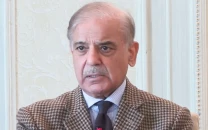
"This is not just one astronaut's journey, but the journey of 240 million Pakistanis. It is the journey of our younger generation, our scientists and our dreams," Prime Minister Shehbaz Sharif said in a post on X. "This is living proof of the ironclad friendship between Pakistan and China."
Chinese President Xi Jinping and Pakistan's President Asif Ali Zardari exchanged congratulatory messages after the crew entered the station, Chinese state media reported.
Space cooperation between China and Pakistan dates back to the early 1990s. China has launched Pakistani satellites and a Pakistani-built rover is also set to fly on a Chinese lunar mission around 2028.
While in space, Ali will help conduct experiments, including one that will look at how self-healing carbon fiber composites can automatically repair small cracks in spacecraft.
Speaking at the launch centre, Planning Minister Ahsan Iqbal said he hoped the flight marked the start of further space cooperation with China, including potentially a joint lunar mission.
"This shows the way forward how developing countries can cooperate to have capability in areas which are very critical for future economic development," he said.
China's self-built Tiangong station has been fully operational since late 2022. It can host up to six astronauts during handovers when an arriving three-person crew overlaps with the departing crew.
This time, the handover will be different. Shenzhou-23 commander Zhu Yangzhu will stay on to support Beijing's study of how the human body copes in space - a crucial step towards a planned crewed mission to the moon and a potential journey to Mars.
Zhu, who will stay for a year, will hold the record for the longest single stay in orbit by a Chinese astronaut by the time he leaves. China's goal of human presence on the moon by 2030 remains unchanged following the delay to its Chang'e-7 lunar mission, which failed to meet launch conditions this year amid adverse weather linked to a tropical storm.
That compares with the US target of 2028 to return humans to the moon amid a tense race for a moon base buildup, a stepping stone to eventual human exploration of Mars. China plans to establish a research base on the moon by 2035 with Russia.
Washington has warned that Beijing could seek to dominate access to resource-rich areas of the moon. Beijing rejects such allegations, saying it advocates peaceful use of outer space.
Meanwhile, Field Marshal Syed Asim Munir, Chief of Army Staff & Chief of Defence Forces; Admiral Naveed Ashraf, Chief of the Naval Staff; Air Chief Marshal Zaheer Ahmed Baber Sidhu, Chief of the Air Staff; and General Syed Aamer Raza, , Commander National Strategic Command, on behalf of the Armed Forces of Pakistan, extend heartfelt felicitations to the nation, SUPARCO and the scientific community on the historic launch of Pakistan's first human spaceflight mission.
The journey of Wing Commander Muhammad Zeeshan Ali, Pakistan's first astronaut and the first foreign astronaut to travel to the Chinese Space Station Tiangong, marks a defining moment in Pakistan's scientific and technological advancement and is a source of immense pride for the entire nation, said an ISPR press release.
The military leadership commends the scientists, engineers and technical teams of SUPARCO for their unwavering dedication, professionalism and sustained efforts in realising this historic national achievement.
The Armed Forces of Pakistan also express profound appreciation to the leadership, Government and people of the People's Republic of China for their invaluable support and cooperation in enabling Pakistan to achieve this significant milestone. The ironclad friendship between Pakistan and China, higher than the Himalayas, deeper than the seas and sweeter than honey, has today reached new heights, extending beyond the frontiers of Earth into outer space.
Pakistan's entry into human spaceflight reflects the immense potential of its human capital, scientific ingenuity and technological capabilities. This landmark achievement will inspire future generations of Pakistanis to pursue excellence in science, technology and innovation, contributing towards national progress and prosperity.
The Armed Forces of Pakistan join the nation in celebrating this historic achievement and extend their best wishes to Wing Commander Muhammad Zeeshan Ali for a successful mission and safe return to Earth.












This material may not be published, broadcast, rewritten, redistributed or derived from. Unless otherwise stated, all content is copyrighted © 2026 The Express Tribune.








COMMENTS
Comments are moderated and generally will be posted if they are on-topic and not abusive.
For more information, please see our Comments FAQ