US approves SpaceX plan to deploy one million data center satellites
Updated 21 minutes ago

Project aims to meet the growing demand for computing infrastructure driven by development of AI
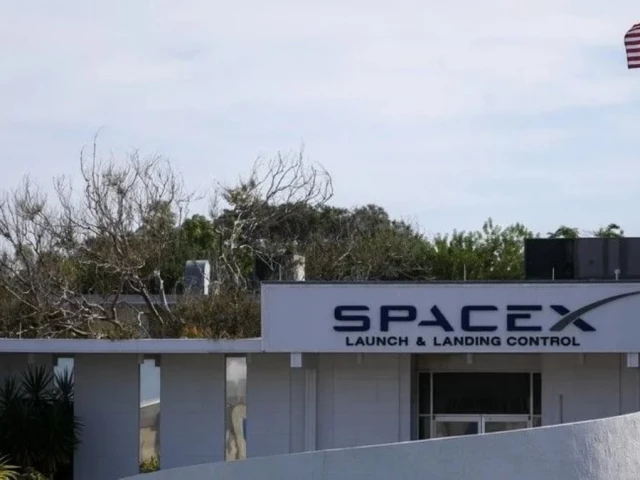
The US Federal Communications Commission (FCC) announced on Wednesday that it had authorised Elon Musk's SpaceX to deploy up to one million satellites designed to operate as data centers in space.
The authorisation, described by the agency as the first of its kind in US history, allows SpaceX to establish its Starmind constellation of orbital computing modules to process large amounts of data for use on Earth.
Read: Musk wants to put AI data centres in space
The project aims to meet growing demand for computing infrastructure driven by the development of artificial intelligence (AI).
The US FCC approved SpaceX’s request to launch as many as 1 million satellites for Musk’s vision to build a network of data centers in orbit https://t.co/qJBOyerm8f
— Bloomberg (@business) November 25, 2026
"By moving compute capacity beyond Earth, SpaceX and the many competitors working on their own orbital data centres are meeting the moment," FCC Chairman Brendan Carr said in a statement.
DATA CENTERS IN SPACE🇺🇸
— Brendan Carr (@BrendanCarrFCC) November 25, 2026
Today, in a historic first, the FCC approved SpaceX’s request for 1 million satellites (orbital compute modules) to create data centers in space
The Starmind & competitor constellations will use solar power to extend America’s lead in Super Intelligence pic.twitter.com/VJinjK5e5E
The constellation would primarily use optical inter-satellite links, with the FCC authorising radiofrequency connections for backup and emergency communications.
The FCC said the proposed constellation would operate in compliance with its orbital debris regulations.
SpaceX first submitted its application for the orbital data centre network in January 2026, seeking permission to deploy as many as one million satellites.














This material may not be published, broadcast, rewritten, redistributed or derived from. Unless otherwise stated, all content is copyrighted © 2026 The Express Tribune.






COMMENTS
Comments are moderated and generally will be posted if they are on-topic and not abusive.
For more information, please see our Comments FAQ