Artists demand repeal of Punjab theatre bill, warn of threats to artistic freedom
Updated 1 hour ago

HRCP roundtable participants urge governor to withhold assent, citing risks of censorship and executive control
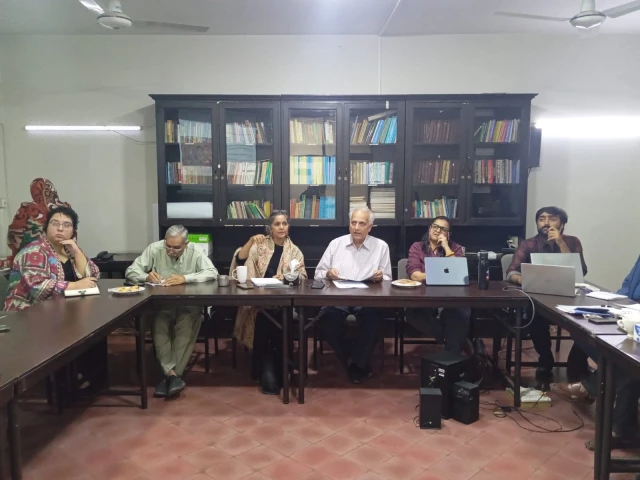
Artistes, writers and human rights activists have called for the immediate repeal of the Punjab Dramatic and Theatrical Performances Bill 2026, warning that the legislation threatens artistic freedom and the constitutional right to freedom of expression.
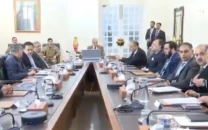
The demand was made at a roundtable organised by the Human Rights Commission of Pakistan (HRCP) in Lahore, where participants strongly opposed the legislation, describing it as an attempt to bring artistic expression under executive control and create a climate of censorship and self-censorship.
On November 19, the Punjab Assembly passed the contentious bill amid strong opposition from several lawmakers. The government maintained that the legislation was aimed at curbing obscenity in performances and improving the standard of theatre, while opposition lawmakers criticised the treasury benches for seeking to control artistic expression.
Ajoka Executive Director and playwright Shahid Nadeem said the bill had been passed without being circulated among relevant stakeholders, adding that artistes had learnt about it through the media.
He raised concerns over the use of vague terms such as “vulgarity”, “obscenity” and “disaffection”, as well as provisions requiring the mandatory registration of artistes, licensing of venues and scrutiny of scripts before performances.
Nadeem warned that the proposed legislation was even more restrictive than the Dramatic Performances Act of 1876, which it seeks to replace.
🔴 Press release
— Human Rights Commission of Pakistan (@HRCP87) November 24, 2026
Artists in Punjab call for immediate repeal of theatre act
24 November 2026, Lahore. Participants at a roundtable convened by the Human Rights Commission of Pakistan (HRCP) strongly opposed the Punjab Dramatic and Theatrical Performances Bill 2026, observing… pic.twitter.com/1c7gPTPIM2
Olomopolo Executive Director and filmmaker Kanwal Khoosat said compulsory registration of artistes could restrict gender-related and political expression.
Writer and HRCP Secretary-General Harris Khalique maintained that artistic expression should not be subjected to a system of registration and licensing, calling for the bill's repeal.
Veteran theatre practitioner Malik Aslam questioned how interactive theatre, which relies on audience participation and spontaneous expression, could be brought under a censorship regime.
Classical dancer Maan Saeed also highlighted the unequal interpretation of language and expression in Punjabi and Urdu, questioning who would have the authority to determine who qualified as an artiste.
During the meeting, participants also stressed the need for solidarity between artistic communities and labour movements.
Punjab HRCP Vice Chairman Hanif Ramay expressed trade unions' support for artistes, while Lok Sujag head Tahir Mehdi proposed organising a public street performance outside the Punjab Assembly to protest the legislation.
Also Read: HRCP warns Punjab theatre bill could put government beyond criticism
The commission's Director Farah Zia emphasised that artistes working in commercial theatre also enjoyed the “right to freedom of expression”.
Sobo Malik of the Khwaja Sira Society cautioned against using shortcomings in commercial theatre as a justification for imposing restrictions on the entire theatre community.
“Participants stressed that the bill was an unacceptable attempt to subject artistic expression to executive control and create a climate of censorship and self-censorship,” the HRCP statement said.
The participants agreed that artistic freedom included the right to question authority and challenge prevailing social attitudes through satire and dissent.
They urged the Punjab governor to withhold assent to the bill and return it to the provincial assembly for further deliberation, ensuring that its provisions did not violate Article 19 of the Constitution of Pakistan or the country's international obligations concerning freedom of expression.
They also called for solidarity across artistic communities to resist restrictions on creative expression.



This material may not be published, broadcast, rewritten, redistributed or derived from. Unless otherwise stated, all content is copyrighted © 2026 The Express Tribune.


COMMENTS
Comments are moderated and generally will be posted if they are on-topic and not abusive.
For more information, please see our Comments FAQ