Interior minister sets social media red lines
Updated 19 minutes ago

Rules shrine on private land is not waqf property
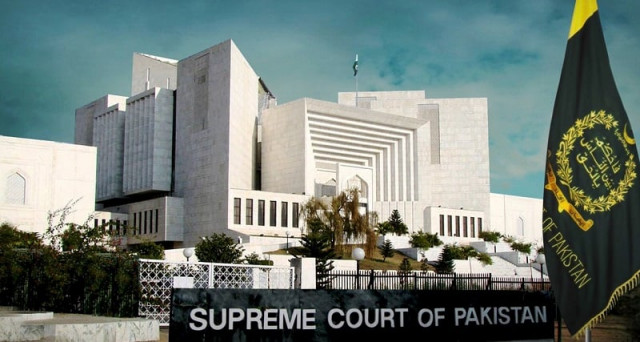
The Supreme Court has ruled that the construction of a shrine on privately owned land, the burial of a family member and subsequent visits by devotees and collection of offerings do not automatically convert the property into waqf, declaring the Auqaf Department's takeover of such land unlawful.
A two-member bench comprising Justice Shahid Waheed and Justice Naeem Akhtar Afghan dismissed an appeal filed by the Chief Administrator Auqaf Punjab against a Lahore High Court judgment concerning five kanals and three marlas of land in Tawaley Wali, Tehsil Pindi Bhattian, District Hafizabad.
The court ordered the department to restore administration, control
and possession of the property,
along with the structures standing on it, to the original owner within 30 days of receiving the judgment.
In its 10-page written verdict, authored by Justice Shahid Waheed, the court held that permanent dedication of property was the fundamental requirement for establishing waqf.
It said a waqf could be created orally or inferred from a person's conduct, but there must be clear evidence of an intention to permanently dedicate the property and relinquish the owner's interest in it.
The dispute arose after the owner purchased the land through a registered sale deed in 1988 and subsequently allowed the burial of a family member, Syed Shabir Hussain Shah, there in 1993. He later constructed a shrine over the grave.
In 2003, the Chief Administrator Auqaf Punjab issued a notification under Section 7 of the Punjab Waqf Properties Ordinance, 1979, taking over the administration, control, management and maintenance of the shrine and the entire five-kanal-three-marla property.
The Supreme Court rejected the argument that the mere existence of a shrine created a presumption that the underlying land had become waqf.
It clarified that Explanation 5 to Section 2(e) of the ordinance applied only where property had been permanently dedicated for a shrine.
Similarly, the court observed that offerings and collections from cash boxes could be treated as waqf property under Explanation 4 to Section 2(e),
but this provision did not automatically make the land on which a shrine
stood waqf property.
The bench also held that the burial of a single family member on privately owned land, without making it available to the general public for use as a graveyard, did not by itself amount to permanent dedication.













This material may not be published, broadcast, rewritten, redistributed or derived from. Unless otherwise stated, all content is copyrighted © 2026 The Express Tribune.






COMMENTS
Comments are moderated and generally will be posted if they are on-topic and not abusive.
For more information, please see our Comments FAQ