Inflation projected at 9.8% as food prices bite
Updated 56 minutes ago

Wheat, tomatoes, chicken drive monthly spike despite fuel relief
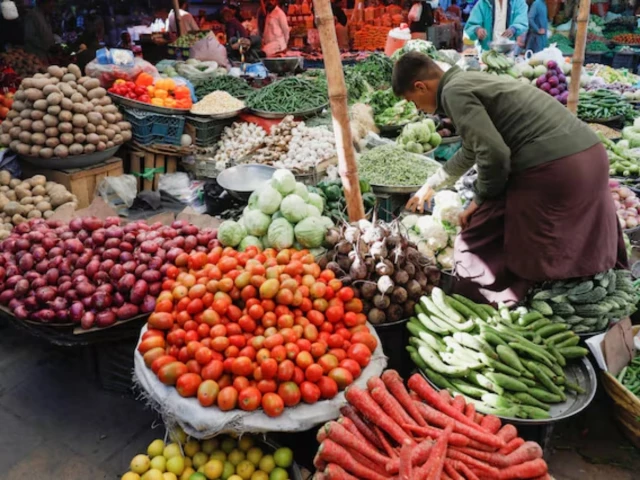
Rising food prices are expected to put fresh pressure on household budgets in November, even as falling petroleum costs help contain the overall increase in prices. While annual inflation is projected to remain below double digits, the expected rise in essential food items could make the coming month difficult for ordinary households.
Annual inflation is projected to edge up to 9.8% year-on-year (YoY) in November, while the Consumer Price Index (CPI) is expected to increase by 0.6% month-on-month (MoM), according to AKD Research on Tuesday. The increase is expected to reflect higher food prices, alongside rising housing and transport indices. The food index is projected to rise 10.7% YoY, while housing and transport indices are expected to increase by 11.5% and 15.9%, respectively.
On a monthly basis, food prices are likely to remain a key source of pressure, with the food index projected to rise 2.5% MoM amid supply constraints affecting both perishable and non-perishable items. Wheat and wheat flour prices are among the major contributors to the increase, with wheat expected to rise 8% MoM and flour 5.6%. Domestic shortages have emerged following the government's shift towards strategic reserves through aggregators, giving farmers greater control over the timing of sales under financing programmes, alongside the removal of support prices.
The report, authored by AKD Director Research Muhammad Awais Ashraf, also points to increases in other essential food items. Tomato prices are projected to rise 54.1%, chicken 11.3%, potatoes 10.8% and eggs 8.2%. However, seasonal factors may provide some relief, with onion prices expected to decline 2.5% and sugar 1.6% amid harvesting and crushing seasons. Milk powder prices are also projected to fall 1.8% due to the seasonal flush.
For ordinary households, the concern is not simply the projected headline inflation rate but the composition of the increase. Food items account for frequent and unavoidable household spending, and sharp monthly increases in staples and other essentials can strain budgets even when prices in other categories are falling. The expected decline in transport costs may therefore offer only limited relief to families facing higher grocery bills.
The transport index is projected to fall 9.8% MoM, following a decrease of 16.3% in motor spirit and 9.1% in high-speed diesel prices. However, the reduction in petroleum prices may not translate proportionately into lower transport costs, as the increasing share of subsidised public transport and stable rail fares limit the impact on the overall index.
Meanwhile, the housing index is expected to increase 1.9% MoM, reflecting higher electricity and liquid hydrocarbon prices. Electricity charges are projected to rise 4.2% following a positive fuel cost adjustment of Rs2.37 per kilowatt-hour, while liquid hydrocarbon prices are expected to increase 22.4% amid supply disruptions linked to the US-Iran conflict and the closure of the Strait of Hormuz. Other categories are also expected to record increases on an annual basis. Communication prices are projected to rise 13.5% YoY, including a 16.7% increase in communication services. Clothing and footwear are expected to increase 9.1%, education 8.4% and health 7.6%, while recreation and culture are projected to rise 2.9%.
The outlook does not point to a return to double-digit inflation in November, but it does signal that the easing of fuel prices may not be enough to offset rising food and housing costs. For households, the pressure will remain visible in everyday expenses, even as the overall inflation rate stays in single digits.
Topline projects November inflation at 9.5-10%
Separately, Topline Securities expects national CPI inflation to range between 9.5% and 10% year-on-year in November, compared with 9.6% in October and 6.15% in November last year. It projects monthly inflation at 0.65%, with food prices expected to increase 2%, while housing, water and electricity costs are forecast to rise 1.47%. These increases are likely to be partly offset by a projected 6.74% decline in transport costs. The brokerage expects average inflation to remain around 10% during the first five months of FY27, reflecting continued pressure from essential spending categories.














This material may not be published, broadcast, rewritten, redistributed or derived from. Unless otherwise stated, all content is copyrighted © 2026 The Express Tribune.






COMMENTS
Comments are moderated and generally will be posted if they are on-topic and not abusive.
For more information, please see our Comments FAQ