Imran Khan may be engaged on new provinces if needed, says Tariq Fazal
Updated 32 minutes ago

PPP warns against imposing decisions through referendum or bypassing constitutional provisions on new provinces
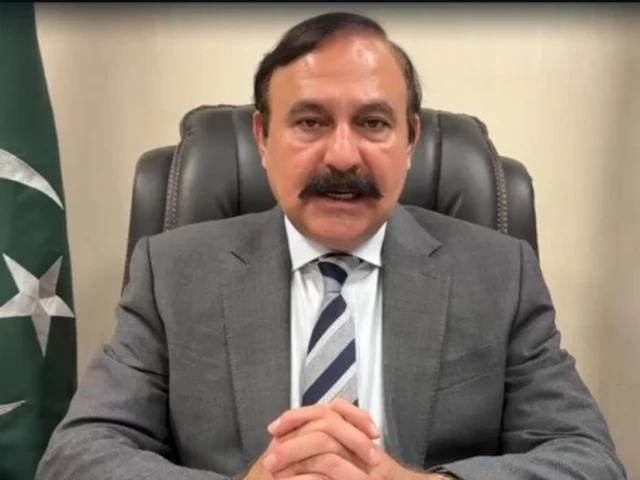
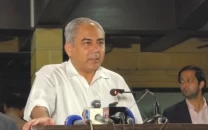
Parliamentary Affairs Minister Tariq Fazal Chaudhry on Monday said any decision on the creation of new provinces would be taken after consulting all political parties and stakeholders, adding that PTI founder Imran Khan could also be engaged if necessary.
Speaking on a private television programme, Capital Talk, Chaudhry questioned the Pakistan Peoples Party’s (PPP) reaction to the idea of a referendum, saying the Constitution clearly outlined the procedure for creating new provinces.
He said a referendum was a constitutional mechanism whose provisions had been incorporated into the Constitution through an amendment during the tenure of former prime minister Zulfikar Ali Bhutto.
Read: Asif eyes consensus on new provinces
“Whatever the decision through a referendum — yes or no — its implementation will follow the procedure laid down in the Constitution,” he said.
Chaudhry reiterated that any decision concerning new provinces would be made after taking all political parties and stakeholders into confidence.
Asked whether the PTI founder would be engaged on the issue, he said Imran had been engaged both directly and indirectly on different occasions.
“If the need arises, he [Imran] will be engaged again, depending on the time and the need,” he said.
Referring to the progress on the issue of new provinces, Chaudhry said those familiar with the game of hockey would understand that “the ball has now reached the D”.
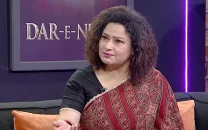
During the programme, PPP leader Shazia Marri said the PPP had already given its position on the proposed political reset. She called for strengthening the confidence of coalition partners in parliament, adding that the parties could sit together wherever necessary to discuss the matter.
Asked why the creation of new provinces was not being debated in parliament, Marri said Article 239(4) of the Constitution was clear on the matter. She said a two-thirds majority in the relevant provincial assembly was required and that the decision should be accepted regardless of whether one agreed with it.
She said Prime Minister Shehbaz Sharif had not consulted PPP Chairman Bilawal Bhutto-Zardari or President Asif Ali Zardari on the proposal. Had such a proposal been put forward, she said, Bilawal would have taken people into confidence, but no such proposal had been received.
“Our position on provinces is clear. We are not opposed to any changes to provincial boundaries or to the creation of new provinces, but the Constitution must be followed,” she said.
Marri described the proposed referendum as a form of “elite capture”, saying no decision could be imposed through coercion, a backdoor route or in violation of the Constitution.
“Even today, the decision you are trying to push through an improper referendum remains, under Article 239(4), the responsibility and prerogative of the provincial assembly concerned. You cannot make a referendum an alternative to this constitutional provision,” she said.
Also Read: Sindh’s unity ‘non-negotiable’, nationalist leaders declare
She warned that seeking judicial endorsement for what she described as an unconstitutional course of action would take the country in a dangerous direction. She added that the PPP would not be party to such an undertaking.
Chaudhry, meanwhile, said he could categorically confirm that governor’s rule in Khyber-Pakhtunkhwa would be extended, adding that the PPP leadership was on board with the decision.
He said governor’s rule would end within six months, once the objectives for which it and the emergency had been imposed were achieved. However, he added, the emergency would remain in force until the targets set for the fight against terrorism had been met.
Emphasising the need for dialogue, Chaudhry said political parties should discuss important national issues on which there was broad agreement, including terrorism, population growth, crime and education.
Marri also defended the imposition of governor’s rule in K-P, saying the decision had not been an easy one for any political party or leader. However, she said, the increasing incidents of terrorism had made it necessary.
She said the governor’s rule and the imposition of an emergency had followed difficulties in coordinating with the majority and violations of the Constitution. She said the important question was what targets had been achieved since the measures were introduced.
Marri cited the staging of Pakistan Super League matches as a significant achievement, describing them as positive optics for the public.





This material may not be published, broadcast, rewritten, redistributed or derived from. Unless otherwise stated, all content is copyrighted © 2026 The Express Tribune.




COMMENTS
Comments are moderated and generally will be posted if they are on-topic and not abusive.
For more information, please see our Comments FAQ