Five things to know about wildly popular 'Grand Theft Auto'
Updated 28 minutes ago

A look at make-up and get-up artists' pivotal role at the recent World Culture Festival 2026
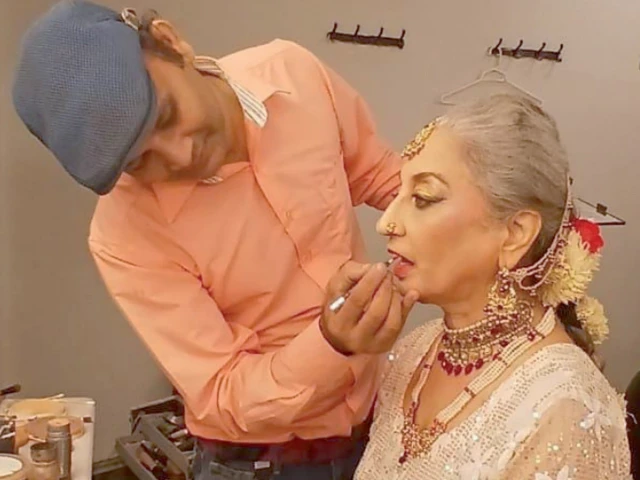
At the third edition of the World Culture Festival in Karachi, hundreds of artists from across the world captivated audiences with their performances, traditional costumes and distinctive appearances. From theatre and music to dance and cultural performances, each artist brought a different identity to the stage. But behind many of these striking transformations were artists whose work often goes unnoticed.
Make-up and get-up artists may not stand in the spotlight, but their creative skills play an essential role in bringing characters to life. Their work goes beyond enhancing appearances, it involves transforming performers into entirely different personalities, reflecting a character's age, background, culture and circumstances.
Among those working behind the scenes at all three editions of the festival are Tanveer and Burhan. Tanveer Kamran is associated with the theatre faculty at the National Academy of Performing Arts (NAPA), where he teaches make-up and get-up techniques, while Burhan Ahmed is a well-known get-up artist in Pakistan. Both believe that make-up artistry deserves recognition as a specialised creative profession.
Speaking to The Express Tribune, Kamran said the profession unfortunately does not receive the recognition it deserves in Pakistan, unlike in countries such as India and the United States, where make-up artists are held in high regard.
Recalling an encounter with visitors from Sri Lanka two years ago, he said they showed him extraordinary respect, even touching his feet as a gesture of appreciation. "They believed that Get-up artists have the ability to change a person's natural appearance and give them an entirely new identity. That made me realise how differently this profession is valued in other parts of the world," he said.
Tanveer explained that the real skill lies not in making someone look attractive but in creating an appearance that suits the character. An artist may have to transform a young person into an elderly individual or alter facial features to reflect a completely different personality.
Historical characters require even greater attention to detail. Creating the appearance of a king or prince, for instance, involves understanding the period's lifestyle, facial features, hairstyles and clothing.
"Make-up and costumes are closely connected. They complement each other. If you are creating a king, his appearance must match the period. He would wear traditional footwear such as khussas, not modern boots or sneakers," Tanveer said.
He also shared some challenging experiences from theatre productions presented during the World culture festival. In Manto Mera Dost, a young actor had to be transformed into an elderly Sikh character. Similarly, Sau Din Chor Ke involved several characters who needed ageing make-up and repeated changes in appearance.
Another demanding assignment was a dark comedy based on Palestine, in which a character had to appear severely burnt following a bombing. Since the performer had sensitive skin, the application required extra care.
Meanwhile, Burhan Ahmed believes make-up artistry should be recognised as a complete profession rather than dismissed as simply applying products to someone's face.
"Initially, when someone enters this field, they may not even know the names of basic make-up products. But with training and experience, they gradually learn about different shades, skin tones and facial features. It is a continuous learning process," he said.
Ahmed also challenged the perception that success and respect are limited to conventional office-based careers.
"You do not necessarily have to wear a tie, put on a suit and go to an office to have a respectable profession. What matters is your skill and how you establish yourself through it," he said, encouraging young people to consider make-up artistry as a viable career and source of livelihood.
Ahmed also emphasised that creating a character requires close coordination and mutual understanding between the make-up artist and the performer.
For both artists, working behind the scenes is an accepted part of the profession.
"If someone mentions your name and appreciates your work, that is certainly a good feeling. But even if they don't, there is no problem. Our responsibility is to work behind the scenes," he said.
As performers receive applause on stage at international cultural events such as the World Culture Festival, the contribution of make-up artists, costume designers, lighting technicians and other backstage professionals remains an integral part of the spectacle.
They may not take the final bow, but their artistry helps others become the characters audiences remember.




This material may not be published, broadcast, rewritten, redistributed or derived from. Unless otherwise stated, all content is copyrighted © 2026 The Express Tribune.








COMMENTS
Comments are moderated and generally will be posted if they are on-topic and not abusive.
For more information, please see our Comments FAQ