NIH issues nationwide winter health alert
Updated 37 minutes ago

.
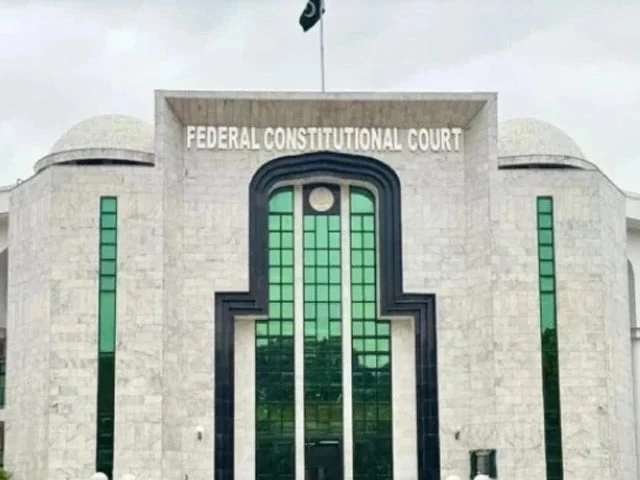
The Federal Constitutional Court's (FCC) decision striking down provincial laws imposing infrastructure cess in Sindh and Khyber-Pakhtunkhwa has triggered a wider debate over the future of provincial autonomy as legal experts remain divided over whether the ruling merely reinforces the constitutional division of legislative powers or signals a broader curtailment of provincial authority.
Authored by FCC Chief Justice Aminuddin Khan, the judgment holds that a province cannot create a fiscal barrier within the national trading system merely by describing a levy as compensation for infrastructure development.
The ruling has also drawn attention to the composition and jurisdiction of the newly established constitutional court, particularly as both judges who struck down the provincial legislation belonged to Punjab, despite earlier political arguments, particularly by the Pakistan Peoples Party (PPP), that all provinces would be represented when the FCC heard important constitutional matters following the 27th Amendment.
The latest ruling is among three judicial developments that have raised questions about the limits of provincial autonomy.
Earlier, the Islamabad High Court (IHC) had directed provincial executive authorities to take measures to stop the PTI's long march in September, a move that many lawyers believe went beyond its jurisdiction by summoning provincial officials and seeking affidavits from them.
More recently, the FCC restrained the Peshawar High Court from hearing writ petitions concerning governor's rule and orders issued under the Maintenance of Public Order (MPO) law.
The court has now struck down provincial legislation imposing infrastructure cess, following objections by the federal government and the Federal Board of Revenue (FBR) to the legislative competence of the provincial assemblies to impose such levies.
'Dismantling of provincial autonomy'
The developments have divided legal opinion over the implications of the FCC's decisions for provincial autonomy.
Renowned lawyer Faisal Siddiqi believes the judgment could pave the way for a gradual dismantling of provincial autonomy and ultimately facilitate the creation of new provinces.
"Now, we know why Bilawal attacked the FCC! FCC is the trojan horse in the armour of the federal government to dismantle provincial autonomy," advocate Faisal Siddiqi said.
Former law officer Waqar Rana, who specialises in tax laws, has also questioned the reasoning behind the judgment, saying it essentially overlooks the fact that the Supreme Court had declared the cess a fee only a few years ago.
Rana said the nature of a levy depended on its underlying objective, arguing that the transportation of imported as well as locally manufactured goods involved the use of provincial infrastructure.
"Perhaps provincial laws could be saved as the changed constitutional scheme that residual powers including the taxation rests with the provinces and therefore fee levied could not be struck down on the basis of taxation entries. But I believe that provincial autonomy is an anathema in the judicial annals," he added.
Another senior lawyer, however, offered a more nuanced interpretation, saying the FCC judgment directly addressed the scope of provincial autonomy and clarified its limits, particularly in the fiscal sphere.
While restricting the provinces' power to impose certain levies, the court had reinforced the constitutional division of legislative powers rather than undermining the principle of provincial autonomy itself, he said.
He said the central finding of the judgment restricted provincial fiscal autonomy by striking down infrastructure cesses imposed on imports, exports and goods in transit.
The FCC held that such levies, irrespective of their stated purpose, including infrastructure development, effectively encroached upon subjects reserved exclusively for Parliament under the Constitution.
The court reasoned that the "charging event" for these cesses was the movement of goods across international or provincial boundaries, which fell within Entries 27 and 43 of the Federal Legislative List, covering imports, exports and customs duties. Since Article 142(a) gives Parliament exclusive legislative authority over these matters, the provinces lacked the constitutional competence to impose such charges.
The court applied the "pith and substance" doctrine to look beyond the label of "infrastructure cess" and determine the true nature of the levy.
The senior lawyer said the judgment also clarified that the expanded provincial autonomy introduced through the 18th Constitutional Amendment was not absolute. The court observed that this autonomy "could not extend to subjects expressly reserved for Parliament".
In this sense, he argued, the ruling did not roll back the 18th Amendment but instead defined the outer limits of provincial authority.
It affirmed that provinces retained their residual legislative powers but could not use the guise of a provincial levy to regulate matters constitutionally reserved for the federation.
Explaining the implications of the ruling, the lawyer said provinces could no longer rely on infrastructure cesses imposed on imports and exports as a source of revenue, placing a direct restriction on one of their fiscal instruments.
He also pointed out that the same court had, in separate rulings, upheld provincial legislative competence where the "pith and substance" of a levy genuinely concerned a provincial subject, such as labour welfare, even when it involved incidental overlaps with federal matters.
He said this demonstrated a broader judicial effort to determine the boundary between federal and provincial powers on the basis of the substance of legislation rather than the labels attached to it.
Another lawyer agreed that the judgment affected provincial autonomy by imposing a firm constitutional limit on provincial fiscal powers, but argued that the court had framed its decision as an enforcement of the federal structure rather than an attack on devolution.
FBR counsel defends FCC ruling
Hafiz Ehsaan Ahmad Khokhar, who represented the FBR, said the FCC decision was an important constitutional judgment, saying it had set aside the Sindh High Court (SHC) and Peshawar High Court (PHC) judgments that upheld infrastructure cess imposed under the Sindh Development and Maintenance of Infrastructure Cess Act, 2017, and the Khyber Pakhtunkhwa Infrastructure Development Cess Act, 2022, including amendments introduced through the K-P Finance Act, 2024.
He said the principal constitutional question was not provincial autonomy but legislative competence, specifically whether provincial assemblies had the constitutional authority to impose fiscal levies on imports, exports and the international or inter-provincial movement of goods, which fell within Parliament's exclusive legislative domain.
During his submissions, Khokhar said he had emphasised Articles 141 and 142(a), read with Entries 27, 43 and 59 of Part I of the Federal Legislative List in the Fourth Schedule to the Constitution.
Entry 27 deals with imports and exports across customs frontiers, inter-provincial trade and commerce, and trade with foreign countries, while Entry 43 specifically covers customs duties, including export duties.
He also referred to Entry 24, concerning the carriage of goods by sea or air, and Article 163 of the Constitution.
He explained that the provincial authority to tax professions, trades, callings and employments could not be extended to matters constitutionally reserved for Parliament.
Khokhar said the provincial governments had defended their legislation on the grounds that the collections were intended to finance provincial infrastructure and that the laws fell within their authority under Article 142(c).
However, he maintained that provincial autonomy was neither unlimited nor independent of the Constitution and had to be exercised strictly within the legislative boundaries prescribed by it, just as federal authority had to remain within its own constitutional sphere.
He said the abolition of the Concurrent Legislative List through the 18th Amendment had undoubtedly strengthened provincial legislative autonomy, but it had not transferred subjects expressly retained in the Federal Legislative List to the provinces.
Khokhar said the FCC had correctly recognised this constitutional distinction.
In particular, the court observed that the purpose for which revenue was spent could not determine the legislative competence to impose a levy.
He added that the court had also held that administrative arrangements, collection through federal customs machinery, retrospective validation or describing a tax as a fee could not cure the absence of constitutional legislative authority.
Khokhar said the FCC ruling strengthened the supremacy of the Constitution, protected the federal legislative framework, facilitated the free movement of goods and preserved the constitutional division of fiscal powers.
He added that neither federalism nor provincial autonomy could be invoked to justify legislation beyond the competence expressly conferred by the Constitution.















This material may not be published, broadcast, rewritten, redistributed or derived from. Unless otherwise stated, all content is copyrighted © 2026 The Express Tribune.







COMMENTS
Comments are moderated and generally will be posted if they are on-topic and not abusive.
For more information, please see our Comments FAQ