UK weighs tougher safeguards after celebrity scandals
Updated 30 minutes ago

Recent shootings and threats put actors on edge
A spate of shootings and extortion threats targeting Bollywood stars has prompted the Indian film industry to tighten security, reviving memories of the underworld's grip on Mumbai cinema during the 1990s, when criminal gangs used intimidation and violence to influence the business.
From gunfire to cash demands, the incidents have unsettled an industry that had largely moved beyond the criminal networks once deeply embedded in its multi-billion-dollar business. Police have linked the latest violence to the gang of Lawrence Bishnoi, a convicted Indian gangster accused by US prosecutors of directing a global criminal network from behind bars.
"Stars are moving around with bodyguards on either side," actor and security agency owner Ronit Roy told AFP. "There has been a sharp increase in demand... Requests have expanded beyond just lead actors, to include family members and children."
Author S Hussain Zaidi, a former investigative journalist, said opportunistic criminals were exploiting the notoriety of established gangsters. "Some desperadoes are opening fire in the air to scare the industry and spread fear," he said. "And they have succeeded - as people have started believing that the mafia-dominated 1990s era is back."
Recent incidents include gunfire targeting actor Tiger Shroff's car in Mumbai in October and an alleged $600,000 extortion demand against actor Tusshar Kapoor. Police have arrested 13 people under organised crime laws in connection with the shooting, alleging it was intended to extort money, establish gang dominance and spread fear.
Police have also said other prominent figures were under surveillance. They have named Anil Pandit, an alleged Bishnoi gang member, as wanted in connection with the shooting.
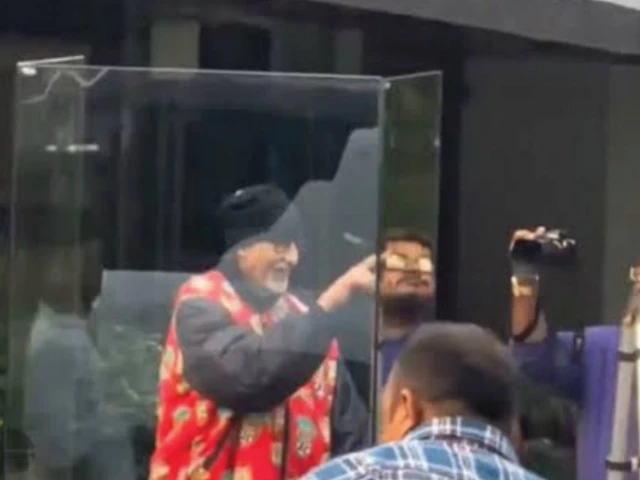
Anxiety across the industry has become increasingly visible. Bollywood superstar Amitabh Bachchan recently greeted fans from behind a bulletproof enclosure outside his Mumbai home during his customary Sunday appearance, while security was reinforced around actor Shah Rukh Khan's residence for his birthday.
But Zaidi said the major gangsters of the 1990s were now dead, imprisoned or inactive. "The only gangster we hear of these days is Lawrence Bishnoi and even he is in jail, so there is no way that any local Mumbai-based gangster has control over the city," he said.
The late 1990s and early 2000s were among Bollywood's darkest periods, when criminal syndicates used threats, extortion and violence to influence film financing, casting and distribution.
Producers were pressured to pay protection money, surrender business interests and comply with gangsters' demands. The underworld's influence later waned as police intensified operations, aided by organised crime legislation introduced in 1999. The growth of corporate financing also reduced criminal groups' hold over the film business.
Director Rajiv Rai, whose hit thriller 'Gupt' brought him prominence, received extortion demands and threatening calls in the late 1990s before eventually leaving India for Britain. "I was the victim in the 1990s, the world knows," he told AFP.
Producer Boney Kapoor, who was targeted by underworld figures over a dispute involving overseas distribution rights for his 1997 Salman Khan film 'Judwaa', believes the latest wave of violence will be "short-lived". "I don't feel that kind of fear," he said. "But one has to be cautious, these shootings can't be ignored."











This material may not be published, broadcast, rewritten, redistributed or derived from. Unless otherwise stated, all content is copyrighted © 2026 The Express Tribune.






COMMENTS
Comments are moderated and generally will be posted if they are on-topic and not abusive.
For more information, please see our Comments FAQ